A TRANSFORMATION
FORGED IN STEEL
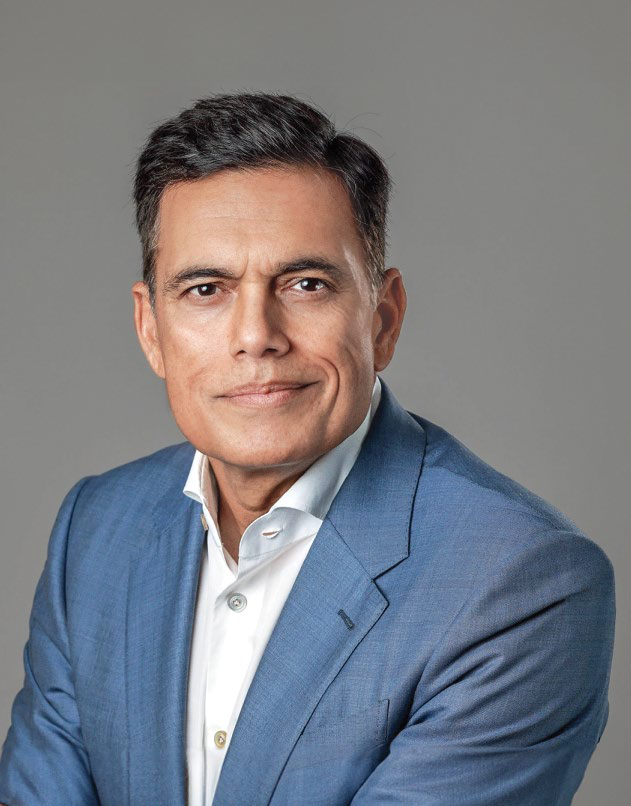
Dear Stakeholders,
At a time of heightened global uncertainty—driven by shifting trade dynamics, geopolitical tensions, and moderating growth across developed economies—India continues to distinguish itself through resilience, advancing with confidence, stability, and a clear sense of purpose.
The Indian economy registered a growth of 7.7% in FY 2025-26, reaffirming its position as the fastest-growing major economy in the world. While this headline number reflects the resilience of our macroeconomic fundamentals, it only partially captures the deeper transformation underway. Across the country, the real economy is being reshaped by a steadily expanding manufacturing base, resilient consumption, and an infrastructure investment programme of an unprecedented scale and ambition. This is being powered by a young, increasingly skilled workforce that is confident, aspirational, and determined to make its mark.
At the same time, India is strengthening its innovation ecosystem, with rising investments in research and development, supported by mission-driven national initiatives that are catalysing private sector participation in emerging technologies and shaping the foundations of future growth.
This is the India that JSW Steel is helping build—and it is this India that reinforces our conviction to remain steadfast on our strategic priorities.
Navigating a complex world
The global steel industry faced a challenging year in 2025. Elevated steel production in China, coupled with weakening domestic demand, led to significant surplus volumes being redirected to global markets, with exports reaching a record 134 million tonnes—nearly double the levels seen in 2022. This exerted sustained pressure on global steel prices.
Encouragingly, towards the latter part of the year, regulatory interventions in China—including tighter export controls and anti-involution measures—signalled a more calibrated approach to exports, which is helping moderate global oversupply in 2026.
At the same time, the global steel landscape continues to be reshaped by rising trade interventions, including tariff escalations, the implementation of the EU's Carbon Border Adjustment Mechanism, and a series of retaliatory trade measures across key geographies.
India was not immune to these global pressures. During the two years preceding FY 2025-26, the country became a net importer of steel, driven by a surge in unfair imports. The imposition of safeguard duties in late December 2025, based on the recommendation of the Directorate General of Trade Remedies (DGTR), was a timely and necessary intervention to provide a level playing field to the domestic industry.
Going forward, the Indian steel industry will continue to work closely with policymakers to ensure that the operating environment remains fair and equitable.
Against this backdrop, India's domestic steel consumption grew by 7.9% to 164 million tonnes in FY 2025-26, reflecting an incremental demand of 12 million tonnes during the year. This growth has been strongly supported by sustained public investment, with Central Government capital expenditure expanding more than threefold since FY 2019-20. This has translated directly into higher steel consumption across infrastructure segments, including roads, highways, railways, metro rail, ports, airports, and urban infrastructure. In parallel, key sectors such as housing, renewable energy, automotive, and appliances have continued to witness healthy growth, further reinforcing demand momentum.
As India advances towards its 'Viksit Bharat' aspirations, the opportunity horizon for steel is both deep and enduring. With per capita consumption at approx. 115 kg—well below global averages—the scope for sustained, multi-decade growth is compelling.
Resilient performance in challenging conditions
FY 2025-26 was a transformational year for JSW Steel—defined by our strategic joint venture with JFE Steel of Japan, continued progress on capacity expansion, strengthened raw material security, and decisive balance sheet deleveraging. And despite a challenging external environment, we delivered a resilient operating performance.
Consolidated crude steel production and sales volumes grew 8% and 12% respectively, with consistently healthy capacity utilisation. Our consolidated adjusted EBITDA for the year stood at a robust ₹32,000 crore. Our EBITDA performance reflects the strength of our integrated business model, sustained focus on Value-Added and Special Products, and the structural cost efficiencies we have built over time.
I am pleased to share that we have continued to maintain our commitment to shareholder returns, with a proposed final dividend of ₹7.1 per equity share. Delivering consistent dividends in a capital-intensive and cyclical industry reflects the strength of our financial discipline, as well as our confidence in the resilience and long-term potential of the business.
Our Net Debt-to-EBITDA improved to 1.81x and Net Debt-to-Equity to 0.51x at the close of FY 2025‑26, compared with 3.34x and 0.94x, respectively, in the previous year. This decisive deleveraging strengthens our financial resilience and provides a strong foundation to support sustained and accelerated capacity expansion aligned with India's long-term growth needs.
Partnering to Shape the Future
Global steel players have shown a keen interest in India's structural growth story, and JSW Steel has continued to be a preferred partner. In December 2025, we announced a strategic joint venture with JFE Steel Corporation of Japan for the steel business of BPSL.
JFE is not just any partner—it has been a trusted collaborator of JSW Steel since 2009, with a relationship that has deepened over time. This joint venture brings together JSW Steel's market leadership and operational expertise in India with JFE's advanced technological capabilities, creating a platform to expand the business and develop a differentiated portfolio of value-added steel products.
For JSW Steel, this partnership marks a significant step forward. Beyond strengthening our relationship with JFE, this strategic transaction materially enhances our balance sheet through deleveraging of approximately ₹37,000 crore, of which ₹30,000 crore was completed by the end of March 2026. This was enabled by JFE's initial equity infusion and the transfer of BPSL's steel business to the newly formed entity, JSW JFE Steel Ltd., which is under joint control. The remaining deleveraging will be completed with JFE's second tranche of equity, unlocking capital to support our next phase of growth.
If our partnership with JFE represents a defining milestone for the year, the announcement of our joint venture with the POSCO Group in April 2026 is a strong endorsement of our long-term growth ambitions. Formalised at the India‑South Korea Summit in New Delhi, this partnership will see JSW Steel and POSCO jointly establish a 6 million tonne per annum greenfield integrated steel plant in Odisha.
Together, these partnerships bring three of the world's leading steel producers into a shared commitment—to support and accelerate India's growth ambitions.
Scaling in India, for India
During the year, we announced a greenfield project at our site in Jagatsinghpur, Odisha, a 5 MTPA plant, designed as an integrated, port-based facility, with iron ore transported via a slurry pipeline, enabling low-cost and efficient logistics. At Kadapa in Andhra Pradesh, we approved a 1 MTPA electric arc furnace facility, strengthening our low-carbon emissions steel capabilities. The Board has also approved the acquisition of BMM Ispat in Karnataka, a 0.9 MT producer of Long Products with further growth potential, which will complement our product basket.
Let me put our capacity ambition in full context. We are raising our India capacity target from 50 MTPA by FY 2030-31 to 62 MTPA by FY 2031-32. Add the JFE and POSCO joint ventures, contributing 10 MTPA and 6 MTPA, respectively, and the total capacity across JSW Steel and its JV entities in India reaches 78 MTPA. Including our US operations, the combined capacity approaches 80 million tonnes. We are building scale to meet India's rising steel demand.
Within India, our Vijayanagar facility—currently the country's largest single-location steel plant—will see a further 5 MTPA expansion, taking its total capacity to around 25 MTPA and will make it the largest single-location steel plant in the world.
The true measure of this phase lies not in the numbers we are chasing, but in the enduring foundations being laid for the decade ahead.
Advancing Self-Reliance in Raw Materials
Growth at this scale is only sustainable if its foundations are secure. That is why our raw material security agenda has been one of the most important priorities of the past several years and FY 2025-26 marked significant milestones on this front.
On the iron ore front, we have 25 captive mines, of which 13 are currently operational. As we progressively operationalise all our mines and expand capacities at some of our existing mines, we expect to meet approximately 50% of our iron ore requirements through captive sources by FY 2030-31, from approximately 33% captive currently.
When it comes to coking coal, we completed a very consequential acquisition during the year. In March 2026, we completed the buyout of Minas de Revuboè in Mozambique, a world-class coking coal asset with estimated resources of approximately 850 million tonnes and the potential to yield about 250 million tonnes of saleable prime hard coking coal. The mine will be developed in phases, with the first phase targeted for completion by mid-CY 2028 at around 5 MTPA of useable coking coal, providing access to high-quality material and long-term supply assurance. We have also increased our effective interest in Australia's Illawarra prime hard coking coal mines from 20% to 30%. Combined with our domestic coking coal mines and linkages, we expect captive coking coal supply to meet approximately 50% of our requirements by FY 2030-31. We aim to have 50% captive iron ore and coking coal beyond FY 2030-31 as well.
Moving up the value curve
Volume and capacity are only part of the story. What matters equally is what we make. In FY 2025-26, value-added and special products accounted for over 60% of our sales, up from just 25% in FY 2013-14. This is one of the most important shifts in our business over the past decade. It reduces earnings cyclicality, improves margin resilience, and positions us in the fastest growing segments of the steel market.
Following our acquisition of the ThyssenKrupp CRGO facility in Nashik, India, we continued to strengthen our presence in advanced electrical steel, which is central to India's energy transition, power infrastructure, and EV ambitions. Our planned expansion will take total CRGO capacity to 350,000 tonnes by FY 2029-30, making India self-reliant in this critical product for electrification of our energy system. We also approved multiple value-added capacity expansions across our Vijayanagar, Khopoli, Raigarh, Rajpura and Salem plants, spanning galvanising, high-strength automotive grades, coated products, and structural steel. We will continue to augment our value-added and specials capacities in response to market needs as we grow.
The transformation underway within the broader JSW ecosystem extends beyond manufacturing. JSW One, a technology-enabled marketplace in which JSW Steel holds a 60.79% fully diluted stake, aims to simplify procurement and improve ease of business for MSMEs. MSMEs are the backbone of the Indian economy, and JSW One is enhancing their efficiency and competitiveness. By bringing together raw materials, financing, logistics and related services on a single platform, it enables a more efficient and transparent customer experience. During FY 2025-26, JSW One recorded a Gross Merchandise Value of ₹18,596 crore, up 48% y-o-y, while digital adoption improved engagement.
Our commitment to a cleaner future
Steel remains indispensable to global development, yet it continues to be one of the most carbon-intensive industries. At JSW Steel, we see this not merely as a compliance requirement, but as a fundamental responsibility—to the planet, to our communities, and to the long-term resilience of our business.
Decarbonisation is not only an environmental imperative; it is central to our future competitiveness, cost structure, and access to markets in an increasingly carbon-constrained world.
Our two-phase decarbonisation roadmap targets a ~42% reduction in CO2 emissions by 2030, and an ambition to become net neutral in carbon emissions by 2050. This transition is being driven through a combination of renewable energy integration, process innovation, raw material strategy, material circularity, and digital optimisation across our operations. During the year, we commissioned ~1 GW of renewable energy capacity, with a total of 2.5 GW approved by our Board, alongside 320 MWh of battery storage. We also commenced the use of green hydrogen at Vijayanagar, launched biomass-based initiatives, and deployed India's first electric locomotive for captive logistics. Increasingly, our capital allocation is aligned to accelerate these lower-carbon investments and move away from fossil fuels.
Our efforts have been recognised globally—we were ranked No. 1 in the steel sector in the S&P Global Corporate Sustainability Assessment and included in the Sustainability Yearbook with a Top 1% score. We were also recognised as a Sustainability Champion by worldsteel for the eighth consecutive year. These recognitions reaffirm our direction, but our focus remains on scaling solutions that are technologically viable, economically sustainable, and globally competitive.
Safety above all
On safety, I will always demand more—no milestone is ever sufficient. Our vision of zero harm is not just a target; it is a non-negotiable standard that we recommit to every day, across all our sites.
We are strengthening safety through leadership accountability, robust systems, a skilled workforce, and a disciplined focus on measurable outcomes. This year, we accelerated our efforts through technology-led interventions, including AI-driven predictive risk identification, alongside immersive training and digital platforms that embed safety as a lived value. Every individual working at JSW Steel—employee or contractor—must return home safe. This is a commitment we will not compromise on.
Guided by clarity, grounded in confidence
India's development trajectory under Viksit Bharat 2047 provides a long runway for steel demand. Domestic consumption is projected to grow at 7–9% in FY 2026-27, adding 12–14 million tonnes of incremental demand. The infrastructure pipeline remains deep and durable. The manufacturing resurgence is real. The energy transition and the imperative of energy security—both inherently steel-intensive—are accelerating. We are well positioned to benefit from these tailwinds, with the capacity, capabilities, and organisational cohesiveness to convert opportunity into sustained growth.
The challenges ahead, however, are equally real. Geopolitical uncertainty has increasingly become the new normal. Our decarbonisation journey will demand sustained investment, innovation, and execution discipline. Yet, I have never been more confident in JSW Steel's ability to navigate complexity and emerge stronger.
I remain deeply grateful to our employees, whose commitment and pride in what they build are the true engine of this enterprise. I thank our customers for the trust they place in us, our Board for its guidance and governance, and the governments of the regions in which we operate for their continued support. And to you—our shareholders—I extend my sincere appreciation for your trust and confidence.
The best of JSW Steel lies firmly ahead of us.
Sajjan Jindal
Chairman & Managing Director