
Bottom-Up Approach:
Empowering employees at all operational levels to identify, design, and implement context-specific decarbonisation interventions.
At JSW Steel, our Sustainability Vision stems from a steadfast desire to foster development that is socially equitable, environmentally responsible, and ethically sound.
Guided by our Sustainability Vision, we aim to ensure that every tonne of steel we produce is fairer, less emissions-intensive, and more resource-efficient than the last. Over the past year, we intensified our pursuit of this goal by accelerating decarbonisation, transforming our energy mix, scaling circularity, strengthening product stewardship, and investing more intentionally in the well-being and resilience of the ecosystems and communities surrounding our operations.
The following pages seek to provide a transparent and holistic overview of where our sustainability performance, initiatives, and ambitions stand today and how we expect them to evolve in the years ahead. It serves not only as a record of the tangible progress we have made toward generating environmental and social value but also as a forward-looking account of the priorities that will shape our journey ahead as we endeavour to embed sustainability at the core of our growth story.
In recent decades, burgeoning concerns about the physical impacts of climate change and its capacity to exacerbate social challenges, such as food insecurity and income inequality, have created a strong impetus for economy-wide decarbonisation. Against this backdrop, the transition toward a low-carbon economy has emerged as one of the most consequential megatrends reshaping societies and industries worldwide. While this shift unquestionably represents an urgent course correction necessary to rein in the GHG emissions driving climate change, it is essential to recognise that a transition of this magnitude will inevitably give rise to both winners and losers.
The steel sector remains a major source of employment globally, and the extensive supply chains underpinning its operations support millions of workers across industries such as energy, mining, processing, and logistics. Over the coming years, spurred by tightening environmental regulations and an imminent upsurge in the demand for responsibly produced steel, steelmakers will significantly transform their energy mixes, hasten the adoption of emerging technologies, and deploy new production processes. The sheer scale of the sector's activities, combined with the extensiveness of its supply chains, means that this shift toward low-carbon practices can trigger cascading socio-economic impacts that extend well beyond immediate value chains, rendering its stakeholders particularly vulnerable to the socio-economic effects of the net-zero transition.
At JSW Steel, we recognise that while our pivot toward low-carbon steelmaking may generate new opportunities for certain communities, in the absence of appropriate safeguards and proactive measures, it may also disproportionately impact others through multiple channels, including the disruption of livelihoods in affected sectors and a gradual erosion in demand for presently coveted skillsets and roles. Therefore, to ensure that this transition does not undermine our mission to create lasting value for the full spectrum of stakeholders touched by our operations, we have designed and adopted a Just Transition policy. This policy aims to ensure that the decarbonisation of our operations proceeds in a just, inclusive, and equitable manner.
Our Just Transition policy draws inspiration from the commitments and principles enshrined in the Paris Agreement and the International Labour Organization's Just Transition Guidelines. It emphasises our commitment to broadening the constellation of stakeholders that the benefits of the transition toward green steel will accrue to, enacting safeguards to prevent this shift's negative impacts from disproportionately weighing on marginalised communities, and equipping the adversely affected with the resources, support, and opportunities needed to adapt and participate meaningfully in the emerging low-carbon economy.
In FY 2025-26, we took a decisive step toward operationalising this policy by introducing a suite of targeted measures designed to further the objectives it pursues. These include extending support to affected workers and communities through social protection measures, conducting stakeholder consultations to proactively identify and mitigate the potential socio-economic ramifications of our activities, cultivating trust-based relationships with Indigenous communities, and upholding human and gender rights across our operations.
JSW Steel performed exceptionally in the latest cycle of the Corporate Sustainability Assessment (CSA) administered by S&P Global. The CSA evaluates and quantifies the environmental, social, and governance (ESG) performance of over 9,000 companies operating across major sectors of the global economy annually. In doing so, it seeks to furnish companies with the data-driven insights needed to benchmark their sustainability performance against that of industry peers, timely identify and address sustainability-related risks and opportunities, and align activities and growth with rapidly evolving investor expectations. The results derived from the CSA inform the construction of the Dow Jones Sustainability Indices (DJSI), which are among the most prominent ESG indices recognising major corporations with industry-leading non-financial performance.
JSW Steel achieved a score of 88 in the 2025 CSA—the highest in the global steel sector—placing the Company in the 100th percentile of the industry and representing a 7% y-o-y improvement.
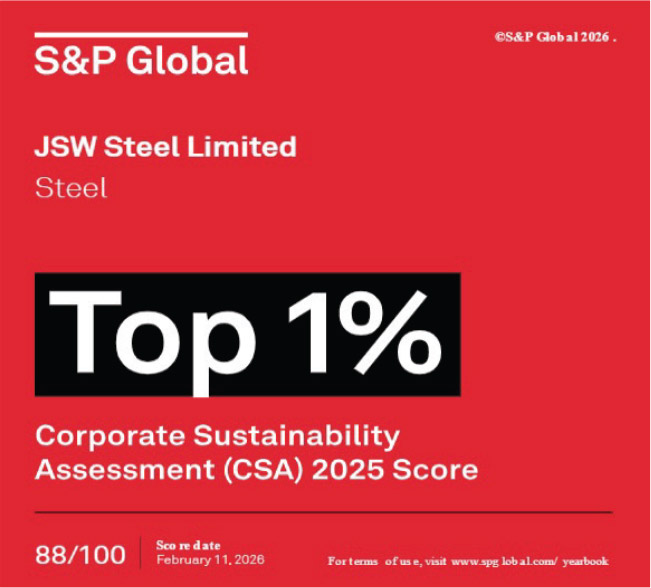
By virtue of receiving this industry-leading CSA score, we also secured inclusion in the S&P Global’s 2026 Sustainability Yearbook, which serves as a showcase of companies across 59 major industries of the global economy that are spearheading the uptake of more sustainable practices in their respective sectors and tangibly contributing to the net-zero transition. Over 9,200 companies were assessed as part of the CSA this year, of which only 848 earned a place in the Yearbook. While inclusion in the Yearbook constitutes a significant achievement in itself, the Company also secured the ‘Top 1% Emblem’. This distinction, conferred upon merely 70 companies this year, distinguishes corporations whose CSA scores rank among the top 1% of all evaluated entities.
As companies strive to lower the embodied carbon of their products in response to the advent of regulations like the EU CBAM and increasingly factor in the sustainability performance of their suppliers as a key consideration in procurement decision-making, the demand for responsibly produced steel could surge precipitously in the coming years. At JSW Steel, we view this shift not as a risk but as an opportunity to catalyse growth and enhance resilience by developing a future-ready, low-carbon portfolio of products. We also recognise that we must provide our customers with the accurate and up-to-date information needed to assess the sustainability performance of our products to capitalise on this trend fully. In this context, we consider obtaining third-party voluntary sustainability certifications a powerful means to credibly communicate our products' superior safety, environmental, and social performance to customers.
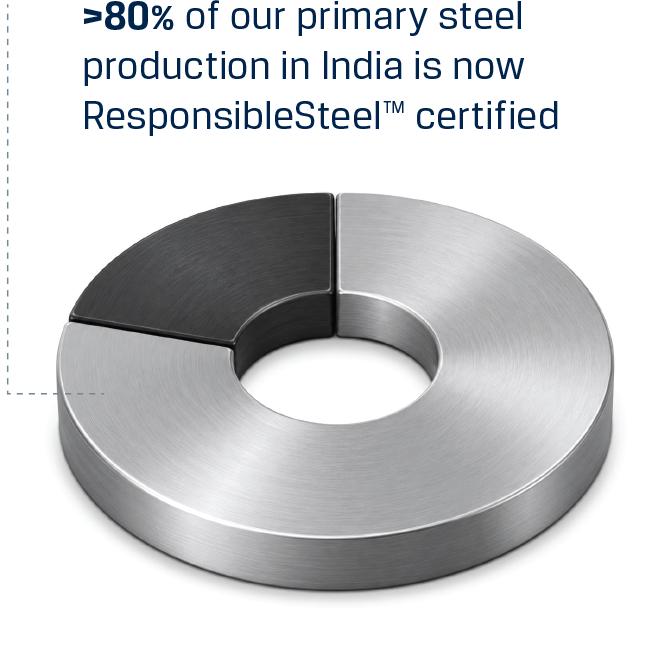
Four of our key manufacturing sites—our ISPs in Vijayanagar, Dolvi, and Salem, and our downstream rolling facility in Tarapur—have received the highly coveted ResponsibleSteel™ certification, which recognises steelmaking operations that uphold the highest environmental, social, safety, and ethical standards. Over 80% of our primary steel production in India is now ResponsibleSteel™ certified. This achievement underscores the significant progress we have made in adopting sustainable practices across our facilities, aligning our operations with internationally recognised environmental and social standards, and decarbonising our operations at scale.


Vijayanagar | Dolvi | Salem | Raigarh | BPSL | Vasind | Tarapur | Kalmeshwar

Vijayanagar
Odisha Mines

Salem
Vijayanagar | Dolvi |
Salem | Tarapur
At JSW Steel, we envision robust governance as the bridge between sustainability ambition and on-the-ground action. We have accordingly sought to implement a structured sustainability governance framework that pursues three core objectives.
First, in line with our conviction that generating environmental and social impact at scale requires the various functions of a complex, multi-facility organisation like ours to work in concert rather than in silos, it aims to establish sustainability as a centrally governed, enterprise-wide priority.
Second, driven by our recognition that business growth and sustainability are increasingly becoming mutually reinforcing rather than adjunct endeavours, it strives to integrate sustainability at the very core of our value-creation strategy, risk-management framework, and operational ethos.
Third, and finally, in furtherance of our belief that meaningfully improving sustainability performance requires ambitious goal-setting, regular evaluation of progress, and continuous oversight, it seeks to institutionalise accountability through clearly defined targets, datadriven monitoring mechanisms, and transparent reporting structures. Together, these enable informed decision-making, timely course correction, and sustained performance improvement across the organisation.
An enterprise-wide Sustainability Framework forms the cornerstone of our governance apparatus. This Framework encompasses 17 core focus areas, ranging from climate change and biodiversity to human rights and ethical governance, which collectively define our sustainability priorities. A structured double materiality assessment, which examined both our operational impact on these issues and the extent to which they influence our long-term growth and resilience, informed the selection of these focus areas. This Framework provides a common direction across the organisation and keeps our sustainability efforts firmly geared toward the issues that have the greatest bearing on our operational resilience and growth.

Sustainability Focus Areas
UN SDGs advanced
















To drive concrete, long-term improvements in our performance across the focus areas delineated in our Sustainability Framework, we have developed a set of targets aligned with national and international sustainability commitments, including the Paris Agreement, the United Nations Sustainable Development Goals (SDGs), and applicable national net-zero and biodiversity strategies. These targets ensure that our efforts contribute meaningfully to the broader systemic transitions underway across the Indian and global economy and that our ambitions remain anchored in the most current and credible scientific and policy benchmarks.
Chaired by an Independent Director, our Business Responsibility/Sustainability Reporting Committee provides strategic oversight of our sustainability and responsible business agenda, ensuring alignment with regulatory requirements, industry best practices, and evolving stakeholder expectations. By placing sustainability and social responsibility firmly within the Board’s remit, the Committee positions these priorities at the very zenith of the organisation’s governance and decision-making architecture. The Committee’s key responsibilities include overseeing the business-wide adoption of the National Guidelines for Responsible Business Conduct (NGRBC), guiding the implementation of related policies and initiatives, monitoring progress against sustainability objectives, and vetting the annual Business Responsibility and Sustainability Reporting (BRSR) report to ensure accurate, transparent, and compliant disclosures.
Read more - Broad-level CommitteesWe have enacted a suite of policies, technical standards, and management protocols that govern conduct, define expectations, and provide operational guidance across the environmental, social, and governance priorities outlined in our Sustainability Framework. These policies and standards apply across the full extent of our operations and constitute the central governance mechanisms for operationalising our Sustainability Framework across the organisation.
They serve three core purposes: translating sustainability principles into clear and enforceable commitments; equipping functions and facilities with the practical guidance necessary to embed responsible practices into day-to-day operations; and strengthening accountability by setting forth the standards against which we measure and report our performance.
We periodically review and update these policies and standards to reflect evolving regulatory requirements, incorporate emerging best practices, and remain responsive to the insights acquired through our materiality assessments.
Read more - our sustainability policy suiteOur data governance and integrity strategy seeks to safeguard privacy, enhance accuracy, and ensure transparency in our sustainability reporting. Our Data Protection and Privacy Policy codifies principles, controls, and responsibilities— all aligned with global best practices—to guide the secure collection, processing, storage, and sharing of data across the organisation. We have also established a data governance framework that aligns our disclosures with globally recognised reporting standards, defines clear procedural requirements, and incorporates regular internal reviews and independent third-party assurance. Together, these measures strengthen the completeness, consistency, and reliability of our data while minimising errors and bias, thereby ensuring that reported information accurately reflects our operational performance. We also align our disclosures with applicable reporting standards, particularly those issued by the Global Reporting Initiative (GRI), to enhance clarity, traceability, and comparability over time, and we continue to invest in robust digital systems to further improve data quality, integration, and control.
Read more - Data Protection & Privacy PolicyIn 2015, all 193 United Nations member states unanimously adopted 17 SDGs. At JSW Steel, we envisage the UN SDGs as the compass guiding our pursuit of a future that is just, inclusive, and ecologically resilient. Accordingly, we consistently strive to design and implement crosscutting sustainability solutions capable of driving meaningful progress across multiple SDGs simultaneously.
To this end, we align our sustainability initiatives with the SDGs and systematically map our interventions to specific goals and targets to ensure that our efforts are purposeful, traceable, and oriented toward delivering the greatest possible impact. Ultimately, by embracing this approach, we seek to ensure that our sustainability initiatives contribute meaningfully to alleviating some of the most pressing social, economic, and environmental challenges plaguing societies across the globe today.
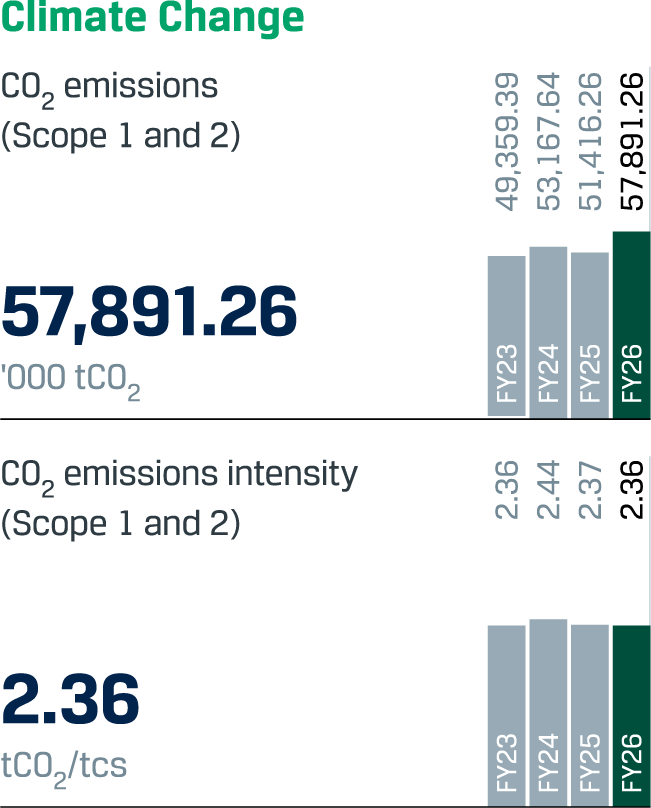
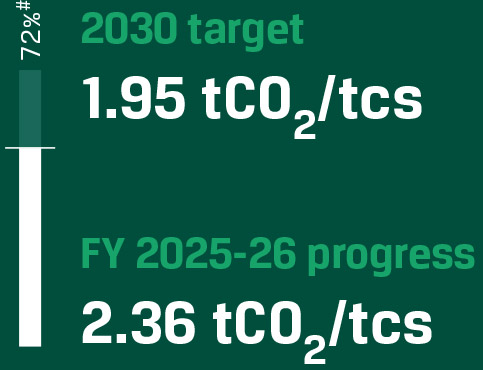
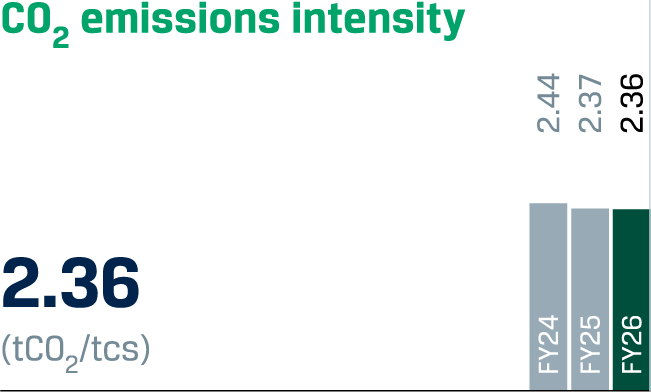
CO2 emission intensity (Scope 1 + 2)
Net neutral in carbon emissions across all operations under direct control.

In recent years, climate change has come to the fore as one of the most consequential socio-environmental challenges of this epoch. As its multifaceted consequences—ranging from extreme weather events to the loss of biodiversity—continue to manifest around the world with unprecedented frequency, the global steel sector has come under increasing scrutiny from policymakers and experts by dint of its outsized carbon footprint, which stood at 4.1 billion tonnes of CO2 equivalent as of 2025.*
At JSW Steel, we remain acutely aware of the magnitude of our emissions and recognise that our position as an industry leader carries an equally compelling responsibility to lead the decarbonisation of the steel sector. Accordingly, in 2024, we adopted two climate goals fully aligned with both India’s national targets and those stipulated by the Paris Agreement: (1) reducing the emission intensity of operations across our ISPs by 42% to 1.95 tCO2/tcs by 2030; and (2) becoming net neutral in carbon emissions across all operations under our direct control by 2050.
We recognise that achieving these targets demands ambitious and sustained effort. Hence, in FY 2025-26, we accelerated our pursuit of these goals by strengthening our climate governance framework, introducing new decarbonisation levers, horizontally deploying proven climate interventions that have delivered measurable emissions reductions across our facilities, and stimulating innovation to unlock new pathways for decarbonising our processes. By virtue of these efforts, we are not only making consistent progress toward our climate targets but also reinforcing our competitive positioning in a world where low-carbon steel is rapidly becoming both a market expectation and a regulatory imperative.
At JSW Steel, we firmly believe that strong governance is fundamental to driving effective climate action. We therefore systematically consider decarbonisation targets, climate-related risks and opportunities, and performance metrics in our business planning and capital allocation processes across the Group. Board-level oversight, clearly defined management responsibilities, and regular performance reviews promote accountability for the delivery of our climate objectives, while independent third-party assurance of our climate disclosures and emissions data reinforces transparency and stakeholder confidence. This integrated governance framework facilitates the systematic implementation of our decarbonisation strategy and fosters organisation-wide alignment in pursuit of our 2030 and 2050 climate ambitions.
The Climate Action Group (CAG), facilitated by our Corporate Sustainability team, convenes operational teams from across our facilities to review progress toward site-level environmental and social goals on a monthly basis. The CAG pursues two principal goals: translating the commitments espoused by our sustainability policies into on-the-ground action and fostering plant-level accountability for social and environmental performance.
To achieve these ends, the CAG upholds a broad gamut of responsibilities. These include serving as a regular stocktake of KPIs across the full extent of our operations to streamline the collection of data for reporting, supporting the design and implementation of sustainability solutions tailored to the unique needs and operational characteristics of our facilities, and identifying and counteracting obstacles hindering the pursuit of our site-level environmental and social targets. The Sustainability Action Group (SAG) fulfils a similar mandate for our Coated facilities.
Since their inception, the CAG and SAG have emerged as critical catalysts in advancing our commitment to embedding sustainability at the core of our operational ethos. By bridging the gap between the conceptualisation and execution of high-impact environmental and social initiatives, these groups have contributed to tangible improvements in sustainability performance across the enterprise.
We published our inaugural Climate Action Report in 2024. This Report, fully aligned with the recommendations of the Task Force on Climate-related Financial Disclosures (TCFD), provided a transparent account of our climate performance and ambitions by revealing where our emissions stood at the time of writing and formalising the targets that our decarbonisation efforts would strive towards over the years to come. Additionally, it equipped our stakeholders with the forward-looking information required to evaluate our preparedness for a low-carbon future by holistically canvassing the climate-related risks and opportunities we expect to encounter and detailing the measures we are undertaking to maintain operational resilience and grow sustainably in the face of a rapidly warming planet. In so doing, the dissemination of our first Climate Action Report constituted a significant stride toward our mission of fostering greater climate transparency and accountability.
Industry experts and sustainability practitioners worldwide have repeatedly emphasised technology's role as a vital enabler of the manufacturing industry's efforts to improve the accuracy of ESG performance disclosures and the effectiveness of sustainability initiatives. Nonetheless, companies have largely failed to unlock its true potential because their technology and sustainability teams continue to operate in silos. The consequent paucity of cross-departmental engagement leaves several opportunities to leverage digital solutions to address pain points undermining sustainability performance and reporting unidentified.
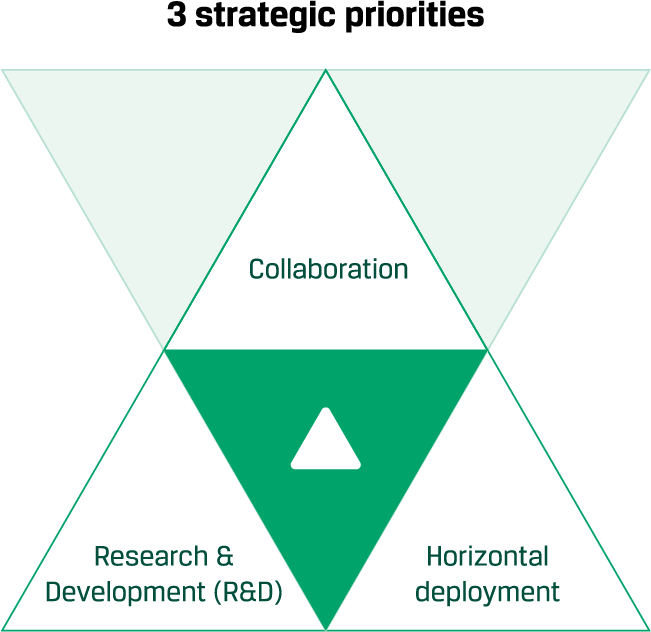
To bridge this gap in engagement, JSW Steel launched its Centre of Excellence (COE) in FY 2022-23. Upon its inception, we tasked the COE with the mandate of acting as a centralised hub of expertise that helps operational teams and departments harness technology to catalyse innovation, deliver cost efficiencies, and promote sustainable value creation at an enterprise-wide scale. The COE pursues three strategic priorities to fulfil these goals—forging high-impact partnerships with academic institutions and start-ups at the forefront of green innovation; horizontally deploying highperforming sustainability initiatives across the full extent of our value chain to amplify their impact; and stimulating research and development to devise new pathways for responsible value creation.
In FY 2025-26, the COE significantly expanded its footprint. Guided by the conviction that operational, financial, and sustainability performance are inseparable in today's business landscape, it executed 629 projects designed to enhance operational efficiency, financial resilience, and environmental and social impact. Of these, 316 initiatives directly generated operational and financial benefits, while 313 contributed to improvements in safety and environmental performance. Within the latter category, the COE implemented 95 initiatives under the operational framework of Project Sustainable Energy, Environment and Decarbonisation (SEED), our flagship climate action programme, to accelerate decarbonisation across the value chain. This balanced portfolio highlights the meaningful progress the COE has made towards its dual mission of advancing near-term performance gains and building long-term operational resilience.
Initiatives contributed to improvements in safety and environmental performance
Decarbonisation initiatives implemented by COE under Project SEED in FY 2025-26
We have set an ambitious goal to become net neutral in carbon emissions across all operations under our direct control by 2050. To deliver on this commitment, we have formulated a strategic roadmap, as presented below, which defines clear pathways, milestones, and targeted interventions to reduce our carbon footprint systematically without compromising operational growth. This year, we continued advancing toward our 2050 climate target in alignment with this roadmap by introducing new decarbonisation levers and simultaneously scaling existing ones. These include improving energy efficiency, accelerating renewable energy adoption, driving process innovation, advancing circularity initiatives, and scaling low-carbon technology deployment.
Read more about our climate action road map by accessing page of our Climate Action Report.
Achieve a 42% reduction in emissions intensity from the baseline year through operational excellence, energy transition, circularity and deployment of breakthrough low-carbon technologies.
Become net neutral in carbon emissions across all operations under direct control through the deployment of green hydrogen and alternative steelmaking technologies, large-scale CCUS, expansion of scrap-based EAF capacity, carbon offsetting and sequestration, demand-side efficiency improvements, and nature-based solutions, while further scaling 2030 decarbonisation levers.
(Short-to-Long Term Objectives)
(Short-to-Long Term Objectives)
(Short-to-Long Term Objectives)
(Short-to-Long Term Objectives)
(Short-to-Long Term Objectives)
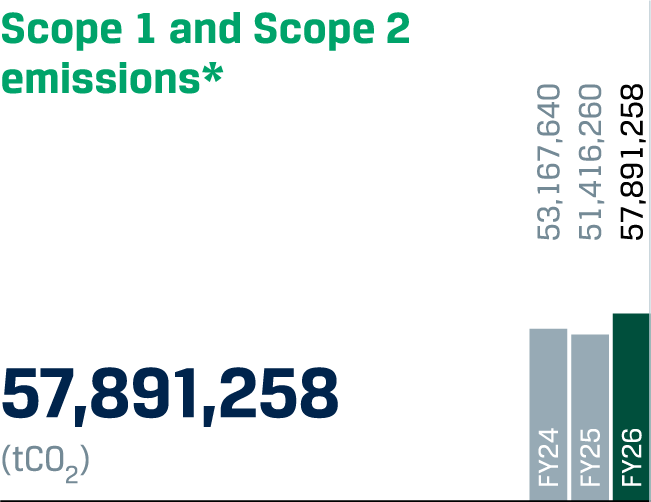
We recognise that accurately measuring and disclosing Scope 3 emissions is essential for providing a holistic account of our carbon footprint. Thus, in line with this belief, we sought to cultivate a more nuanced understanding of our Scope 3 emissions over the course of the past year by refining our accounting methodology, identifying emissions hotspots across our value chain, and fostering stakeholder engagement to effectively measure and address high-emission areas. By virtue of such efforts, we now monitor our Scope 3 emissions across all 15 categories specified by the GHG Protocol. The categories that apply to our operations, as listed below, contributed to net Scope 3 emissions of ~8.95 million tCO2 during FY 2025-26. Additionally, this year, we recorded avoided emissions credits of ~6.60 million tCO2 in the categories of ‘Use of Sold Products’ and ‘Processing of Sold Products’, in accordance with worldsteel guidance.
Relevant Scope 3 emission categories, as defined by the GHG Protocol
Also worth noting, we calculated our Scope 3 emissions for the categories noted above in alignment with the technical guidance shared by worldsteel and the GHG protocol.
Ozone Depleting Substances (ODS)
Our steel manufacturing units utilise Ozone Depleting Substances (ODS) principally in their cooling systems. In FY 2025-26, measured in CFC- 11 equivalent, our facilities consumed 31.83 kgs of ODS.
Project SEED
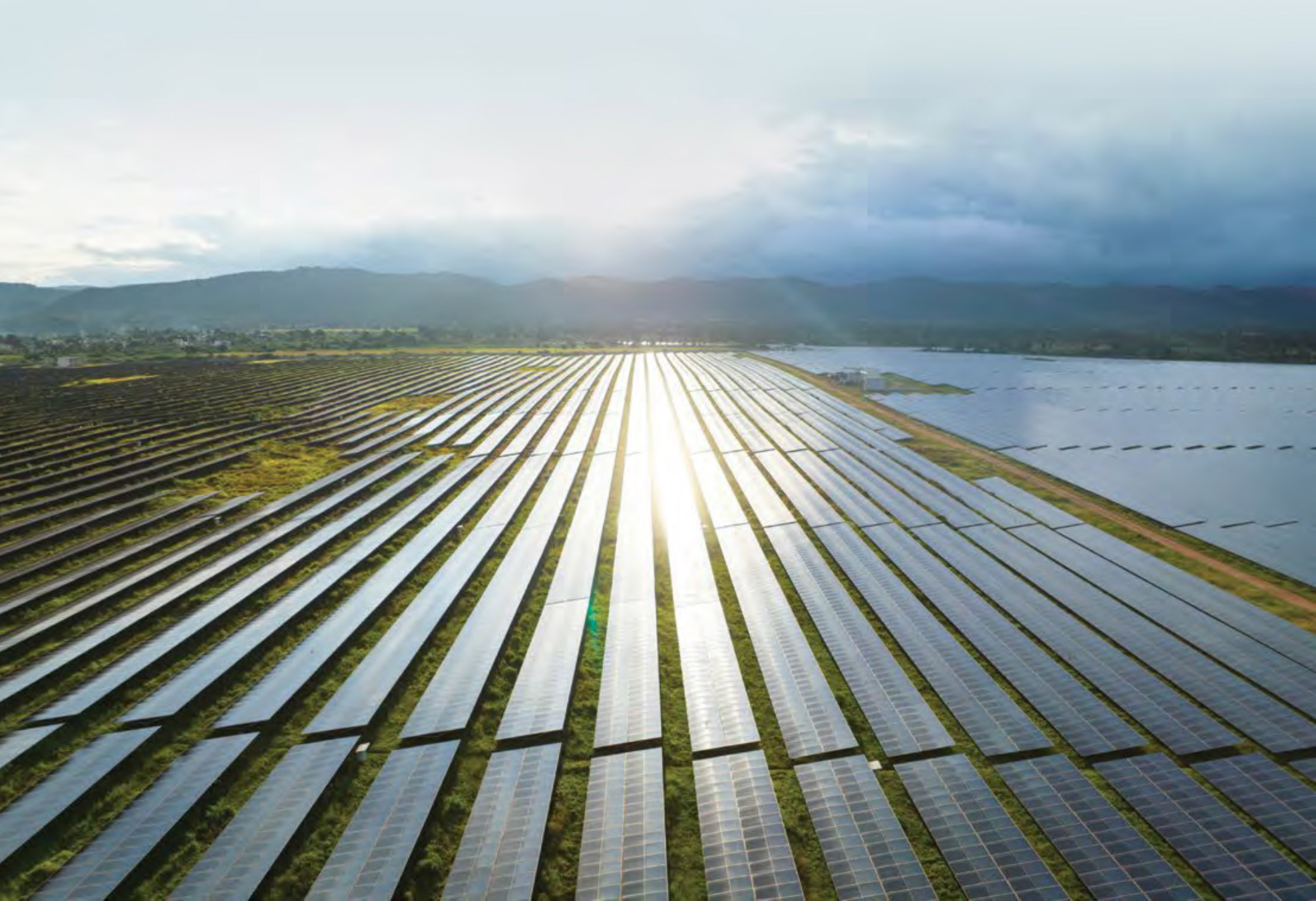
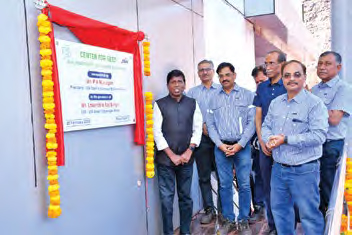
In line with our recognition that operationalising our climate action roadmap demands consistent and structured action at the facility level, we launched Project Sustainable Energy, Environment and Decarbonisation (SEED), our flagship climate action initiative, at our largest integrated steel plant in Vijayanagar in 2022. Project SEED adopts a first-of-its-kind, bottom-up approach that draws upon the knowledge and expertise of ground-level employees on the shop floor to identify and implement context-specific decarbonisation levers across our operations.
Since its inception, Project SEED has identified over 400 emissions reduction interventions, each tailored to the unique operational characteristics of our facilities. These measures—ranging from optimising energy consumption and increasing the use of alternative fuels to deploying waste heat recovery systems—have collectively abated ~4.93 million tCO2 across our value chain as of FY 2025–26. Nonetheless, its impact transcends emissions reduction; it is transforming how we approach decarbonisation by institutionalising it as a ground-level practice across every facility and function.
Project SEED aims to abate 18 million tonnes of CO2—a figure nearly tantamount to Sri Lanka’s annual CO2 emissions* or the emissions savings that would be realised by taking 3.5 million cars off the road—across our value chain by 2030.
Savings targeted by 2030
Emissions abated across the value chain through Project SEED initiatives since inception
Decarbonisation initiatives identified
Empowering employees at all operational levels to identify, design, and implement context-specific decarbonisation interventions.
Embedding 'climate consciousness' into organisational culture.
Positioning decarbonisation as a central driver of competitive advantage and business value, with initiatives delivering measurable cost efficiencies alongside emissions reductions.
Scaling high-impact interventions proven at pilot sites across operations to accelerate enterprise-wide decarbonisation.
Piloting and deploying cutting-edge, previously untested technologies to unlock decarbonisation pathways for hard-to-abate processes.
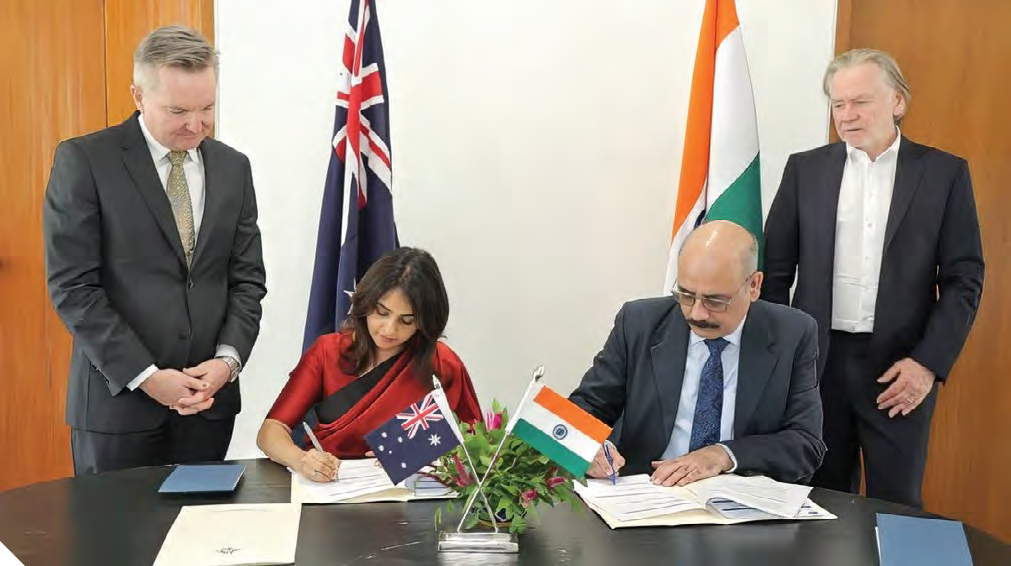
We recognise that the efforts of any single actor alone cannot solve a challenge as complex and multi-causal as climate change. Addressing a challenge of this magnitude and intricacy, instead, requires harnessing the collective expertise, resources, and perspectives of diverse stakeholders, including civil society organisations, academic and research institutions, policymakers, industry bodies, technology providers, and peer companies. Our climate and sustainability initiatives therefore adopt a multi-stakeholder approach focused on fostering collaboration, sharing knowledge and best practices, and cross-deploying solutions capable of generating system-wide impact.
This model stems from the core premise that heterogeneous stakeholders possess distinct capabilities, expertise, and knowledge that uniquely position them to contribute to the pursuit of our sustainability goals, and it accordingly aims to leverage the combined strengths of relevant actors. Since successfully implementing such a model requires forging strong partnerships with a broad spectrum of actors, we consistently engage with leading global coalitions, sustainability forums, and industry associations across the globe. These organisations broadly fall into two categories: voluntary multi-stakeholder initiatives and standard-setting bodies. While examples of the former include the United Nations Global Compact (UNGC), Responsible Steel (RS), and the World Business Council for Sustainable Development (WBCSD), the latter category encompasses organisations like the Climate Action Charter, the Global Reporting Initiative (GRI), and the Climate Group.
We also collaborate with various institutions and initiatives based in India. These include the India Hydrogen Alliance (IH2A) and the Indian Business Biodiversity Initiative (IBBI). Such engagements enable us to remain abreast of domestic developments across issues like climate change, green technologies, and biodiversity conservation. Together, our national and international engagements allow us to collaborate with experts and peer organisations to stimulate innovation, shape industry standards, spur the adoption of best practices, and thereby contribute meaningfully to the pursuit of both economy- and sector-wide sustainability goals.
We entered into several high-impact partnerships this year. For starters, we launched an ambitious project in collaboration with Mitsui—a global leader in environmental engineering solutions— to probe the feasibility of integrating biomass and bio-char in our captive power plant and blast furnace operations. Thanks to the knowhow gained through this partnership, we successfully piloted our first biofuel-based decarbonisation project across two facilities. This project successfully replaced a portion of our blast furnace pulverised coal injection (PCI) with bio-char and substituted over 11% of the coal used in our captive power plant with biomass, supporting decarbonisation by decreasing fossil fuel use. We also signed a joint study agreement with Carbon Clean, a start-up at the cutting edge of innovation in point-source carbon capture technology, to explore the viability of deploying their CycloneCC modular technology at our Vijayanagar ISP. This project holds the potential to abate emissions to the tune of 1,00,000 tonnes of CO2 per year, and it resembles the largest-scale application of this technology in steelmaking to date.
The intensification of climate change and its wide-ranging social, environmental, and economic impacts has fundamentally reshaped the business risk landscape in recent years by introducing an additional layer of complex physical, transition, and regulatory uncertainties. Recognising that effectively navigating this rapidly evolving landscape, while capitalising on the opportunities it presents, demands a structured, organisation-wide approach, we have integrated climate-related risks and opportunities into our Enterprise Risk Management (ERM) framework. In parallel, we are conducting assessments to identify and address site-specific physical and transition risks. Below, we briefly discuss the most material climate-related risks and opportunities affecting our business, along with the measures implemented to manage and respond to them.

The European Union's Carbon Border Adjustment Mechanism (CBAM), widely regarded as one of the most ambitious climate pricing systems instituted to date, entered its definitive phase on January 1, 2026, marking a seismic shift in the global climate regulation landscape. Under this phase, importers of goods subject to the regulation must purchase and submit CBAM certificates corresponding to the embedded carbon emissions of their products. The CBAM seeks to thwart carbon leakage—a phenomenon whereby emissionsintensive industries relocate operations from jurisdictions with stringent carbon pricing to those with more lenient climate regulations to circumvent the concomitant compliance burden—and safeguard the competitiveness of EU-based manufacturers, who often face higher levels of domestic carbon pricing than their foreign counterparts.
Since Europe remains a vital market for our products, we recognised the need for a prompt and well-calibrated response to these emerging risks. To this end, we initiated a multipronged strategy focused on strengthening our emissions accounting capabilities, deepening strategic engagement with customers and suppliers to ensure the timely provision of fully compliant and verifiable emissions data, and exploring opportunities to reduce the carbon intensity of our products. Collectively, these measures are enabling us to us to navigate the evolving CBAM landscape with resilience and strategic foresight.
India's Carbon Credit Trading Scheme (CCTS), launched in 2023, represents the country's first attempt aimed at institutionalising a formal, compliance-based carbon market. The scheme will serve as one of the primary regulatory mechanisms for advancing progress toward India’s Nationally Determined Contributions (NDCs) by imposing emissions intensity targets for nine energy-intensive sectors, including iron and steel, paper, pulp, cement, and aluminium, which account for an outsized share of the country’s GHG footprint.
Under the CCTS, companies that achieve emissions intensities below their prescribed targets will earn transferable Carbon Credit Certificates (CCCs), which they can trade or sell to other entities participating in the market. Conversely, entities that exceed their targets must purchase CCCs to bridge the gap between their actual emissions intensity and the limit mandated by the CCTS.
In June 2025, the Bureau of Energy Efficiency (BEE) released draft emissions intensity targets for 253 steel units expected to come under the ambit of the CCTS, signalling the sector’s imminent formal inclusion in the programme. We are actively analysing the implications of these draft targets across our facilities and implementing targeted interventions to improve their emissions performance, thereby ensuring they remain well positioned to comply with—and, where possible, even outperform—the prescribed thresholds after the CCTS comes into effect.
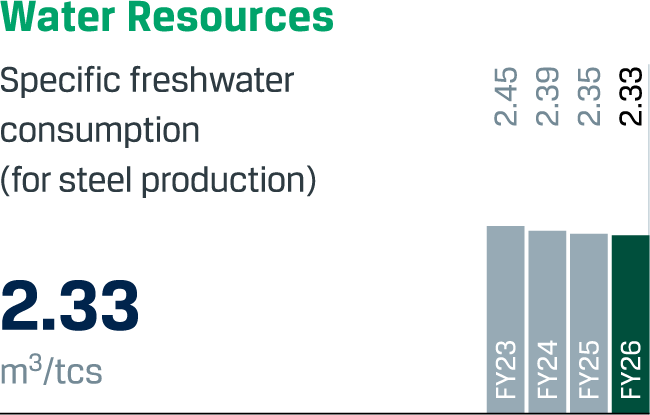
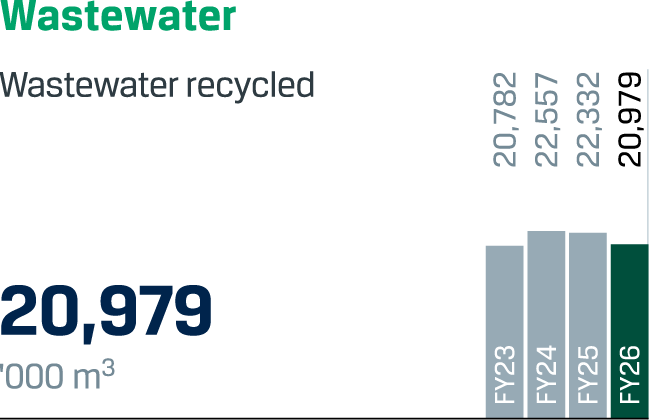
We recognise that the continuity of our operations hinges on a stable and reliable water supply, and that climate change impacts—particularly evolving rainfall patterns and heightened water stress—can constrain water availability and, by extension, pose material risks to our operations. To address these risks, we have implemented an integrated Water Stewardship Programme across the full scope of our operations. The programme aims to enhance water efficiency, expand rainwater harvesting and recycling, and maintain zero-liquid discharge (ZLD) through a series of technology-driven and community-oriented initiatives. By facilitating the responsible management of water resources that are likely to become increasingly scarce as climate change impacts intensify, this programme is enabling us to improve our operational resilience and effectively manage our natural capital dependencies.
At JSW Steel, we view the use of biofuels as one of the most powerful and viable levers at our disposal to accelerate short-term decarbonisation. Thus, in FY 2024-25, we launched an ambitious trial at Salem Works to evaluate the feasibility of partially substituting the pulverised coal injection (PCI) employed in the facility's blast furnaces with a bio-char blend. The rationale underpinning this initiative was two-fold: first, to lower the carbon footprint of the plant's ironmaking process by replacing a portion of emissions-intensive PCI coal with a renewable, carbon-neutral fuel; and second, to identify a potential cost-reduction mechanism.
The successful execution of this trial paved the way for rolling out this initiative across the facility's two blast furnaces in FY 2025-26. This year, Salem Works successfully blended 1% bio-char with the PCI used in its blast furnaces. This integration of bio-char abated 4,090 tCO2 across the facility’s blast furnace operations, demonstrating how alternative reductants can help lower process emissions by partially substituting fossil carbon-based inputs.
We remain committed to progressively augmenting the bio-char-to-coal blending ratio in our PCI over the medium to long term. In support of this goal, we aim to shore up our supply of bio-char in the coming year by diversifying our procurement and cultivating strategic partnerships with select suppliers.
Abated
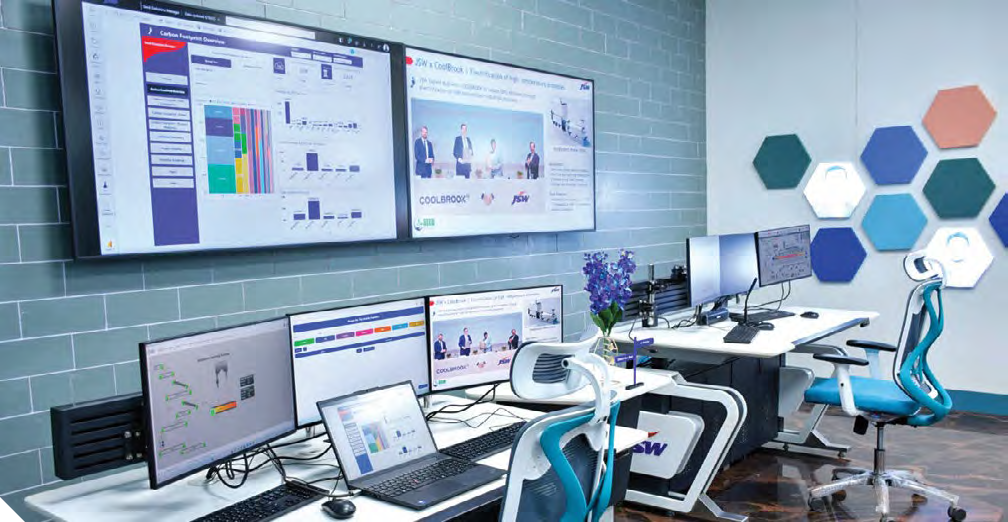
At JSW Steel, we maintain that the adoption of state-of-the-art digital solutions and the pursuit of ambitious sustainability goals are not parallel efforts but mutually reinforcing endeavours, each of which possesses the potential to amplify the impact and effectiveness of the other. Guided by this conviction, we strive to identify and implement technological solutions that hold the potential to accelerate both decarbonisation and the achievement of our broader sustainability goals.
Two complementary digital interventions implemented under the ambit of Project SEED at Vijayanagar in FY 2025-26 serve as salient examples of this commitment.
In tandem, these initiatives have abated ~200,000 tCO2 since their introduction, accentuating how digitalisation and technology are emerging as powerful catalysts in advancing our mission to create measurable environmental value. The versatility of these technologies renders them ripe for cross deployment, and we correspondingly aspire to roll them out across other sites in the coming years to unlock their full potential to drive enterprise-wide decarbonisation.
Abated since inception
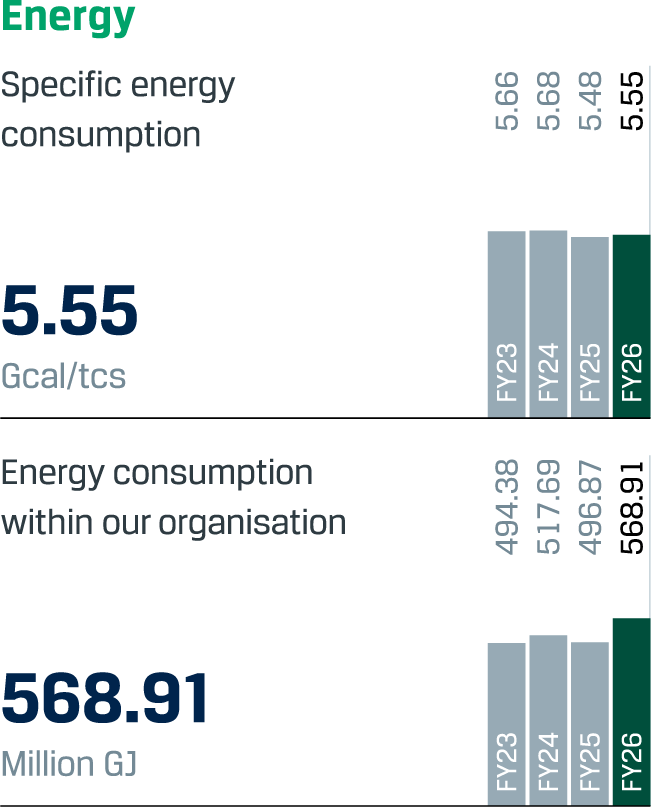
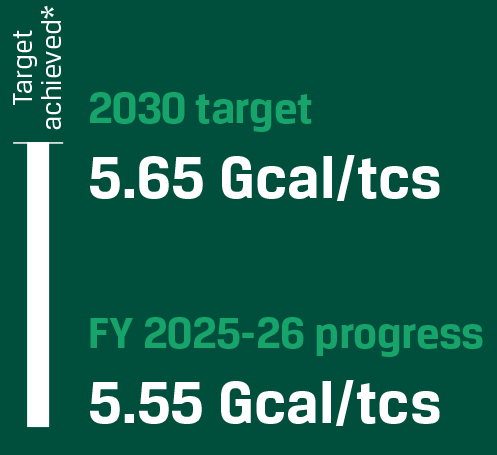
Reduce specific energy consumption
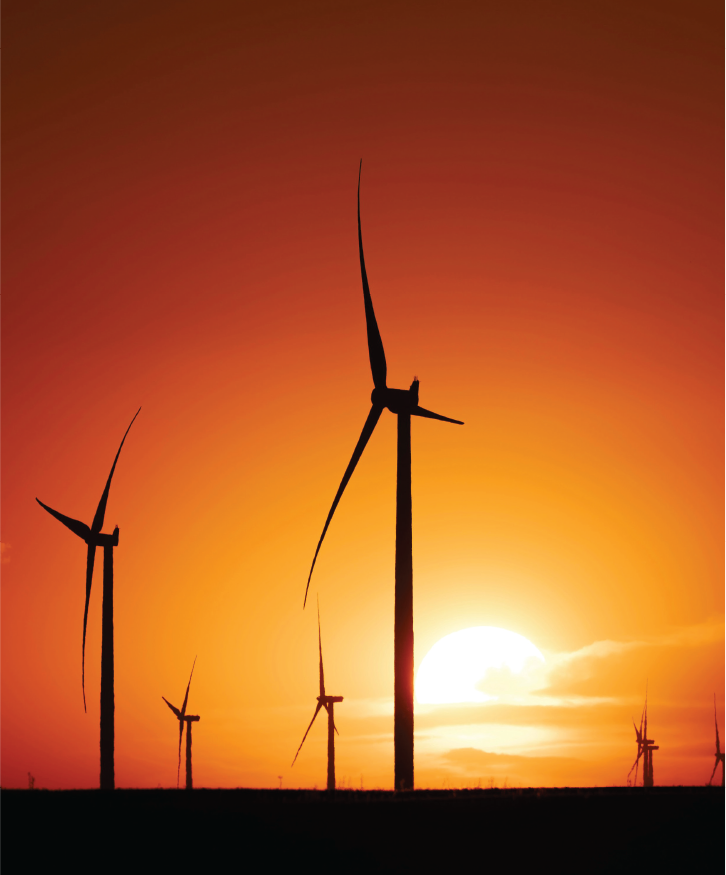
Energy is at once one of the most significant inputs in steelmaking and, when sourced and used responsibly, a potent lever for advancing decarbonisation. For an organisation of our scale and operational complexity, the manner in which we source, consume, and manage energy carries far-reaching implications; it shapes our carbon footprint, cost competitiveness, and long-term competitiveness in an era defined by increasingly stringent regulations, recurring energy shocks, and surging carbon costs.
We have accordingly adopted a three-pronged approach to energy management that seeks to improve the efficiency with which we consume energy across our facilities, expand the share of renewable and low-carbon energy in our overall mix through captive installations, fuel switching, and PPAs, and recover and repurpose energy that would otherwise be lost in our production processes.
We fully recognise that operationalising this strategy demands sustained investment, technological innovation, and precise execution. We therefore approach the energy transition not as a compliance obligation but as a strategic opportunity to future-proof our operations and contribute meaningfully to India's broader energy transition ambitions.
Over the past year, the confluence of soaring fossil fuel prices precipitated by widespread supply chain disruptions and the rapidly improving economics of solar and wind power, which have emerged as the most cost-competitive sources of new electricity generation globally, reinforced the business case for scaling up renewable energy deployment. At JSW Steel, we view these developments not simply as a conducive backdrop but as a clarion call for ramping up both action and ambition. Hence, we have embarked on an ambitious renewable energy programme anchored in the expansion of captive generation capacity, long-term power purchase agreements (PPAs), and the adoption of emerging technologies.
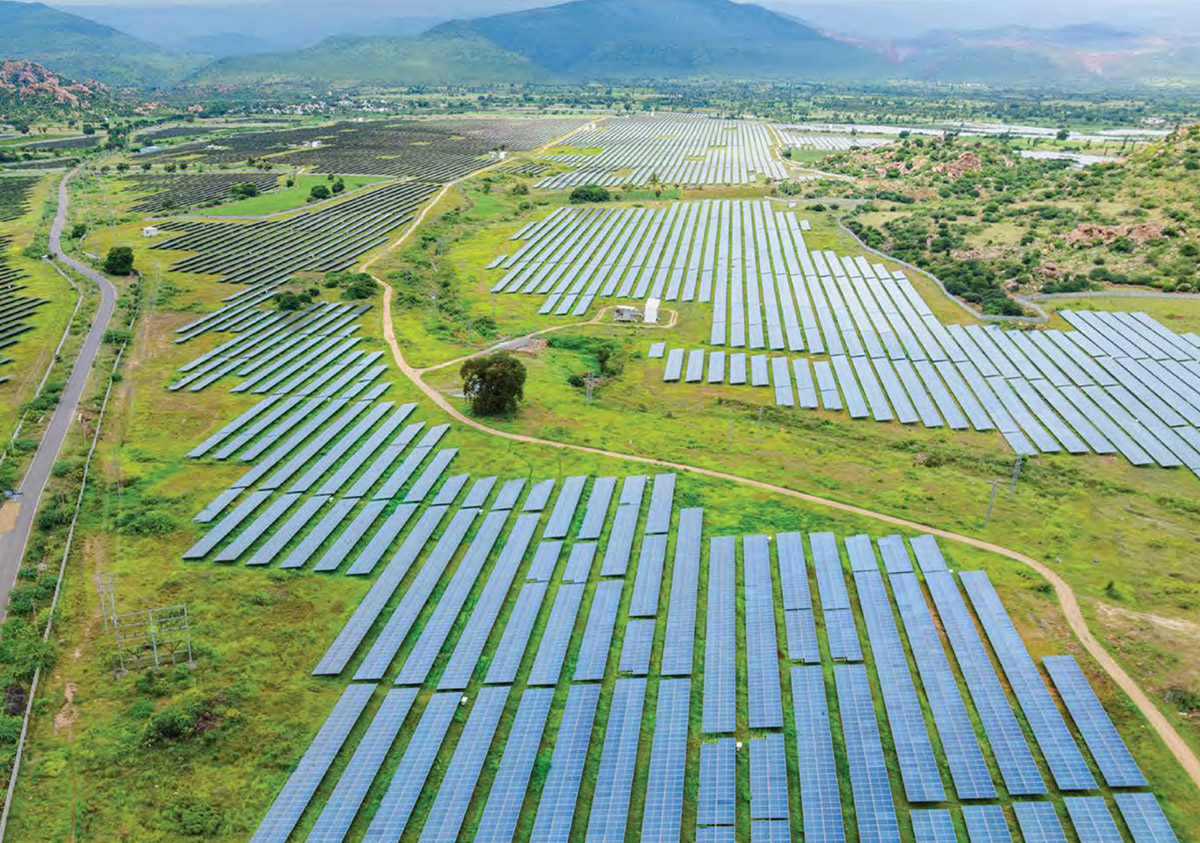
Our captive renewable energy strategy primarily focuses on deploying solar and wind power, both of which offer unique advantages given the consistently high wind speeds and hours of sunlight found across many of our operating locations. In FY 2025-26, we commissioned additional solar and wind energy projects, increasing our cumulative installed renewable energy capacity to approximately 1 GW. We also approved the installation of 320 MWh of battery storage capacity to enhance the dispatchability of this energy and counteract intermittency concerns. With an additional ~1.5 GW of solar and wind capacity currently under commissioning, we remain committed to systematically elevating the share of renewable energy in our overall power mix and thereby lowering our carbon footprint, bolstering energy security, and furthering our long-term decarbonisation objectives.
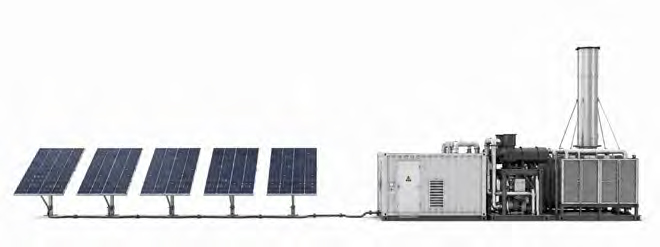
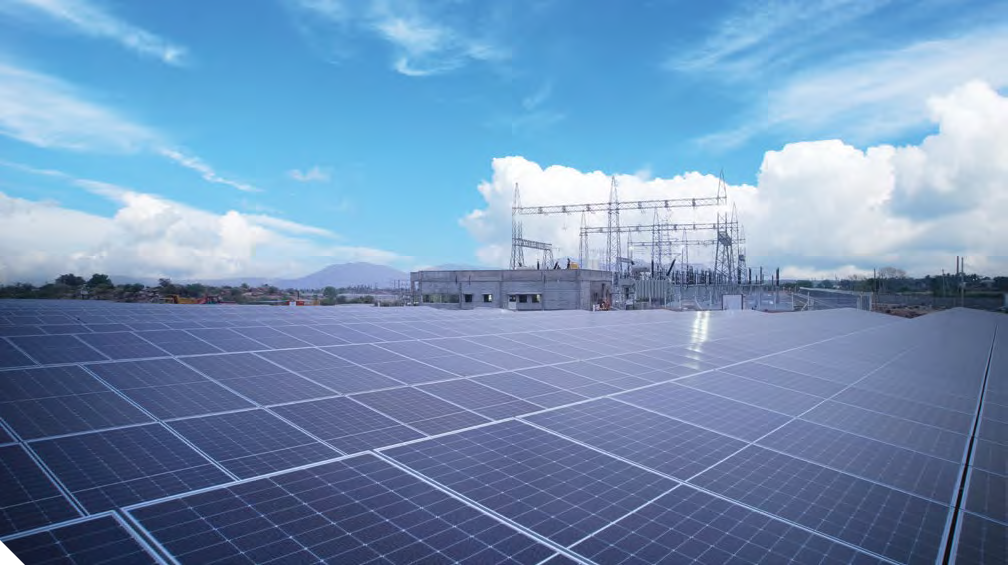
Beyond solar and wind power, this year, we took a decisive leap toward fulfilling our ambition of fostering the maturation of India's fledgling green hydrogen ecosystem and leading the commercial-scale deployment of the technology in the global steel sector by striking a seven-year off-take agreement with JSW Energy. Under this arrangement, JSW Energy will supply Vijayanagar Works with green hydrogen manufactured at its recently commissioned 3,800 TPA electrolyser, the largest in India, located adjacent to the facility for use in its DRI operations.
Total installed renewable energy capacity as of FY 2025-26
Renewable energy capacity under commissioning as of FY 2025-26
Battery storage capacity
approved as of
FY 2025-26
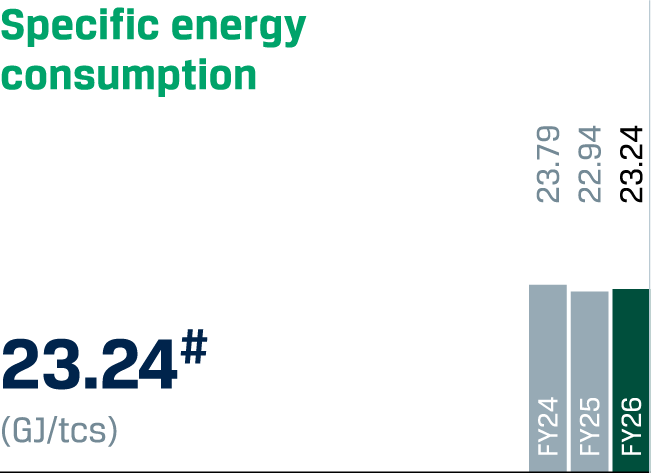
While the production and procurement of renewable energy will undoubtedly play a critical role in shrinking the carbon footprint of our operations over the long term, we remain equally committed to unlocking the potential of energy efficiency improvements to deliver tangible, near-term reductions in both our emissions and our cost base. In furtherance of this objective we have adopted an agile energy efficiency strategy grounded in consistent monitoring and data-driven decision-making. We also conduct regular energy audits across our facilities to determine energy consumption hotspots, identify inefficiencies, and benchmark performance against best-in-class industry standards. In parallel, to instil a commitment to energy consciousness across operational teams, we conduct regular energy efficiency training and awareness programmes. These initiatives help foster a culture of prudent energy use and empower employees to identify opportunities to reduce energy consumption across our operations.
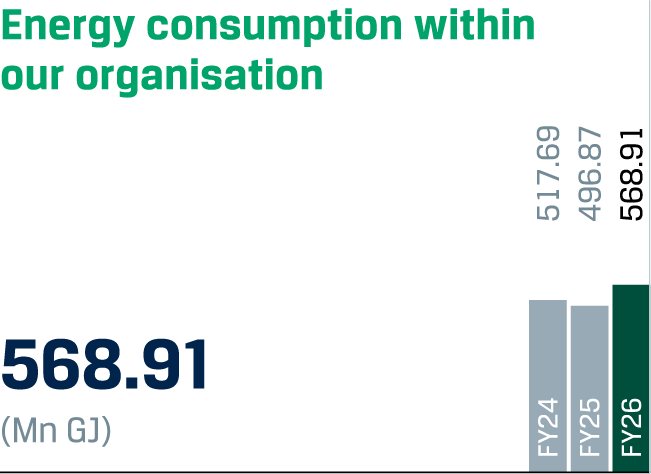
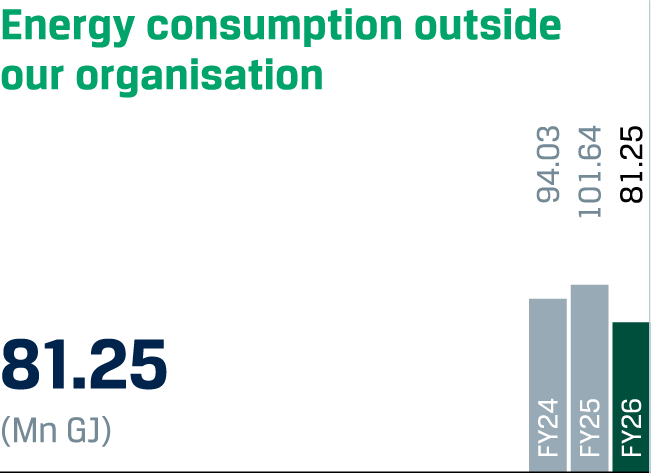
| ARCL | JSW Industrial Gases |
JSW Steel Coated Products |
JSW Mines* | JSW Green Steel Limited |
JSW Raigarh | BPSL | |
|---|---|---|---|---|---|---|---|
| Energy consumption within our organisation ('000 GJ) | |||||||
| 15,241.54 | 2,530.00 | 9,882.74 | 788.94 | 2,530.86 | 31,693.17 | 1,34,390.93 | |
| 7,849.28 | 2,430.38 | 7,252.86 | 303.90 | 9,961.20 | 32,027.86 | 1,33,421.54 | |
| 7,665.21 | 2,554.87 | 7,040.00 | 270.04 | 10,542.90 | 31,326.29 | 1,23,531.24 | |
| Specific energy consumption | |||||||
| GJ / t coke produced | GJ/million Nm³ | GJ/tonne | GJ/tonne | GJ/tonne | GJ/tonne | GJ/tonne | |
| 33.42 | 2,034.50 | 1.66 | 0.0485 | 16.91 | 39.06 | 34.87 | |
| 12.11 | 2,086.22 | 1.80 | 0.040 | 16.90 | 39.13 | 37.70 | |
| 11.21 | 2,102.81 | 1.88 | 0.042 | 13.50 | 43.91 | 38.85 | |
The energy systems that power conventional steelmaking are largely linear in nature. Based on a 'take-make-waste' model, these systems extract finite natural resources, convert them into energy through combustion, and generate waste gases and heat as inevitable by-products.
At JSW Steel, we have endeavoured to challenge this prevailing paradigm guiding the design of energy systems across industries worldwide by designing a circular model that recovers and repurposes the waste gas and heat streams emanating from our production processes into alternate sources of energy. The table below provides an overview of some of the major waste and gas streams we have identified and the pathways through which we are re-deploying them in our operations.
Of gross power generated using by-product gases, waste heat, TRT, and CDQ across Vijayanagar, Dolvi, and Salem
In recent years, biofuels, particularly bio-char and biomass, have garnered significant interest as potential substitutes for coal in both electricity generation and steelmaking processes by virtue of their similar metallurgical properties and compatibility with extant steelmaking processes, particularly the BF-BOF route. Nonetheless, this form of fuel switching remains at a nascent stage, and it has not been deployed at scale heretofore.
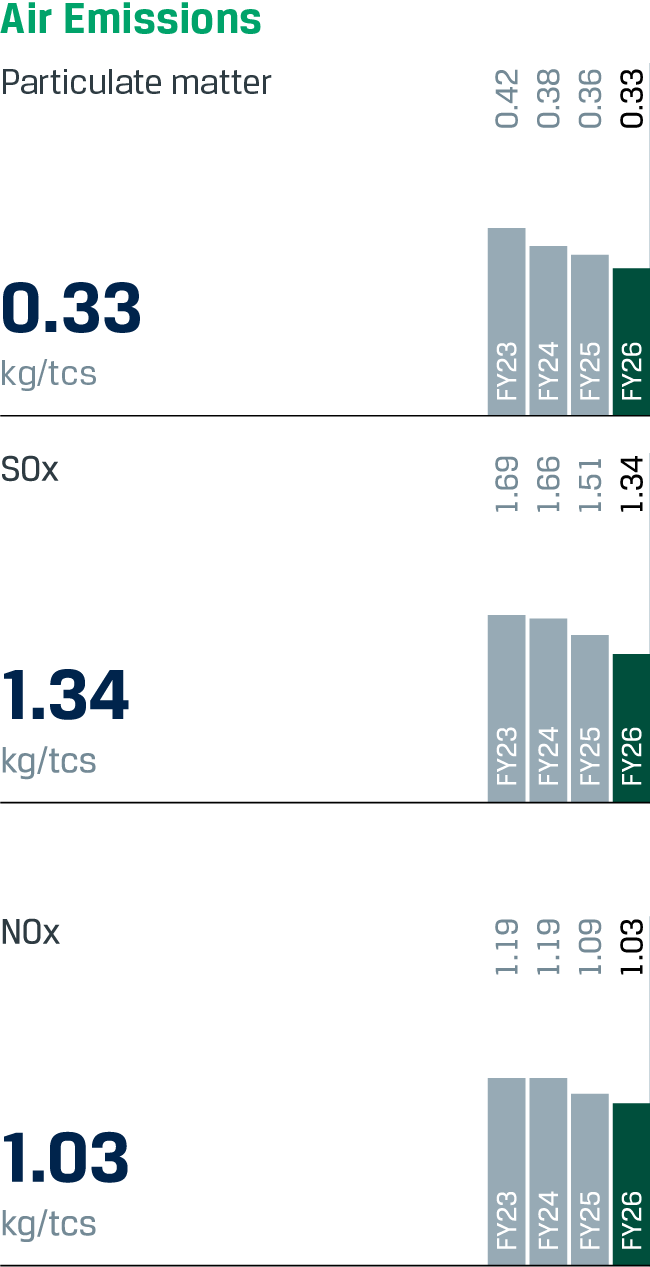
We maintain that operating in India, one of the world's foremost agricultural producers, affords us a distinct structural advantage in sourcing biofuel feedstock locally and at volumes commensurate with our operational needs. Therefore, this year, we intensified our efforts to increase the use of biomass at our captive power plants and bio-char in our blast furnaces. These interventions have generated numerous environmental and social benefits by delivering measurable reductions in CO2 and SOx emissions, curbing waste generation, and providing local communities engaged in subsistence and commercial agriculture with a means to monetise agricultural waste.
Under its Paris Agreement NDC, India has committed to installing 500 GW of nonfossil fuel-based energy capacity, of which wind energy will account for approximately 100 GW and hydropower a further 55–70 GW. Both rank among the most steelintensive forms of energy infrastructure. The Indian Ministry of Steel estimates that an average onshore wind turbine requires roughly 100–180 tonnes of steel per MW of installed capacity, while constructing civil, mechanical, and transmission structures underpinning large hydropower projects often warrants procuring hundreds of thousands of tonnes of steel.
The realisation of India’s renewable energy ambitions accordingly hinges on a stable, long-term supply of high-quality steel products capable of meeting demanding performance, durability, and sustainability requirements. As India's pre-eminent steel producer, we believe we have both an opportunity and a responsibility to play a central role in helping meet this demand. Therefore, over the past few years, we have strengthened our capabilities across specialised steel grades, value-added downstream products, and low-emissions manufacturing processes tailored to the evolving needs of the renewable energy sector.
These efforts are allowing us to contribute to the energy transition at a system-wide scale, not only by decarbonising our own operations but also by providing the reliable, low-carbon materials and solutions needed to catalyse growth in sectors at the heart of the emerging low-carbon economy.
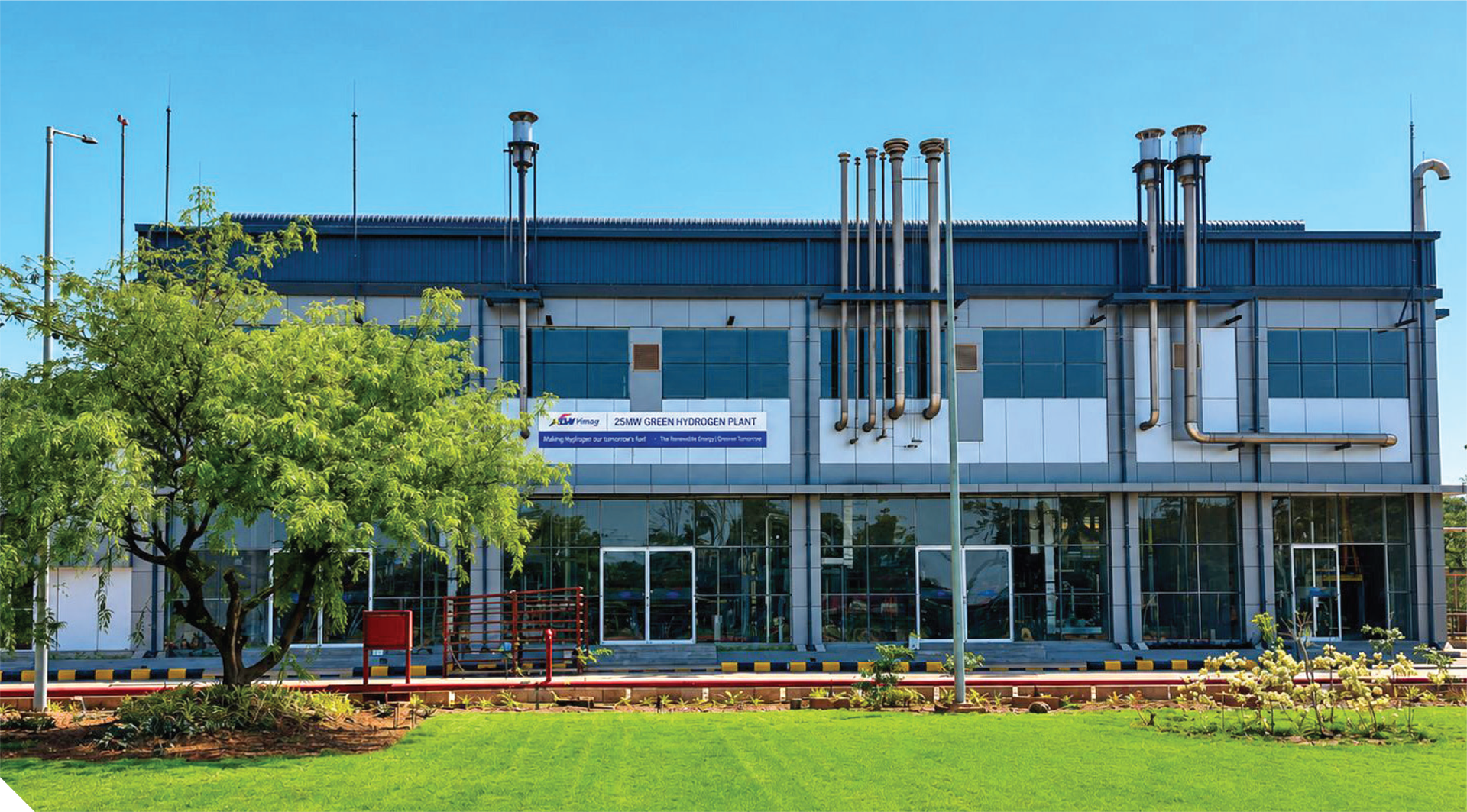
When considering the Indian steel industry, the extensive use of coal as the primary fuel powering major processes, especially iron reduction, remains one of the most formidable obstacles stifling deep decarbonisation. Thus, we remain committed to intensifying efforts to replace coal in key processes with alternative, low-carbon fuels. While industry experts envision hydrogen energy as a vital enabler in this transition, the technology's commercial deployment remains in its elementary stage, with limited real-world applications at scale.
At JSW Steel, we believe our industry-leading position and operational scale provide a unique opportunity to contribute meaningfully to the innovation of new—and the maturation of existing—hydrogen-based steelmaking and ironmaking processes. Accordingly, in FY 2025-26, we launched the first phase of an ambitious initiative to integrate green hydrogen into the Direct Reduced Iron (DRI) process at our Vijayanagar ISP, which previously relied exclusively on COREX gas. By injecting nearly 5,000 Nm³/hr of green hydrogen derived from a 25 MW captive electrolyser powered by hybrid renewable energy into the DRI shaft furnace, the initiative achieved emissions savings of 30 kg CO2 per ton of DRI by displacing a sizable portion of the carbon-rich COREX gas previously utilised in the process.
Looking ahead, we aim to ratchet up the rate of hydrogen injection systematically over the coming years through two additional phases. While Phase 2 seeks to raise the injection rate to 20,000 Nm³/hr by installing an additional 75 MW electrolyser, Phase 3 will ultimately scale it to 1,25,000 Nm³/hr. In doing so, the project will strengthen our readiness for emerging green steel markets and further our mission to position ourselves at the vanguard of low-carbon, sustainable steelmaking.
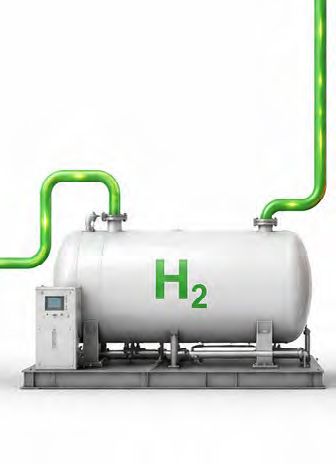
Of green hydrogen injected in the DRI process
Captive electrolyser installed to produce green hydrogen
Emission reduction achieved
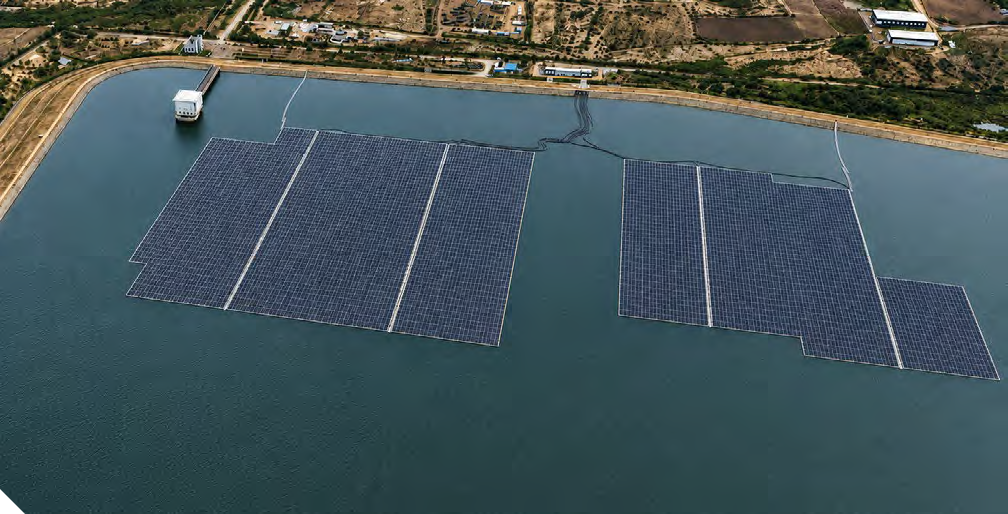
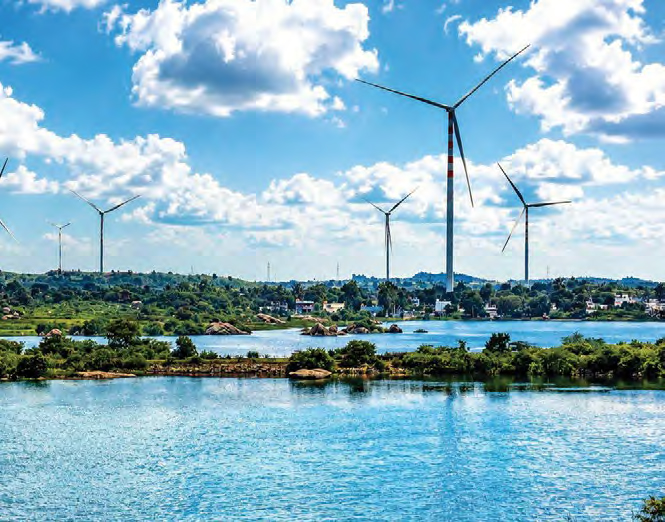
Reservoirs strategically constructed across our ISPs play a vital role in supporting steelmaking operations by ensuring a stable and reliable supply of freshwater for various operational processes, including cooling and dust suppression. Yet, at JSW Steel, we have always believed that, beyond fulfilling their immediate operational function of storing freshwater, reservoirs hold the potential to serve as a key frontier for renewable energy generation by virtue of their vast, though often unused, surface area.
Renewable energy projects, mainly those based on solar or wind power, are highly land-intensive, and unlocking their full operational efficiency requires extensive parcels of flat, open, and sunny terrain devoid of both natural and artificial landscape features that can intercept wind and sunlight. Given that land is a rivalrous resource with a strictly fixed supply, each unit of area utilised or earmarked for renewable energy projects results in a proportionate decline in the land available for alternative uses such as agriculture and conservation. This land-use conflict will likely intensify as wind and solar power projects proliferate globally, potentially stymieing renewable energy expansion.
Against this backdrop, industrial reservoirs—often spanning several kilometres in surface area—offer an alternative and largely untapped avenue for hosting solar and wind projects. To capitalise on this opportunity, we established a 20 MW floating solar project at our Vijayanagar ISP in FY 2025-26. The project incorporated all relevant ecological safeguards to ensure that the introduction of the solar arrays did not erode the resilience of the reservoir ecosystem.
By generating renewable electricity for our steelmaking operations, this project helped avoid 17,092 tCO2 while delivering a range of additional environmental co-benefits, including reducing water loss through evaporation by covering a portion of the reservoir's surface and consequently conserving freshwater resources. As a result, it transformed the reservoir into a multi-functional asset that simultaneously supports water stewardship, clean energy generation, and recreational activities such as water sports.
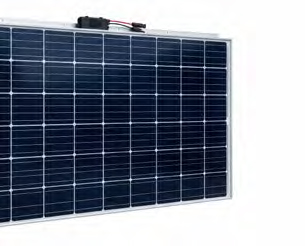
Floating solar capacity installed
Avoided
The electrification of steelmaking processes traditionally powered by fossil fuels has gained momentum in recent years, prompting an increase in the sector’s electricity consumption. In line with this trend, we have sought to electrify several processes across our operations, viewing it as a cross-cutting solution to enhance operational and environmental efficiency concurrently.
Nevertheless, we recognise that the ability of electrification to support our sustainability goals hinges on the source of electricity used. While reliance on fossil fuel-based power can offset electrification’s ostensible environmental benefits by increasing GHG emissions and upstream impacts associated with fuel extraction, sourcing a significant share of electricity from renewable energy can buttress its potential to support decarbonisation and reduce the overall environmental footprint of our operations. Accordingly, we have set an ambitious target of installing 10 GW of renewable energy capacity by 2030.
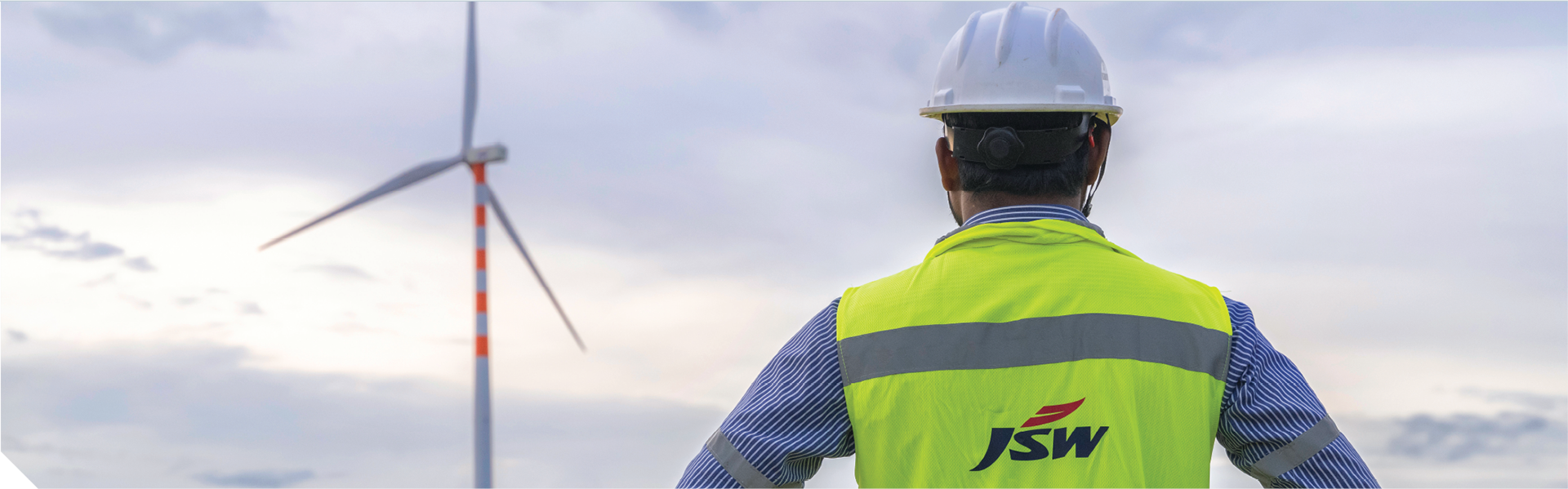
In FY 2025-26, we took a decisive step towards this goal by inaugurating a 99 MW wind power facility comprising 30 turbines in Tujlapur, Maharashtra, to provide Dolvi Works with a reliable supply of clean, low-carbon electricity. During the year, the facility generated 2,06,267 MWh of renewable energy, enabling Dolvi Works to reduce its reliance on fossil fuel-based electricity and avoid an estimated 1,87,909 tonnes of CO2 emissions. In doing so, this initiative has established a blueprint for integrating renewable energy across our steelmaking operations.
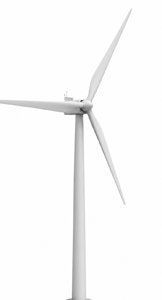
Of wind energy capacity installed
Wind turbines installed
Of renewable energy generated for steelmaking
Avoided
In conventional steel operations, Pressure Reducing and De-superheating Stations (PRDS) manage high-pressure steam through throttling—a process that permanently dissipates the energy embedded in the pressure differential as waste heat. This year, BPSL re-envisioned this inherent inefficiency as an opportunity to harness this otherwise lost energy for productive use.
The facility optimised its 130 MW captive power plant Pressure Reducing and Desuperheating System (PRDS) by replacing conventional throttling valves with microturbine technology. This upgrade enabled the recovery of energy from a pressure differential of ~59 bar, converting previously dissipated pressure energy into useful power generation, thereby improving overall energy efficiency.
The system now generates 16.57 million kWh of electricity annually, delivering a specific energy reduction of 0.004 Gcal per tonne of crude steel and an annual financial benefit of ₹9.61 crore. Each unit generated through this mechanism displaces power that would otherwise come from the grid or captive fossil fuel-based systems, thereby reducing exposure to energy price volatility and avoiding Scope 2 emissions.
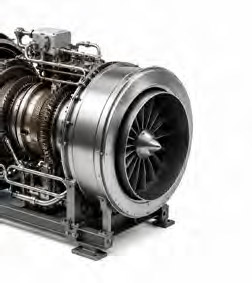
Of electricity generated annually using waste heat
In energy savings
Realised in cost savings
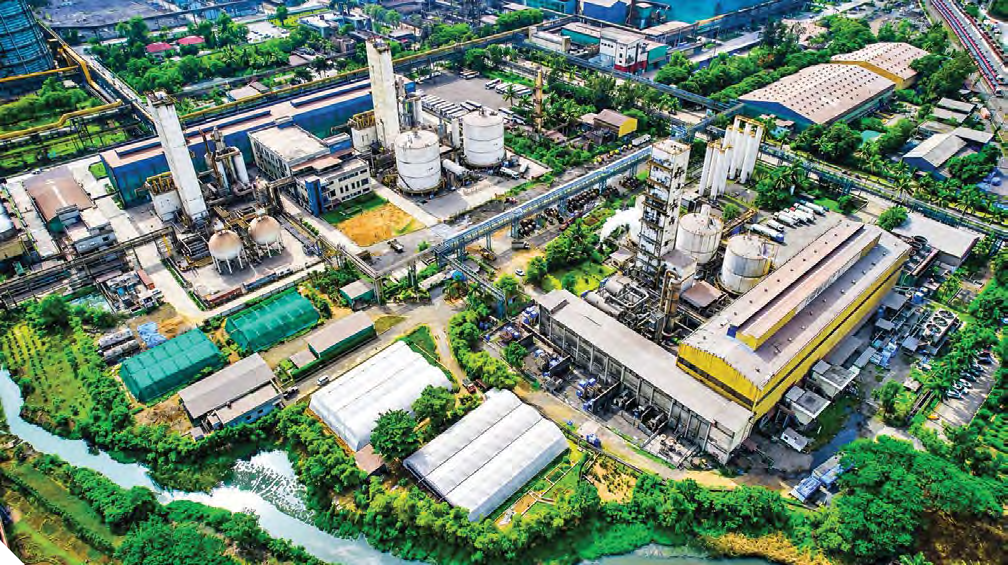
Key determinants of hot blast quality (HBQ), particularly temperature and moisture content, significantly influence blast furnace performance (BFP), and even the slightest variations in HBQ can adversely impact BFP. This phenomenon is particularly acute in humid regions such as Maharashtra’s Raigad district, home to JSW Steel's Dolvi Works, where atmospheric humidity varies markedly throughout the year, ranging from about 15 g/m³ in winter to 25–30 g/m³ during the summer months. Elevated ambient humidity increases the moisture content of the hot blast and, in turn, raises key BFP indicators such as coke rate, energy consumption, and emissions, while simultaneously reducing overall output, thereby impinging on both environmental and financial performance.
In FY 2025-26, to address these ramifications of moisture-induced fluctuations in hot blast quality, Dolvi Works commissioned a vapour-type lithium bromide (LiBr) absorption refrigeration-based dehumidification system in one of its blast furnaces. The system maintains a consistently dry hot blast, irrespective of seasonal weather variations, by measurably lowering the moisture content of the air blown into the furnace.
Since its installation, the system has improved the environmental performance of the blast furnace across several key parameters. Most notably, it has delivered energy savings of 68,846 Gcal and reduced emissions by 30,489 tCO2 through a 6–8 kg per tonne of hot metal reduction in blast furnace fuel rate, complemented by further optimisation of pulverised coal injection (PCI). Collectively, these improvements have translated into estimated annual cost savings of ₹55 crore, demonstrating how environmental performance and cost efficiency can go hand in hand.

In energy savings
In emissions savings
In estimated annual cost savings
Upstream and downstream freight and logistics, including mine-to-plant raw material transportation, intrafacility material handling, and finished product distribution to customers and vendors, account for a significant share of JSW Steel's energy footprint and Scope 3 emissions. Recognising that a heavy reliance on conventional road and rail transport constrains both decarbonisation potential and operational efficiency, we have embarked on a phased, multi-pronged logistics transformation. This strategy advances modal shifts, electrification, and process innovation to curb GHG and particulate emissions, optimise energy use, and lower transport costs on a per-tonne basis.
At Dolvi Works, we have engineered one of India's first steelworksintegrated inland waterway systems to enable the barge-based movement of raw materials. Over the last five years, this system has transported nearly 57 million tonnes of raw materials, delivering measurable reductions in logistics-related GHG emissions, energy consumption, and freight costs by reducing dependence on congested road networks and minimising weather- and traffic-related disruptions.
Our emphasis on modal transformation extends beyond waterways to land-based logistics. Our soon-to-be operational 30 MTPA slurry pipeline in Odisha, one of India's most resource-rich states, will provide an end-to-end, energy-efficient solution for transporting iron ore from mine to plant. By displacing a substantial share of road trucking and conventional rail haulage, the pipeline will lower upstream GHG and particulate emissions, enhance transport reliability, and decrease the carbon intensity of JSW Steel's raw material supply chain.
Likewise, at Vijayanagar, a 24-kilometre pipe conveyor directly links our Integrated Steel Plant (ISP) with captive iron ore mines, eliminating the need for external road transport of ore. This dedicated conveyor system has markedly lowered GHG emissions, energy consumption, and fugitive dust generation while streamlining the reliability and efficiency of raw material movement.
We remain committed to progressively electrifying intra-facility transport through the deployment of electric vehicles, electric locomotives, and electric buses across our manufacturing sites. This transition decouples material handling and personnel mobility from fossil fuel combustion, aligning plant-level logistics with our broader energy transition roadmap while reinforcing long-term operational efficiency.
As of FY 2025-26, the deployment of over 130 electric buses across our operations at Vijayanagar and Dolvi has delivered annual emissions reductions of ~6,578 MT CO2.
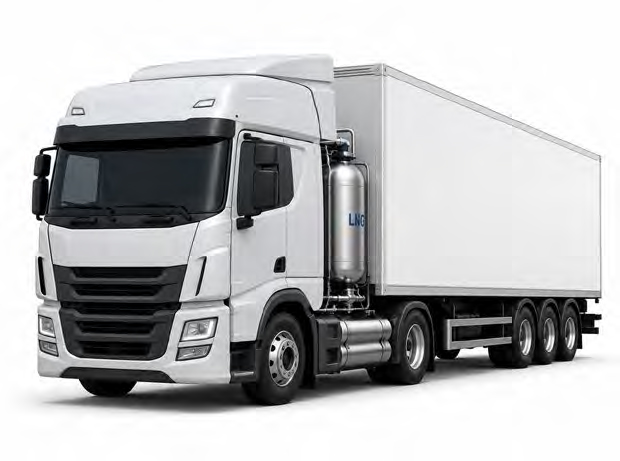
For hard-to-abate distribution and external logistics, where fixed modal alternatives are not yet feasible, we have commenced the deployment of LNG-powered 'Greenline' trucks. Compared with conventional diesel trucking, LNG offers an estimated 15–25% reduction in well-to-wheel emissions, providing a pragmatic interim decarbonisation pathway for end-to-end distribution networks until hydrogen-powered freight solutions become commercially viable at scale. As of FY 2025-26, we have deployed over 250 such trucks across our operations, resulting in savings of approximately 550 tCO2.
Collectively, these initiatives signify a shift from incremental logistics optimisation to systemic, multi-modal decarbonisation. They reinforce our conviction that steel decarbonisation is not driven by a single intervention but by disciplined, sequential investment across transport modes, enabling infrastructure, and low-carbon technologies.
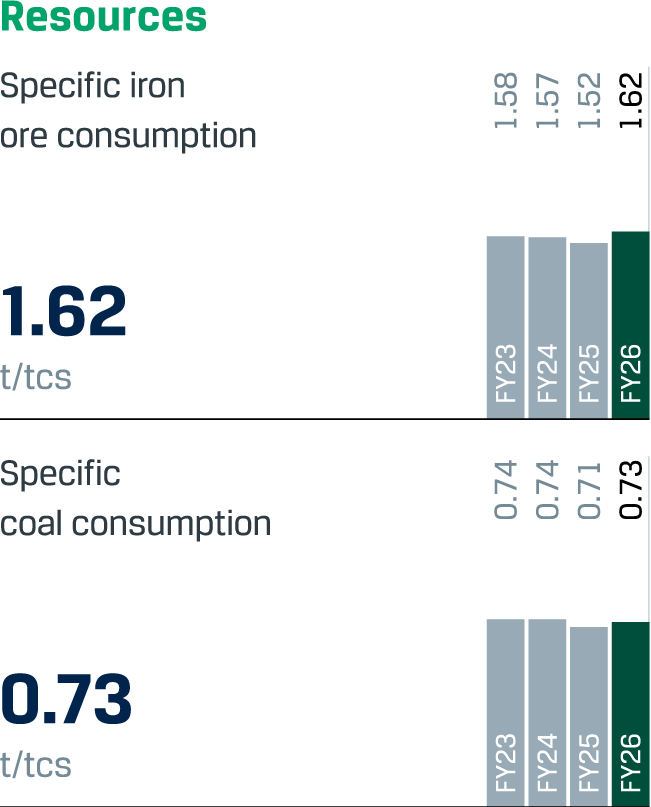
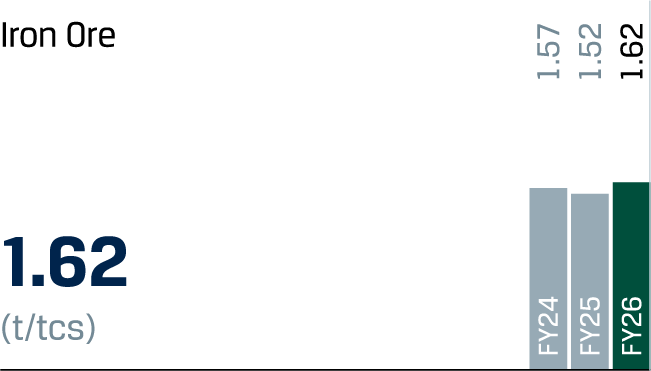
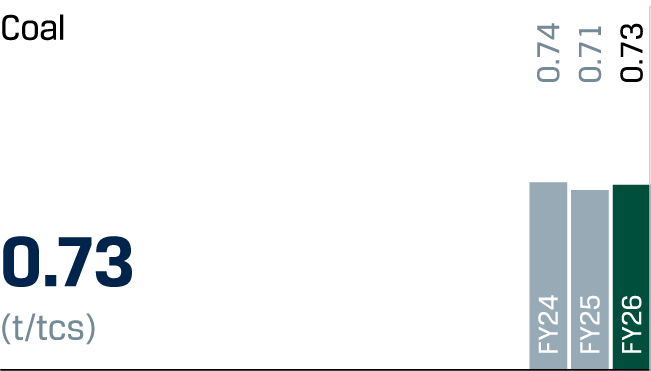
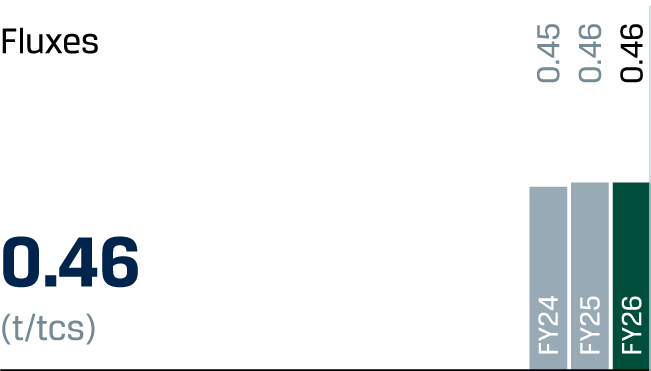
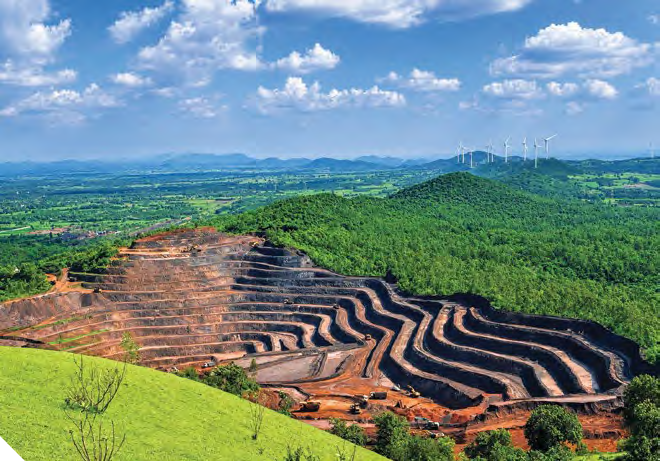
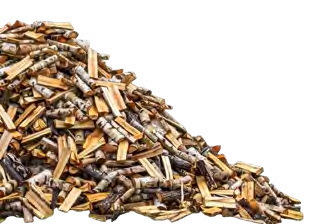
Our operations, like those of any integrated steel producer, are inherently resource-intensive, with coking coal, iron ore, and fluxes serving as critical inputs. We therefore recognise that the continuity of our operations is contingent on a reliable and stable supply of these materials, and that their finite nature renders responsible natural resource stewardship not only an environmental imperative but also a strategic business priority.
Guided by this understanding, we have implemented an enterprise-wide resource management strategy built around three mutually reinforcing pillars: preservation, efficiency, and circularity. By ingraining these principles into our operational philosophy and day-to-day decision-making, we are steadily transitioning from the linear 'extract–use–dispose' model that characterises much of the global manufacturing sector toward more circular, closed-loop systems. These systems emphasise the reuse, recycling, and repurposing of by-products to pare back dependence on virgin resource extraction and enhance resource efficiency across our operations.
A simple yet powerful conviction lies at the heart of our resource management strategy: the by-products stemming from one process should serve as inputs for another. We have implemented a range of waste-to-value initiatives over the years to operationalise this idea.
These initiatives aim to unlock the crosssectoral synergies that accrue to us by virtue of operating within a diversified conglomerate encompassing multiple manufacturing businesses, each of which runs unique processes, uses distinct input materials, manufactures diverse products, and generates heterogeneous by-product streams. To achieve this end, they identify and leverage opportunities to upcycle our operational by-products across the full breadth of the JSW Group’s value chains, spanning the energy, cement, paints, infrastructure, and automotive sectors, and, where feasible, beyond them. Three waste-to-value initiatives introduced across our value chain stand out for their scale, innovation, impact, and potential to advance our sustainability ambitions.
Of slag converted into construction sand
Of plastic waste injected across steelmaking operations at Vijayanagar
We firmly believe that ferrous steel’s theoretically infinite recyclability affords us a distinct competitive advantage in advancing resource circularity. To capitalise on this inherent strength, we are systematically scaling up the use of scrap steel across our operations, recognising it as both a powerful decarbonisation lever and a critical enabler of sustainable steelmaking.
During FY 2025-26, we utilised 3,37,000 MT of external scrap steel across our operations, representing a 70% y-o-y increase and underscoring the growing integration of recycled materials into our steelmaking processes. To further anchor this effort in a stable and reliable supply of high-quality scrap, we are establishing dedicated 0.5 million tonnes per annum (MTPA) external scrap steel recycling and processing facilities in both Maharashtra and Tamil Nadu.
Looking ahead, as India’s scrap collection ecosystem matures and our processing capabilities expand, we remain committed to ratcheting up scrap consumption across our plants and positioning scrap-based steelmaking as a foundational pillar of our long-term decarbonisation strategy and broader transition towards a circular, low-carbon future.
Of external scrap steel used across operations in FY 2025-26
Year-on-year rise in external scrap use from FY 2024-25 to FY 2025-26
While global steel demand will surge sharply in the coming years, primarily prompted by large-scale infrastructure development across the developing world and the accelerated deployment of steelintensive renewable energy, the stockpile of essential resources needed for steel production, be it iron ore or coking coal, will grow increasingly constrained. Hence, recognising that this growing dissonance between resource demand and supply warrants a strategic focus on resource efficiency, we have amplified our efforts to reduce consumption through process improvements, enhanced handling systems, and the digital monitoring of usage patterns.

This year, we deployed India’s first electric locomotive for the captive transport of materials and finished products at JSW Vijayanagar Works. By replacing conventional diesel-powered alternatives, the locomotive reduces dust generation and lowers greenhouse gas emissions, contributing to cleaner air within the plant and surrounding areas. This shift not only supports our commitment to decarbonisation but also improves efficiency in material movement across the site. Preliminary estimates indicate diesel savings of 300 liters/day, underscoring the intervention’s role as a key enabler of both environmental and operational performance improvements.
In diesel savings
In FY 2025-26, we launched an innovative zinc-dust-to-cement programme at our Vijayanagar ISP. This initiative redirects the zinc-laden dust captured by the facility's cyclone separator systems, which mitigate particulate matter emissions emanating from blast furnaces and refine flue gases to eliminate impurities that would otherwise prevent their reuse, for deployment as an economically valuable input in the Group's cement-manufacturing operations located in Nandyal. The high zinc content of the collected dust renders it a well-suited input for cement production, where zinc functions as both a strengthening agent and a retarder in Portland cement hydration.
By repurposing nearly 300 tonnes of zinc dust in FY 2025–26, this initiative emerged as a mutually beneficial intervention delivering measurable environmental benefits across both cement- and steel-making value chains. It reduced the environmental footprint of steelmaking operations by curbing point-source particulate matter emissions, diverting waste from landfills to productive use, and abating Scope 3 emissions associated with waste disposal. It also strengthened resource circularity by demonstrating the viability of a scalable waste-to-value model with potential for horizontal deployment across other facilities. In parallel, it reduced the upstream environmental impacts of cement production by decreasing reliance on virgin natural resources that would otherwise require extraction, processing, and long-distance transportation.
Ultimately, the success of this initiative is emblematic of how waste-to-value interventions, which tap into inter-sectoral synergies, are allowing us to amplify our sustainability impact by concurrently generating social and environmental benefits across multiple value chains and, in effect, broadening the range of stakeholders who benefit from such measures.

Tonnes of high-zinc dust repurposed for cement manufacturing
Our captive power plant at Salem Works supplies electricity for critical in-house industrial operations, including heavy machinery, rolling and finishing processes, and essential auxiliary systems such as de-dusting and gas recovery.
Prior to the integration of biomass, Salem Works' Atmospheric Fluidised Bed Combustion (AFBC) boiler operated exclusively on thermal coal. Recognising the urgent need to transition away from coal-based power generation in line with our climate ambitions, we initiated a pilot in FY 2022-23 to assess the feasibility and practicality of partially substituting coal with biomass in the AFBC boiler. The success of this trial laid a strong foundation for augmenting biomass co-firing in the years that followed. Our biomass-to-coal blending ratio has steadily increased year on year, rising from 5% in FY 2022-23 to 5.10% in FY 2023-24 and further to 7.58% in FY 2024-25. This upward trajectory continued in FY 2025-26, with the blending ratio reaching 11.38%.
This year, the initiative resulted in an annual reduction of 16,711 tonnes of CO2 emissions and coal savings of 6,347 tonnes. These outcomes also generated broader upstream and downstream environmental benefits, including reducing the ecological burden associated with coal mining and transportation.
Biomass-to-coal blending ration achieved in CPP
Of CO2 abated
Reduce specific water consumption from ISPs

Today, water remains one of the most critical resources underpinning industrial production cycles across major sectors of the global economy. While steelmaking relies on substantial volumes of water for applications such as cooling, descaling, cleaning, and dust suppression, it consumes a relatively trivial amount, as contemporary steel plants now widely operate closed-loop and circular water systems that return the lion's share of extracted water to its initial source after treating it to purge impurities.
India, nonetheless, faces a dual predicament when it comes to freshwater. On one hand, a combination of pressures—breakneck population growth, an industrial boom, and whirlwind agricultural expansion, among others—have rendered India one of the world's most water-stressed nations globally. Simultaneously, years of unplanned urbanisation have led to a marked decline in water quality near major population centres, undermining both public health and community well-being.
Against this backdrop, freshwater preservation has emerged as a fundamentally crosscutting issue for steelmakers that is not only an operational priority but also a pathway for fostering healthy and thriving communities. In response, we have adopted a comprehensive water stewardship strategy that combines scientific knowledge, data-driven methodologies, and community engagement to reduce freshwater consumption within our operations, while concomitantly ensuring that our water use does not compromise the availability of this vital resource for surrounding communities and ecosystems.
Each of our facilities possesses a unique water profile; in other words, water sources, consumption patterns, and treatment requirements diverge significantly across our operations. In effect, rather than adopting a one-size-fits-all approach, we tailor our water-related interventions to the specific needs and operational characteristics of each site. To this end, we first acquire a nuanced understanding of site-specific water dependencies, inefficiencies, and associated risks and opportunities by applying a three-layered assessment strategy:
Fitted with the intelligence garnered through these assessments, we introduced a targeted portfolio of interventions aimed at reducing freshwater withdrawal, maximising water recovery, and strengthening circular water management across our operations this year. These include:
Overall, thanks to this continuous cycle of assessment and intervention, we have experienced no water-related incidents that have materially affected our costs or revenues over the past four fiscal years.
Water forms the lifeblood of communities, sustaining drinking needs, agricultural livelihoods, and sanitation. Since water constitutes a shared, common pool resource, the manner in which one actor uses it can directly shape the ability of others to access it.
We recognise that sharing watersheds with surrounding communities carries with it the profound responsibility to manage our water use in ways that preserve and, wherever possible, actively enhance their capacity to meet their own needs. Hence, our water stewardship strategy adopts a systems perspective that extends well beyond the boundaries of our facilities.
We carefully consider how our withdrawal of water from shared sources may affect local communities and ecosystems, and we translate this awareness into concrete action by constructing and restoring water harvesting structures, percolation ponds, community wells, and pipeline networks across surrounding villages. These initiatives remain anchored in a collaborative, bottom-up approach that aligns our conservation efforts with the lived water realities of local communities.
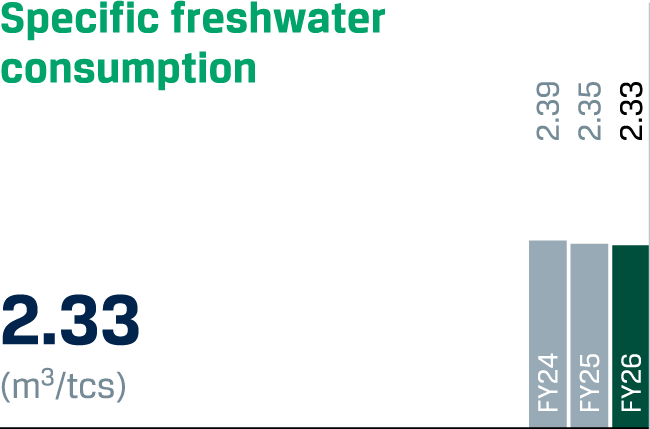
| ARCL | JSW Industrial Gases |
JSW Steel Coated Products |
JSW Mines* | JSW Green Steel Limited |
JSW Raigarh | BPSL | |
|---|---|---|---|---|---|---|---|
| Total water consumed (’000 m3) | |||||||
| 1,511.14 | 987.63 | 2,369.46 | 680.58 | 1,302.53 | 1,949.57 | 8,252.31 | |
| 1,877.69 | 554.01 | 1,508.92 | 240.82 | 2,546.74 | 2,141.68 | 9,071.57 | |
| 2,640.00 | 584.19 | 1,559.63 | 268.21 | 2,847.07 | 2,173.35 | 8,603.12 | |
| Specific water consumption | |||||||
| m3/tonne coke produced | m3/million Nm3 | m3/tonne | m3/tonne | m3/tonne | m3/tonne | m3/tonne | |
| 3.31 | 794.20 | 0.40 | 0.042 | 8.704 | 2.40 | 2.14 | |
| 2.90 | 475.56 | 0.37 | 0.031 | 4.32 | 2.62 | 2.56 | |
| 3.86 | 480.83 | 0.41 | 0.041 | 3.65 | 3.05 | 2.71 | |
Coke Oven Plant (COP) and blast furnaces (BFs) are among the most waterintensive units in integrated steelmaking. They rely on a continuous supply of water to support critical functions such as cooling, quenching, gas treatment, and by-product recovery. Any disruption in the availability of makeup water can hinder operational stability and efficiency.
Traditionally, these facilities depend on freshwater sourced from rivers, reservoirs, or groundwater. However, growing industrial demand, changing rainfall patterns, and increasing competition for water from agricultural and municipal users have intensified pressure on these resources. This dependence also exposes operations to supply uncertainties and evolving regulatory expectations around water use.
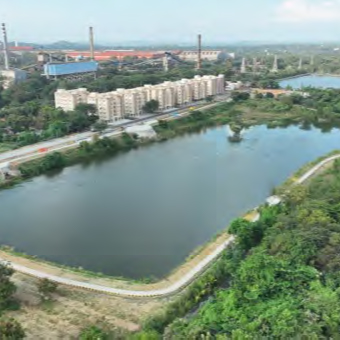
To address this challenge, Salem Works implemented a dedicated rainwater harvesting system centred around a purpose-built reservoir with a storage capacity of 1,49,000 m³. The harvested rainwater is treated and reused as cooling tower makeup water in the COP and Blast Furnace-2 (BF2), curtailing reliance on external freshwater sources.
In FY 2025–26, the initiative achieved annualised freshwater savings of 86,729 m³ in the Coke Oven Plant and 6,673 m³ in BF2. In addition, collected rainwater was utilised for process applications in the Air Separation Plant (ASP) and Captive Power Plant (CPP), generating a further 597 m³ of annualised freshwater savings. Overall, the project delivered 93,999 m³ of annualised freshwater savings across Salem Works' operations.
By turning rainfall into a sustainable operational resource, this initiative has enabled Salem Works to improve water efficiency, reduce stress on local water resources, and bolster operational resilience.
Of rainwater storage capacity created
Of annualised freshwater saving
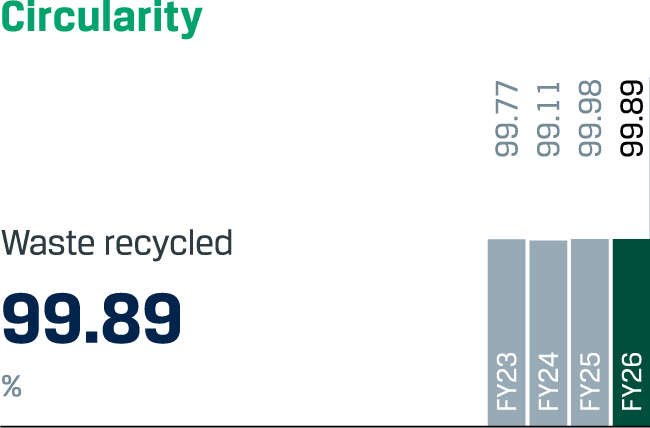
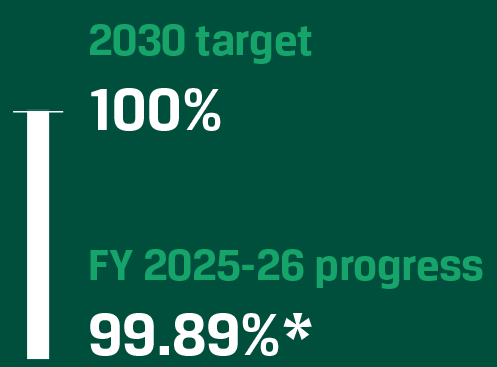
Recycling of all waste generated by our operations

Solid waste generation is an inherent consequence of industrial production, and steelmaking is no exception. Across its lifecycle, the steelmaking process yields multiple by-products, including slag, dust, ash, sludge, and tailings, each of which presents unique challenges in terms of handling, treatment, and disposal.
At JSW Steel, however, we view this challenge not as a constraint but as an opportunity to identify and develop new pathways for resource recovery, value creation, and the advancement of circular and sustainable steelmaking practices.
As steel production grows to meet soaring global demand, the volume of the by-products it engenders will concomitantly rise over the coming years. Furthermore, this anticipated uptick will likely unfold alongside tightening regulatory requirements promoting responsible waste management and shrinking landfill capacity. Taken together, these pressures will compel steelmakers to move beyond compliance-driven waste disposal and adopt ambitious measures that minimise waste production, enhance material recovery, and promote reuse.
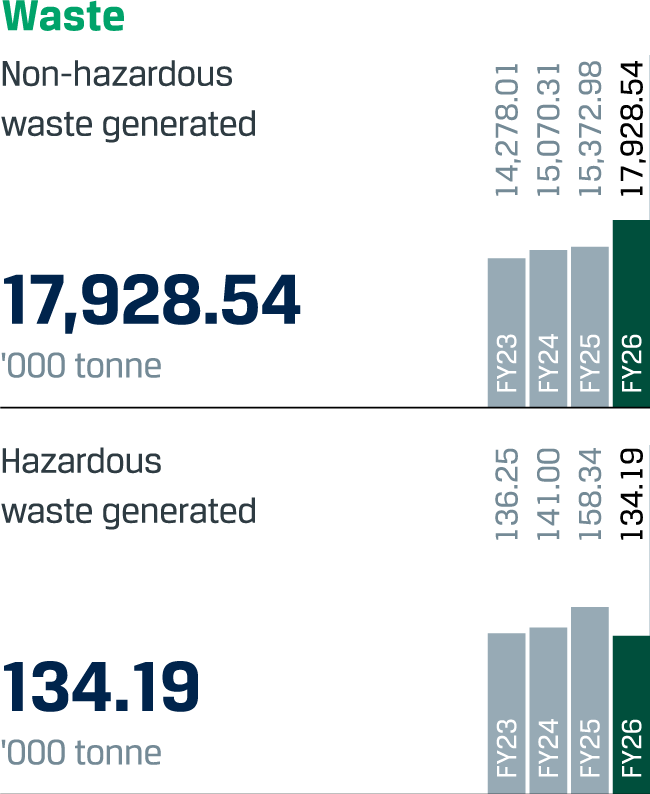
At JSW Steel, in anticipation of such shifts, we have embraced an enterprise-wide Zero Waste to Landfill (ZWTL) commitment that aims to divert the entirety of our solid waste away from permanent disposal, primarily by refashioning waste streams once regarded as liabilities into secondary resources that, after processing and re-integration, substitute for virgin raw materials, reduce input costs, and lower the environmental footprint of production.
We follow a four-step waste management hierarchy to operationalise our ZWTL commitment.
Together, these ZWTL practices generate various upstream and downstream socio-environmental benefits. Upstream, they lower our dependency on virgin raw materials, attenuate extractionrelated environmental degradation, and decrease overall production costs. Downstream, they alleviate our operations' burden on landfills, prevent soil and water contamination, and avoid the GHG emissions associated with the decomposition and incineration of disposed waste.
Our waste management strategy follows a continuous cycle of assessment, planning, and targeted intervention. We routinely perform comprehensive waste audits across all facilities to develop a granular, site-specific understanding of the types, quantities, treatment pathways, and disposal mechanisms associated with every by-product generated across our operations.
The insights garnered through these assessments enable us to distinguish between unavoidable process residues and inefficiencies that we can address through operational improvements. They also help identify gaps in collection, segregation, handling, and disposal infrastructure that may hinder the effectiveness of our waste management practices. Based on these findings, we design and implement targeted interventions tailored to the distinct operational realities and waste profiles of individual facilities. We also deliver waste reduction training sessions to our employees to help them develop the skills and operational know-how needed to meaningfully contribute to waste minimisation across our operations.
Ultimately, this data-driven approach allows us to refine our waste management practices in consonance with evolving operational requirements, technological advancements, and circular economy principles.
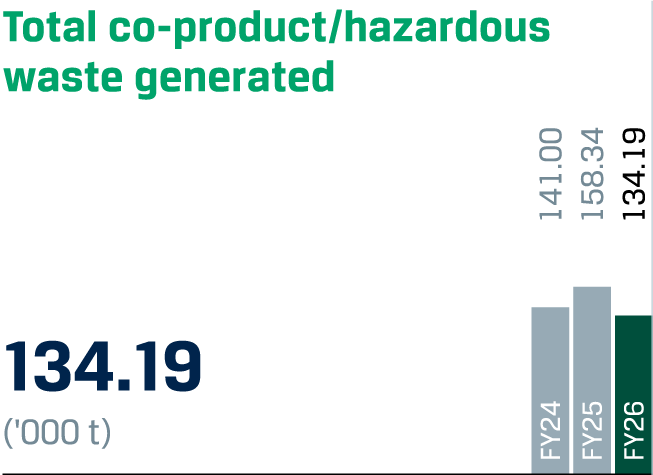
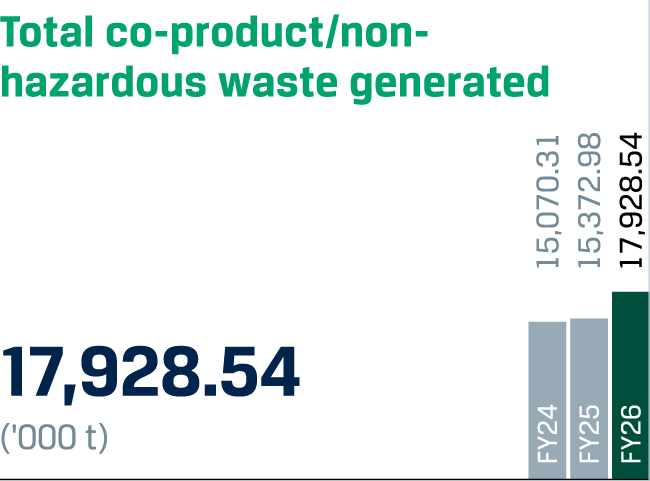

| ARCL | JSW Industrial Gases |
JSW Steel Coated Products$ |
JSW Mines* | JSW Green Steel Limited |
JSW Raigarh | BPSL | |
|---|---|---|---|---|---|---|---|
| Non-hazardous waste generated ('000 tonnes) | |||||||
| 37.06 | 0 | 252.16 | 4,953.73# | 0.10 | 1,077.74 | 4,248.65 | |
| 58.19 | 0 | 263.49 | 2,516.08# | 0.130 | 1,061.81 | 3,928.05 | |
| 53.19 | 0.0613 | 220.14 | 2,479.61# | 0.185 | 971.57 | 3,727.47 | |
| Hazardous waste generated ('000 tonnes) | |||||||
| 0.084 | 0.0021 | 205.29 | 0.144 | 0.000042 | 0.094 | 1.93 | |
| 0.053 | 0.0034 | 214.38 | 0.021 | 0.006 | 0.102 | 1.35 | |
| 0.050 | 0.0038 | 189.34 | 0.018 | 0.008 | 0.034 | 1.55 | |
Zero liquid discharge (ZLD)
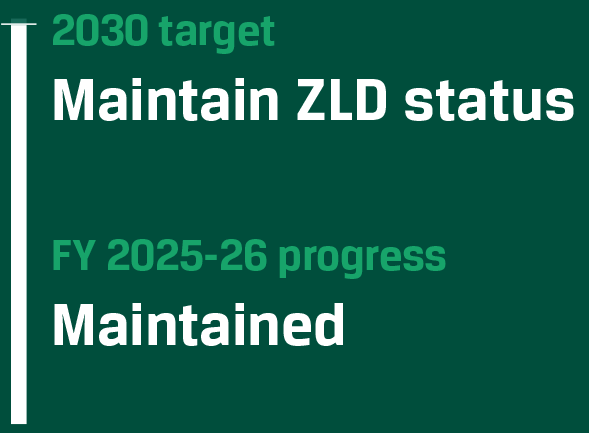

Closed-loop water management systems represent one of the most effective mechanisms available to industrial operators seeking to reconcile operational water requirements with environmental responsibility. By enabling the continuous treatment, recovery, and internal reuse of wastewater, these systems decouple production activity from freshwater withdrawal and external discharge, thereby enhancing resource efficiency, supporting regulatory compliance, and protecting surrounding ecosystems in concurrence. Our commitment to maintaining Zero Liquid Discharge (ZLD) across all operational sites reflects our embrace of this operational paradigm.
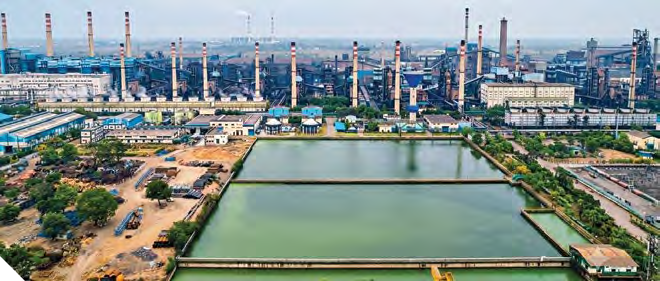
ZLD represents one of the most rigorous standards in industrial wastewater management. It requires companies to treat, recover, and internally reuse virtually all wastewater generated through their operations, consequently forestalling the discharge of untreated effluents into the natural environment.
We have established dedicated ZLD systems across all our facilities. These systems deploy advanced water treatment technologies, including reverse osmosis, nano-filtration, and other high-efficiency purification processes, to treat wastewater to a quality suitable for reuse within captive industrial applications. We subsequently reintegrate the treated water into our operations for activities such as cooling, slag quenching, gas cleaning, and other non-potable process requirements, thereby strengthening circular water use across our facilities.
Beyond preventing the discharge of untreated effluents, this circular approach delivers significant environmental and operational benefits. By maximising the internal recovery and reuse of treated water, our ZLD systems systematically whittle down our dependence on freshwater withdrawals from external sources, allay pressure on local water ecosystems, and reinforce the broader resource-efficiency and circularity objectives embedded within our Sustainability Framework.
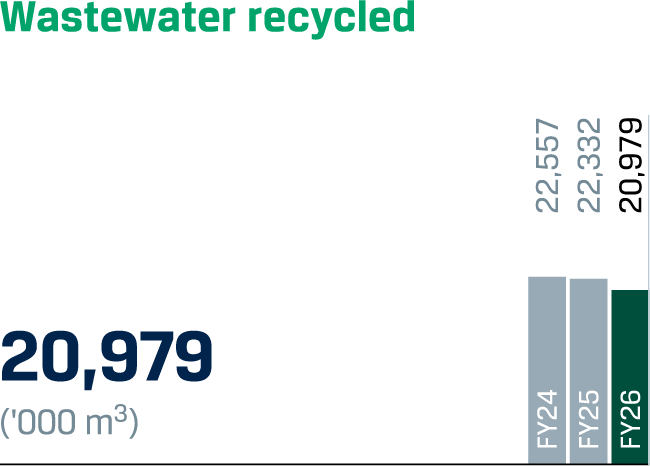
Reduce specific dust emissions
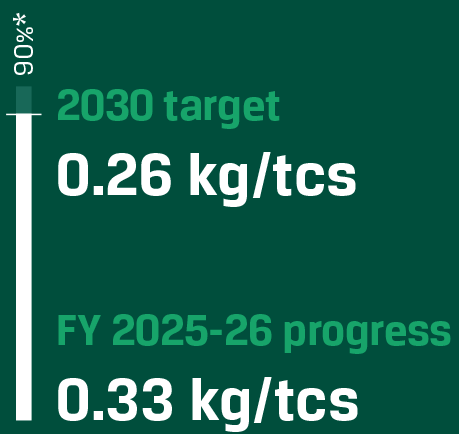
Reduce specific emissions of oxides of sulphur
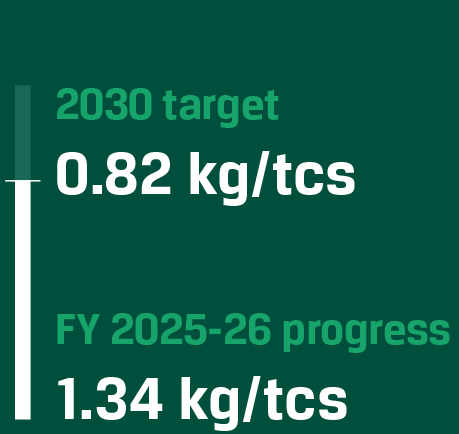
Reduce specific emissions of oxides of nitrogen
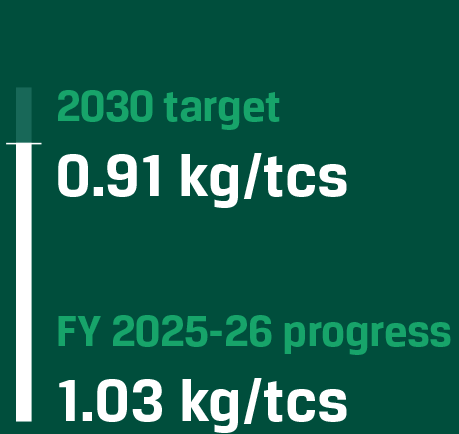
Air quality management carries direct implications for the health of the communities in which we operate and the integrity of the ecosystems that surround our facilities. We recognise that steelmaking results in the release of airborne pollutants that demand continuous attention, and we remain resolute in our commitment to managing these with rigour, transparency, and accountability. To this end, we have structured our air emissions management efforts around three interrelated strands of action: technology deployment, digital monitoring, and integrated materials management. This three-pronged approach delivers sustained air emissions reductions while strengthening operational oversight and driving long-term air quality improvements.
During FY 2025-26, we continued to deploy advanced air pollution control systems across our facilities, with a particular focus on sintering and other high-temperature processes that constitute significant point sources of particulate matter (PM), oxides of sulphur (SOx), and oxides of nitrogen (NOx). Most notably, we became an early adopter of MEROS (Maximised Emission Reduction of Sintering) technology—an advanced dry off-gas cleaning system that enables the highly efficient, simultaneous removal of dust, heavy metals, dioxins, and acidic gases such as SOx from industrial exhaust streams, while eliminating the need for conventional wet scrubbing systems—thereby enhancing both air quality and water efficiency.
In parallel, recognising that fugitive emissions from material handling and storage remain a significant yet often under-addressed contributor to ambient air quality impacts, we strengthened our dust management infrastructure through the targeted deployment of mist cannons and dust suppression systems at key material handling, stockpiling, and transfer points across our facilities. Collectively, these interventions have significantly strengthened our ability to control dust emissions at source, further enhancing the robustness of air quality management across our operational footprint.
At JSW Steel, our sustainability strategy remains firmly anchored in the principle that ‘you cannot manage what you cannot measure.’ Accordingly, we endeavour to collect accurate, current, and decision-useful data across the full range of sustainability KPIs that are materially relevant to our operations.
Among these, the monitoring of air emissions represents a particularly challenging undertaking for industrial organisations by dint of the sheer breadth of the spectrum of parameters, ranging from particulate matter to sulphur dioxide, which they must quantify and track. The multiplicity of point sources, such as smokestacks, high-emitting processes, and standalone machinery, typically found across ISPs further compounds this challenge in the steel sector’s context.
To overcome this challenge, we have implemented a comprehensive, technology-based system for monitoring air emissions. Continuous Emission Monitoring Systems (CEMS), which form the core of this framework, provide real-time, uninterrupted measurement of key pollutants—including particulate matter, SOx, NOx, and carbon monoxide—across major point sources. By further integrating AI-based flare monitoring, advanced data analytics, and predictive decision-support tools, this system enables our teams to pre-empt potential deviations and optimise processes to minimise emissions at source, ensure regulatory compliance, and continuously strengthen overall air quality management across our operations.
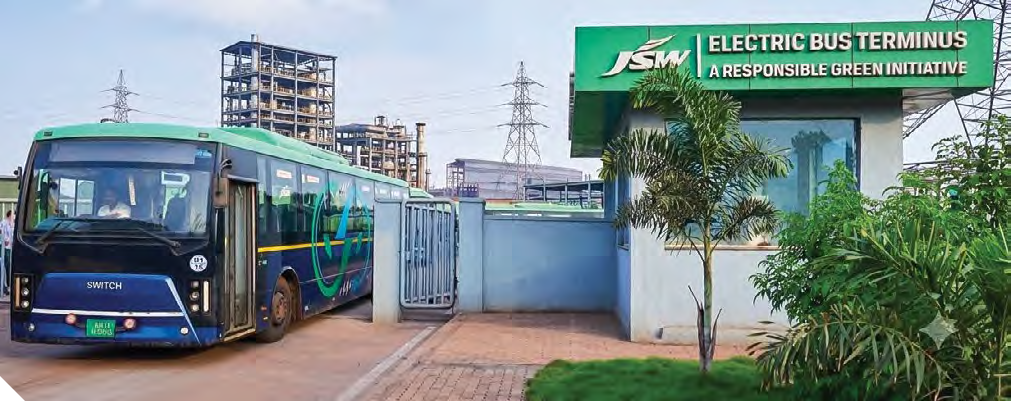
We acknowledge that the transport of raw materials and finished products constitutes an equally significant source of air emissions as our production processes themselves. Hence, our air emissions strategy extends beyond process boundaries to encompass the full scope of operational activity, spanning raw material haulage, intra-facility logistics, and personnel mobility. Three key initiatives illustrate the breadth and ambition of our approach in this regard.
EVs deployed across Vijayanagar, Dolvi and Salem
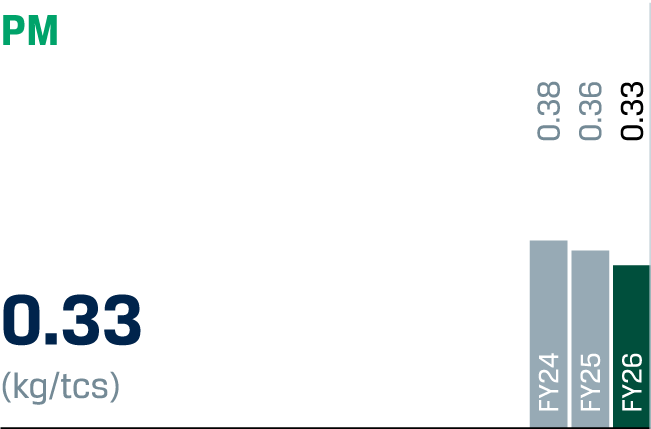
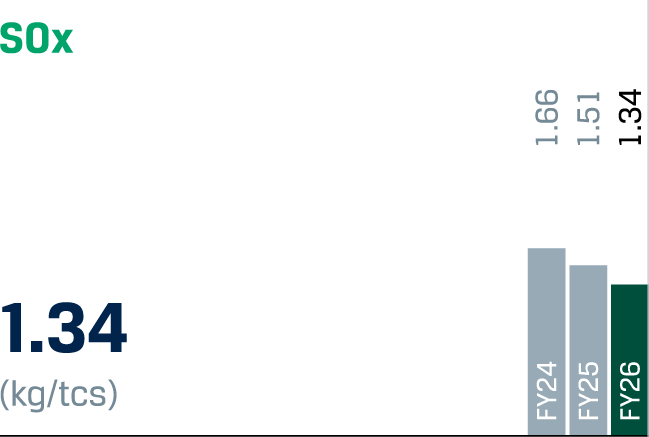
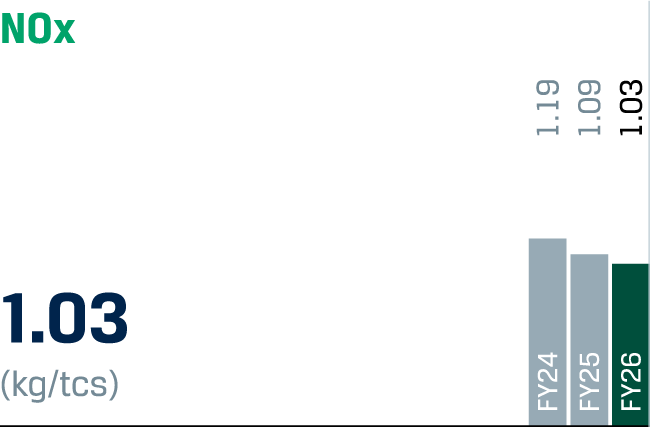
Electric buses deployed across Vijayanagar and Dolvi
Annual emissions reduction achieved through electric bus deployment
| ARCL | JSW Industrial Gases |
JSW Steel Coated Products |
JSW Mines* | JSW Green Steel Limited |
JSW Raigarh | BPSL | |
|---|---|---|---|---|---|---|---|
| PM emissions (kg/tonne of product) | |||||||
| 0.649 | 0.017 | 0.073 | 0.0000644 | 0.008 | 1.638 | 0.584 | |
| 0.750 | 0.016 | 0.015 | 1.87E-05 | 0.008 | 1.32 | 0.50 | |
| 0.550 | 0.021 | 0.015 | 2.00E-05 | 0.0044 | 2.02 | 0.58 | |
| SOx emissions (kg/tonne of product) | |||||||
| 2.648 | 0.140 | 0.014 | 0.00002340 | 0.016 | 5.512 | 3.823 | |
| 2.350 | 0.141 | 0.022 | 3.36E-06 | 0.0129 | 5.73 | 3.71 | |
| 1.882 | 0.133 | 0.025 | 1.24E-06 | 0.0111 | 5.06 | 4.29 | |
| NOx emissions (kg/tonne of product) | |||||||
| 2.850 | 0.171 | 0.01 | 0.000466 | 0.067 | 3.105 | 2.367 | |
| 2.353 | 0.162 | 0.029 | 1.35E-05 | 0.0587 | 2.92 | 2.47 | |
| 1.867 | 0.162 | 0.027 | 2.08E-05 | 0.0464 | 1.37 | 2.70 | |
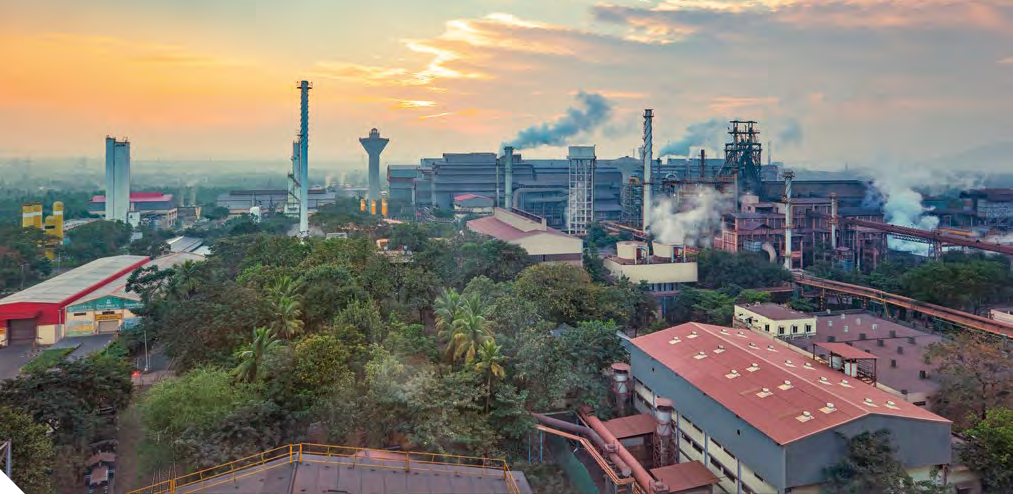
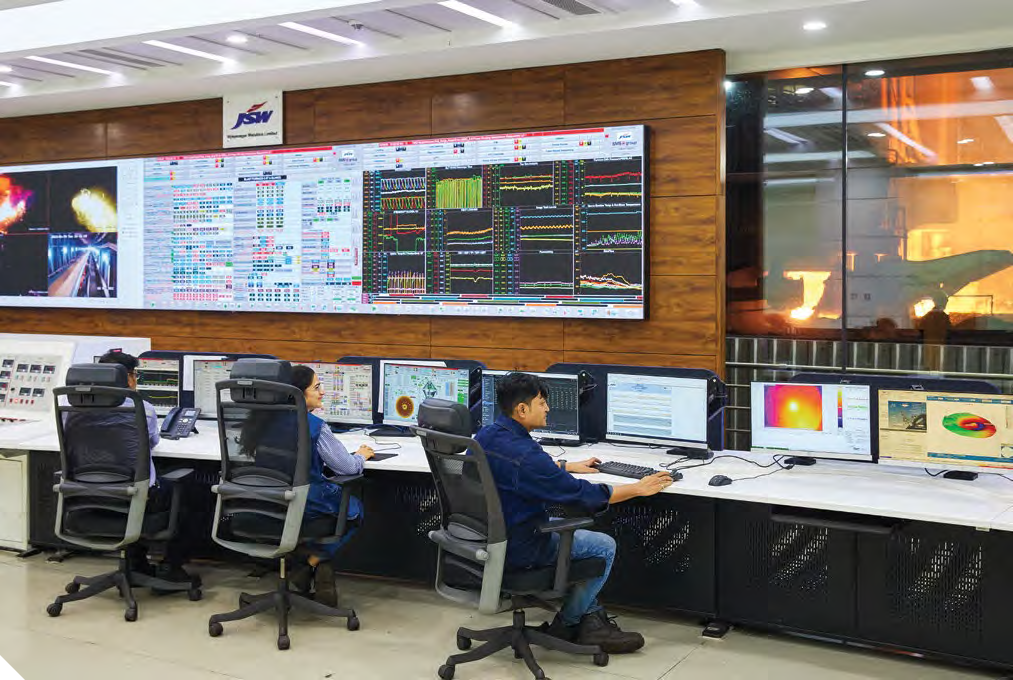
This year, driven by our belief that technology serves as a powerful enabler of sustainability monitoring, we deployed 11 AI-powered cameras across our Vijayanagar ISP. These cameras—strategically placed at the facility's foremost air emissions hotspots—leverage computer vision technology, machine learning algorithms, and Internet of Things (IoT) sensors to detect, quantify, and monitor pollutants in real time. They also enable the differentiation of emissions, smoke, fire, and steam condensate that are often indistinguishable to the human eye.
This initiative has significantly strengthened the monitoring and management of our air emissions by providing our operational teams with a continuous stream of nuanced real-time data required to promptly identify and respond to deviations. In effect, it has also emerged as a compelling example of the vital role that the strategic application of sophisticated optoelectronic technologies can play in strengthening large-scale industrial organisations' sustainability monitoring and environmental management practices.

AI-powered cameras installed to improve air emissions monitoring
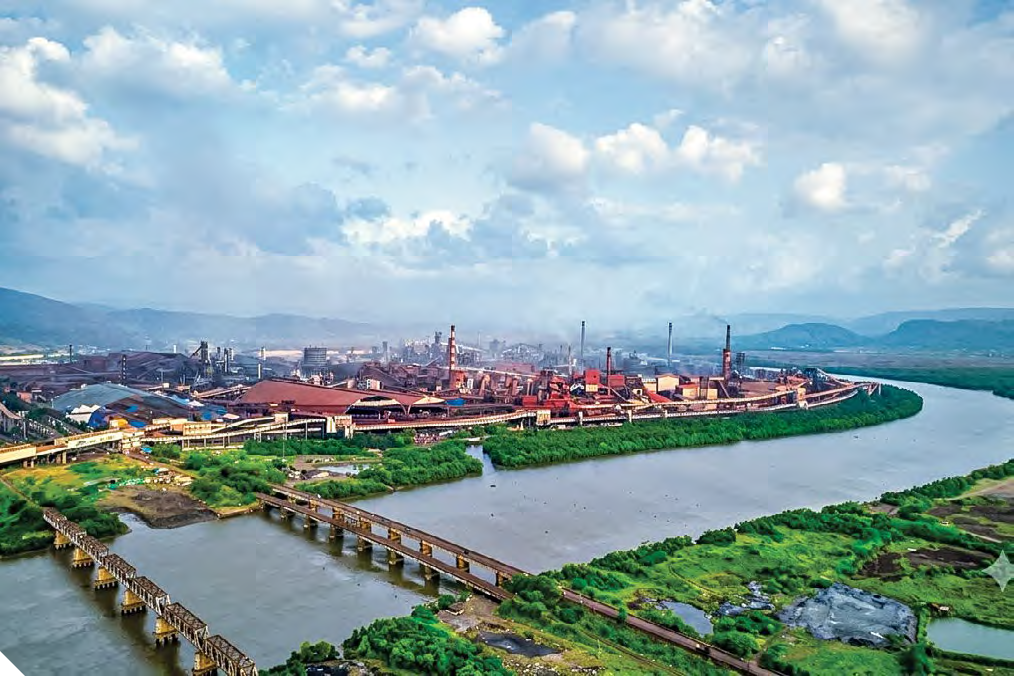
Sintering operations, like other steelmaking processes, generate an array of waste gases. While these have traditionally been viewed as a one-way liability—streams of hot, particulate-laden exhaust posing environmental and health risks in the absence of appropriate safeguards—they also possess several productive applications. Most notably, when processed and recirculated into the sintering process, they can serve as a valuable source of recoverable thermal energy.
In FY 2025-26, to unlock this untapped energy conservation potential, Dolvi Works installed MEROS® (Maximised Emission Reduction of Sintering) and waste gas recirculation technology at one of its sinter plants. Working in tandem, these systems capture waste gases from the sintering process, prevent their release into the surrounding atmosphere, expunge impurities such as dust, SOx, NOx and dioxins, and return the refined, thermally rich gas back into the sinter bed. This delivers dual environmental benefits by reducing reliance on solid fuels, such as coke breeze and coal, while also minimising pollutant emissions.
During the year, the implementation of MEROS® and waste gas recirculation at Dolvi Works reduced particulate matter emissions from 30 mg/Nm³ to 10 mg/Nm³, marking a 67% y-o-y reduction, and delivered energy savings of 80,541 Gcal. This initiative not only advances our efforts to devise a circular energy system by repurposing waste streams as cleaner fuels but also strengthens compliance with applicable pollution control standards and air emissions regulations.
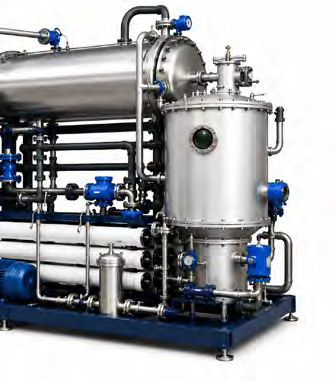
Decline in PM emissions
In energy savings
Biodiversity conservation, management, and monitoring
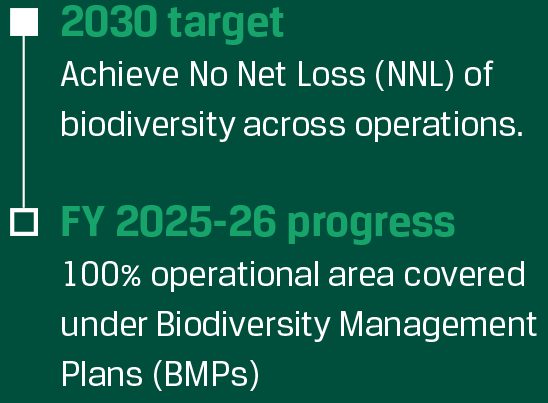

Steel production is, at its core, a resource-intensive undertaking that draws heavily upon the natural environment, including land, water, and raw materials. As a result, our operations inevitably interact with the ecosystems and species that inhabit the landscapes in which we operate. This interdependence cuts both ways. On one hand, we possess significant natural capital dependencies by dint of which our operational resilience remains inextricably tethered to the health, stability, and integrity of surrounding ecosystems. On the other hand, the pressures associated with industrial activity can adversely affect these very ecosystems if not managed with rigour and care. Our commitment to biodiversity management stems from this dual commitment—of dependency and responsibility in equal measure—and induces us to move decisively beyond a compliance-oriented posture toward one grounded in genuine ecological accountability and a determination to leave the natural environments in which we operate measurably better than we found them.
We have set ourselves the clear mandate of achieving NNL of biodiversity across our operational footprint by 2030. In pursuit of this objective, we have adopted a structured mitigation hierarchy—Avoid, Minimise, Restore, and Offset—which now serves as the foundational framework guiding how we assess, manage, and mitigate biodiversity impacts across the lifecycle of our operations and projects. Critically, we have not confined this framework to our environmental function; rather, we have embedded it within our Enterprise Risk Management (ERM) framework, positioning nature-related considerations alongside financial, operational, climate, and reputational risks and opportunities in decision-making processes across all levels of the organisation.
Credible progress towards NNL demands rigorous, scientifically grounded measurement of biodiversity impacts. Thus, we have developed a site-level biodiversity assessment and accounting approach aligned with internationally recognised standards and frameworks, including the TNFD LEAP approach, IFC Performance Standard 6, IUCN guidance, the Biodiversity Protocol, and relevant national regulatory requirements. Building on this foundation, the approach also incorporates the Double-Entry Bookkeeping (DEBK) methodology under the Biodiversity Protocol and the IUCN Biodiversity Indicator and Reporting System (BIRS), enabling us to account for historical ecosystem losses and gains in a structured and comparable manner.
Within this overarching methodology, we track biodiversity impact across four interrelated dimensions: the extent of land disturbed, restored, and actively managed; the ecological functionality and resilience of restored habitats; the status of species of conservation significance; and the condition of critical ecosystem services, including water regulation and soil conservation. Together, these dimensions provide the analytical breadth and methodological rigour required to consistently assess, quantify, and benchmark biodiversity impacts across our diverse operational contexts.
In FY 2025–26, we completed baseline biodiversity assessments at our Dolvi, Salem, and Vasind facilities, establishing a robust foundation for ongoing impact measurement, performance tracking, and long-term target setting across these sites. We also took a further step toward greater transparency and accountability in managing our nature-related impacts and dependencies by publishing our first TNFD-aligned report: a comprehensive disclosure canvassing our governance approach, strategic priorities, naturerelated risks and opportunities, natural capital dependencies, and biodiversity performance. In doing so, we reaffirmed our belief that meaningful progress on biodiversity must be visible, verifiable, and open to scrutiny from all stakeholders with an interest in how we manage our relationship with the natural world.
Biodiversity surveys carried out across our sites have recorded the presence of 3 Critically Endangered, 9 Endangered, and 11 Vulnerable IUCN Red List species, confirming that our operational landscapes serve as habitats for fauna and flora of considerable ecological value. This revelation has lent both urgency and purpose to the rigour with which we approach their stewardship.
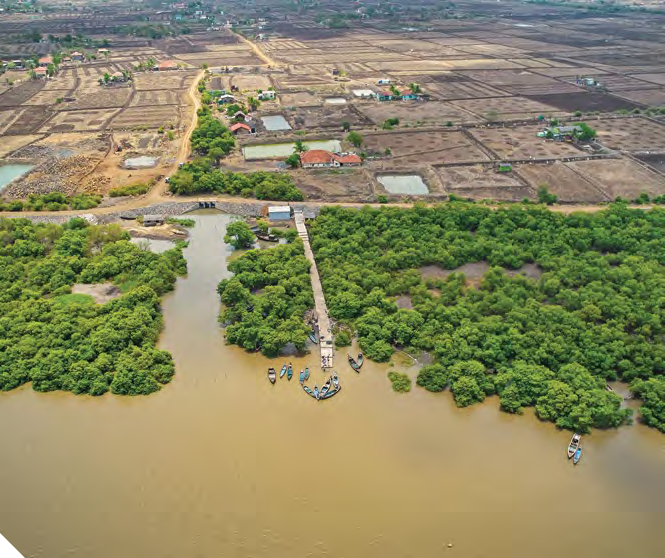
This year, we significantly deepened our conservation efforts, with our restoration programmes shifting decisively away from conventional compensatory plantation approaches toward ecosystem-specific rehabilitation strategies aimed at reviving ecological functionality and strengthening long-term resilience. As of FY 2025-26, site-specific biodiversity monitoring programmes are now operational across 100% of our locations, facilitating continuous oversight, early detection of ecological stress, and proactive ecosystem management across our entire operational footprint. The findings derived through this monitoring directly inform the design of on-the-ground conservation actions, including the reintroduction of native species, the implementation of habitat-sensitive restoration practices, and nature-based solutions (NbS).
We have made equally significant strides in ecosystem services enhancement— an area we regard as integral to, rather than separate from, our NNL commitment. Targeted interventions across our operations have delivered an estimated annual water recharge of 41.16 million m³ and scaled back our freshwater dependency by 22.43%, simultaneously counteracting operational vulnerabilities and generating measurable ecological benefits across the surrounding landscape. On the risk management front, we
achieved 100% coverage in assessing our sites for biodiversity risk in alignment with the TNFD framework; of the 15 sites identified as ‘High’ or ‘Very High’ risk, each carries a robust, approved mitigation plan with clearly defined accountability structures, timelines, and KPIs. We have fully incorporated these risks into our ERM framework, subjecting them to continuous monitoring through established governance and review mechanisms and ensuring that biodiversity management remains a centrally governed organisational priority.
Coverage in assessing operational sites for biodiversity risk in line with the TNFD framework achieved
| Indicator | Baseline (FY 2019-20) | As of FY 2025-26 | Status |
|---|---|---|---|
| Sites with BMPs | 7% | 100% | On track |
| High-risk sites under mitigation | 7% | 100% | On track |
| Ecosystem service enhancement (habitat quality), hectare equivalent | Baseline | 1,932.88 | Positive trend |





Land use and restoration
Total operational land footprint
Area under BMPs*
Land disturbed during the year
Cumulative land restored till date
Ecosystem condition and restoration quality
Ecosystem service enhancement (habitat quality)
Native species planted
Survival rate of native species planted
Water recharge generated
Looking ahead, we remain committed to strengthening our biodiversity management approach by enhancing the quantification of ecosystem condition and ecosystem service metrics, aligning with emerging frameworks such as the Science Based Targets for Nature (SBTN), and advancing digital monitoring systems to enable near real-time ecological tracking. As our measurement capabilities continue to mature, we will progressively increase the ambition of our site-level initiatives, expand the scope of our restoration programmes, and deepen engagement with local communities and conservation partners to co-develop NbS that deliver durable, landscape-scale biodiversity outcomes.
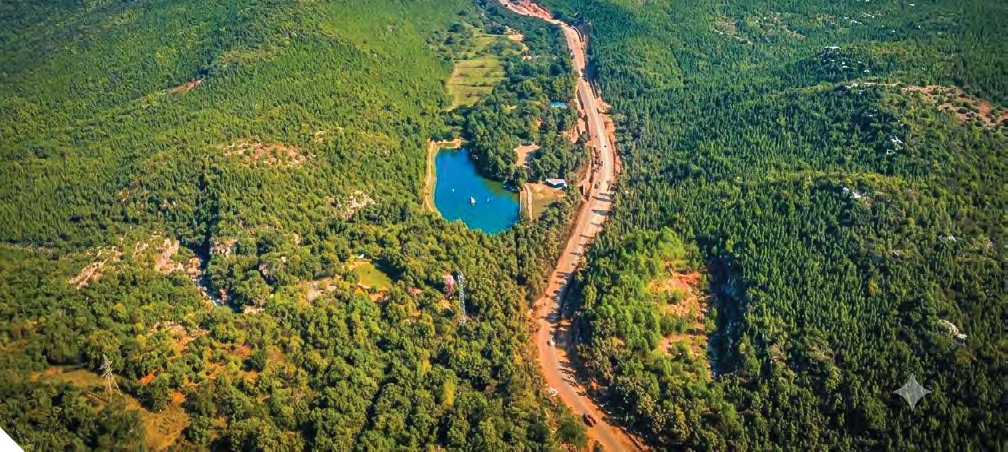
Human-animal conflict remains one of the primary drivers of the unfettered loss of biodiversity unfolding across the planet. This problem is particularly acute in hilly regions, where dense forests teeming with a vast array of animal species co-exist alongside large-scale mining developments employing hundreds of human workers.
Barbil, one such region home to our mining operations, has witnessed a rising frequency of human-elephant conflicts in recent years. Elephants from nearby forests have trespassed into farms and villages, fomenting panic among nearby settlements and resulting in widespread damage to both crops and property; unfortunately, in some cases, residents have responded to these encounters aggressively, leading to elephant deaths.
At JSW Steel, we recognise that elephants constitute keystone species that play a pivotal role in maintaining the resilience of the ecosystems they inhabit. Therefore, we set ourselves the goal to address their loss by fostering a more symbiotic relationship between elephants and local communities in the areas surrounding our operations in Barbil.
To this end, we entered into a partnership with the SAGE Foundation and the local Forest Department. Together, we focused on awareness raising, striving to help communities cultivate a better understanding of the importance of preserving elephants, and capacity building, helping communities implement non-kinetic measures, such as solar-powered streetlights, trip alarms, blinking lights, and fences, to prevent elephant encounters without inflicting any damage on the creatures. These measures have enabled 38 villages, with a combined population of nearly 20,000, to successfully manage 45 elephant encounters, demonstrating our commitment to fostering harmonious coexistence between people and nature.
Human-elephant encounters prevented or successfully managed
Villages positively impacted
Responsible mining practices
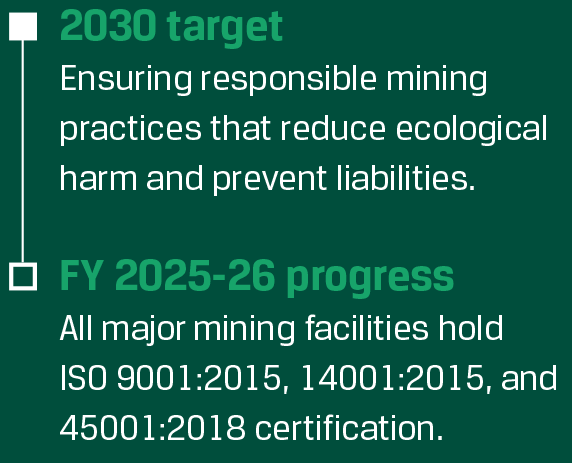

In recent years, we have sought to integrate our operations vertically, driven by a recognition of the multifaceted benefits this strategy can offer. By gaining greater control over our supply chain, vertical integration strengthens our resilience against external disruptions, improves operational efficiency, and contributes to the reduction of Scope 3 emissions. As part of this effort, we have expanded our mining footprint across India, improving supply certainty for key raw materials and enhancing operational resilience through greater control over upstream value chain linkages.
Regardless, we recognise that this expansion carries with it an equally compelling responsibility to ensure that the extraction of mineral resources is undertaken responsibly, with due regard for environmental integrity, biodiversity conservation, and the long-term resilience of the landscapes in which we operate.
While mining is often regarded as an inherently polluting and ecologically damaging activity, we seek to challenge this perception by ensuring that our mines uphold the highest environmental standards, coexist symbiotically with the local environment, and ameliorate rather than disrupt the livelihoods of surrounding communities. To achieve this goal, we employ a robust sustainable mining strategy that embeds environmental and social considerations at every stage of our operations—from breaking ground to the extraction and transport of mined materials.
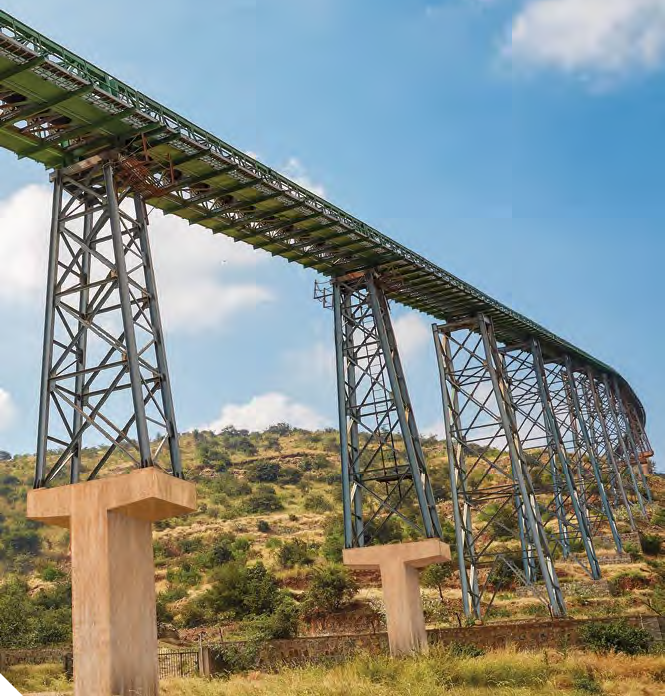
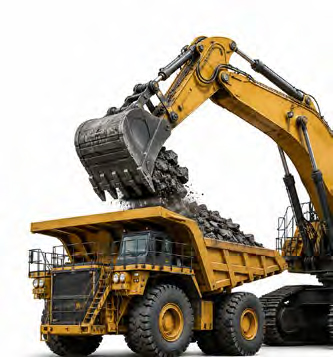
Mining carries significant environmental consequences, including the degradation of ecosystem integrity and the pollution of air and water resources, which, left unaddressed, can engender indirect and compounding effects on human health and community well-being. We counteract these risks by ensuring that all our mining activities comply with stringent, globally recognised environmental management standards. All major mining facilities now hold certification under EMS ISO 14001:2015, reflecting management systems designed to continuously monitor and minimise environmental impacts, promote resource efficiency, and ensure regulatory compliance.
Of major mining facilities certified under EMS ISO 14001:2015
The safe management of tailings remains among our highest environmental priorities, given its direct implications for the health of nearby communities and the integrity of surrounding ecosystems. Our approach to tailings management extends well beyond safe containment: we treat tailings as a resource rather than a liability. Across our mines, we have installed state-of-the-art containment systems and established tailings ponds to store intercepted materials securely. Where feasible, we recover valuable minerals from stored tailings; where recovery is not viable, we ensure safe storage. This approach minimises waste, reduces the environmental footprint of our operations, and generates cost savings by limiting the need for waste transport and external disposal.
The responsible management of tailings is fundamental to our commitment to environmental stewardship, operational excellence and sustainable mining. We recognise that effective tailings management is critical to protecting our employees, host communities, the environment and the long-term value of our operations. Our approach is based on sound engineering principles, robust governance, proactive risk management and continuous monitoring throughout the lifecycle of our Tailings Storage Facilities (TSFs).
Our tailings ponds aim to blend environmental safety with resource recovery and circularity.
While they incorporate advanced lining systems and geotechnical measures to enhance safety, they also serve as closed-loop systems, wherein the water consumed in beneficiation is virtually completely reclaimed and recycled through thickening, paste backfill methods, and intricate piping systems. We further strive to regularly implement structural reinforcements to ensure seismic safety and curb seepage.
While mining is widely perceived as a significant driver of biodiversity loss, we firmly believe that meaningful opportunities exist to reverse this trend. We therefore conduct detailed impact assessments to identify potential threats our mining activities pose to local biodiversity and implement targeted interventions in response. These include the establishment of wildlife corridors to allow local fauna to navigate areas surrounding our mines safely, the creation of buffer zones to safeguard keystone species and critical ecosystems, and sustained investment in habitat restoration. Awareness programmes, which equip our workforce with a thorough understanding of local biodiversity and the role they can play in its protection, complement these measures.
Together, these standards provide a structured approach to identifying, assessing and managing tailings-related risks while ensuring compliance with legislative obligations and industry best practice.
The integrity and performance of our tailings storage facilities are continuously monitored through a comprehensive inspection and assurance programme. This programme is designed to identify potential risks early, verify compliance with operating requirements and support continual improvement.
Key activities include:
Findings from inspections and audits are tracked through formal action management processes, with corrective actions monitored to completion and lessons incorporated into operational practices.
When assessing the environmental impacts of mining, attention tends to concentrate on the extraction stage. Yet the transportation of mined materials carries equally consequential, and frequently underappreciated, environmental costs, including greenhouse gas emissions, air and noise pollution, and habitat fragmentation.
To manage these overlook socio-environmental consequences, we have focused on engineering sustainable transportation systems that simultaneously reduce environmental impact and improve the speed and efficiency with which mined materials reach their point of use. Our 24-kilometre pipe conveyor system, which transports iron ore fines from our captive mines to our largest Integrated Steel Plant at Vijayanagar, stands as the most prominent expression of this commitment. By displacing truck-based transport at scale, the system has materially reduced greenhouse gas emissions, curbed dust and noise pollution, and shortened transport timelines— concurrently advancing the sustainability and operational efficiency of our mining operations.
Reducing fossil fuel dependency across dispersed mining operations presents a distinct set of challenges. Unlike centralised industrial facilities, mine sites are often geographically isolated from established grid infrastructure and must maintain a reliable energy supply across multiple locations simultaneously. Historically, diesel generators have served as the most practical solution, owing to their ease of deployment and ability to provide dependable, dispatchable power on demand.
However, extensive reliance on diesel generation carries a significant GHG footprint and exposes operations to the cost volatility associated with fossil fuel procurement. Recognising these risks, our Vijayanagar mining operations took a deliberate step toward reducing diesel dependency in FY 2025-26 by expanding solar installations across all nine mines in the region. These installations generated 32,908 kWh of clean energy over the course of the year.
Together, these measures contributed to a measurable reduction in GHG emissions and lowered our dependence on externally procured fossil fuels. More importantly, they reflect a broader conviction that guides our approach to sustainable mining: the transition to cleaner energy is not limited to our steelmaking processes but is equally achievable, and equally necessary, across every stage of the value chain, from the extraction of raw materials at mines to the delivery of finished steel to our customers.
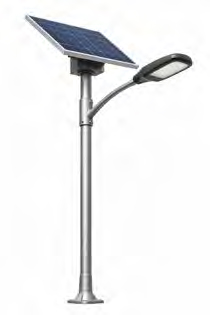
Clean energy generated across mining operations in FY 2025-26
Solar-powered trolleys deployed
Solar-powered streetlights installed
The sustainability of our operations and the health, well-being, and welfare of the communities living near our facilities are not separate considerations; they remain inherently and inextricably linked. Steel production entails multiple industrial processes that, in the absence of appropriate safeguards, hold the potential to exacerbate air, noise, and water pollution, with direct and measurable consequences for surrounding communities. We recognise this intersection not as a risk we must manage at arm's length but as a responsibility that sits at the centre of how we design and implement our operational strategy.
To translate this commitment into structured, accountable action, we have adopted a community engagement framework centred on four core steps: identification, prevention, engagement, and surveillance.
Together, these four principles form the foundation of a framework that seeks to not only protect communities from the potential adverse effects of our operations but also help them cultivate a deeper understanding of contemporary environmental challenges, their complex impacts, and the adaptation and mitigation strategies available to them.
We also remain steadfast in our commitment to creating opportunities for local communities and strengthening regional economies. We offer training programmes to enhance the employability of local individuals, equipping them with skills relevant to our operations, and recruit them on a case-by-case basis, depending on operational requirements. Given our extensive operations across different regions in India, we define ‘local’ at the country level (i.e., India). Thus, at the site level, all employees are recruited from within India, and all senior management roles are filled by individuals recruited from within the country.
We regularly conduct needs assessments across communities located near our operations to identify the most pressing socio-economic challenges burdening local populations and to ensure the implementation of high-impact interventions with the greatest potential to uplift their quality of life. The findings stemming from a recent assessment conducted in Barbil indicated that limited access to safe and clean drinking water remained one of the foremost challenges hindering local communities’ ability to live a safe and healthy life.
Accordingly, in coherence with our commitment to ensuring the well-being of local communities affected by our operations, we implemented two key measures to mitigate this concern. Firstly, to provide immediate relief in the short run, we deployed 12 drinking water tankers across various regions near our mining operations. We strategically deployed these tankers in areas with high population densities to ensure that the benefits they provide accrue to as large a swath of individuals as possible. Additionally, in the long term, we installed solar-powered bore wells equipped with overhead tanks connected to tap water systems in nearby villages, systematically targeting the communities most vulnerable to water scarcity first.
Over the past three years, we have constructed 51 such bore wells across 47 habitations in 32 villages, benefiting nearly 13,427 people. The introduction of solar-powered bore wells has generated several benefits for residents, including bolstering their access to potable water and allaying the physical hardship (i.e., drudgery) faced predominantly by women in collecting water from open wells often located miles away from their homes.
Overall, by adopting this multifaceted approach to strengthening water security in a traditionally water-scarce region, we have reinforced our commitment to participatory, people-first solutions that directly counteract socio-economic issues impinging on the quality of life of communities and their most marginalised residents touched by our operations.
Solar-powered bore wells constructed
Residents across 32 villages positively impacted
Climate change and the transition to net zero represent tectonic shifts for the steel sector. They are not only giving rise to various physical and transition risks and opportunities that, if not managed effectively, could jeopardise the continuity of the industry's operations but are also fundamentally altering prevailing demand patterns for steel products. In particular, the growing global emphasis on sustainability, coupled with an upswing in climate-conscious consumerism, is gradually increasing demand for cleaner, low-carbon materials and greater transparency regarding the sustainability performance of products.
Maintaining competitiveness in an era where rapid decarbonisation promises to reshape every aspect of society, be it infrastructure, manufacturing, or transportation, requires businesses to innovate new products and concomitantly embed the principles of sustainability and responsible climate stewardship at the very core of their product innovation processes. With this in mind, we are endeavouring to re-envision our existing products and design new offerings that deliver superior performance, enhance the sustainability of our operations, and hold the potential to serve as catalysts for our growth in this era of mounting climate action. In concurrence, we are enhancing the availability and quality of sustainabilityrelated product information, enabling customers and other stakeholders to better understand the environmental attributes and lifecycle impacts of our offerings.
As the transition to a low-carbon economy gains irreversible momentum, we recognise that accurately and effectively communicating our products' environmental footprint to customers is becoming indispensable for sustaining business growth and expanding our customer base. Therefore, we have intensified our pursuit of globally recognised third-party sustainability certifications in recent years.
The application process for these certifications typically entails rigorous assessments that evaluate the environmental performance of a company’s products. By successfully completing these assessments and meeting a set of other prerequisites, firms earn the right to use accompanying eco-labels, which signal a product’s superior environmental performance to consumers and foster more informed, data-driven purchasing decisions.
The highly coveted GreenPro certification, conferred by the Confederation of Indian Industry (CII), is one such example. Companies receive GreenPro certification based on an intricate and stringent life cycle assessment process that systematically examines a product's environmental impact at every stage of its lifecycle, spanning raw material extraction, manufacturing, usage, and end-of-life disposal. The receipt of this certification indicates a company's commitment to sustainable practices and provides consumers with confidence that the product satisfies industry-leading environmental standards.
Over the past few years, we have significantly broadened our portfolio of GreenPro-certified products. Most notably, we have established ourselves as one of India's first steelmakers to earn GreenPro certification for automotive-grade steel products. We believe these products will play a pivotal role in helping our customers in the auto-manufacturing sector reduce the environmental footprint of their products and, in turn, meet the mounting demand for more sustainably produced vehicles, with lower embedded emissions, spurred by evolving customer preferences and regulatory changes.
As demand for cleaner and greener products rises, sustainability is emerging not only as a potent value-creation lever but also as a vital product differentiation strategy. While customers are increasingly factoring environmental indicators, such as embedded emissions, water usage, and waste generation, into their purchasing decisions, this information is often unavailable or difficult to access, resulting in a gap between consumer intent and informed choice.
At JSW Steel, we remain committed to bridging this lacuna by equipping our customers with accurate and up-todate information needed to evaluate the sustainability performance of our products holistically. We accordingly undertake meticulous LCAs across our key product lines, examining their environmental impacts, and publicly disclose the findings through detailed, third-party-verified EPDs. In doing so, we strengthen both the transparency and traceability of our products' environmental impacts for our customers.
Read more - EPDsJSW GreenEdge is our certificate-based solution designed to enable customers to access lower-carbon emissions steel while supporting the transition to a decarbonised steel value chain. This approach recognises the inherent complexity of decarbonising steel production and provides a credible, transparent mechanism to connect emissions reduction efforts at source with customer demand for sustainable materials.
Under the GreenEdge framework, emissions reductions are generated through dedicated decarbonisation initiatives implemented across JSW Steel’s operations and value chain. These initiatives include improvements in energy efficiency, increased use of renewable energy, process optimisation, circularity measures, and deployment of breakthrough technologies. All reductions achieved are independently verified to ensure accuracy, credibility, and alignment with global best practices.
These verified emissions reductions are converted into certificates, which are then allocated to customers based on predefined rules. The framework is operationalised in alignment with internationally recognised chain-of-custody principles, including ISO 22095, ensuring traceability, transparency, and auditability of claims. Robust governance mechanisms underpin the system, including clear boundaries, allocation methodologies, third-party assurance, and comprehensive documentation to prevent double counting and ensure credibility of claims.
JSW GreenEdge offers several key advantages to customers:
For JSW Steel, GreenEdge represents a strategic enabler to accelerate investments in decarbonisation while responding to growing market demand for low-carbon materials. It bridges the gap between current technological constraints and future pathways to near-zero steel, enabling immediate climate action. Through JSW GreenEdge, we are not only reducing emissions within our operations but also empowering our customers to participate meaningfully in the low-carbon transition—building a more sustainable and resilient steel ecosystem.
Products covered by EPD*
Products covered by GreenPro# Certification
Production covered by ResponsibleSteel™ Certification
Revenue generated from Green Products
In FY 2025-26, World Steel Association recognised JSW Steel as a ‘Sustainability Champion’ for the eighth consecutive year, placing it among an elite group of just 14 global steelmakers to earn this distinction. Now in its ninth year, the programme honours companies demonstrating sustained commitment to responsible steelmaking, with eligibility contingent on adherence to worldsteel’s Sustainability Charter, participation in its Life Cycle Inventory (LCI) programme, and recognition through industry awards. At a time when the global steel sector is accelerating its transition towards low-carbon production, this continued recognition affirms that our sustainability agenda is clearly defined, measurable, credible, and consistently advancing.
JSW Steel's Salem Works was honoured with the Tamil Nadu Green Champion Award 2025–26 for Salem District in recognition of its exemplary contributions to environmental sustainability and water stewardship.
At the third FICCI Sustainable Industrial Practice Awards, held in New Delhi on 17 March 2026, JSW Steel received the Platinum Award for Sustainable Industrial Practices in the Large Industries category—the event's highest honour. Presented by FICCI in collaboration with ProIndia Solutions, the award recognises organisations that are redefining industrial processes in alignment with the UN SDGs.
At the 2026 India Corporate Governance and Sustainability Vision Awards, coorganised by the Indian Chamber of Commerce (ICC) and EY in New Delhi on 13 January 2026, JSW Steel received the First Prize in the Sustainability Performance category. The recognition reflects the significant progress we have made across our sustainability priorities, including decarbonising our value chain, advancing energy efficiency and circularity, conserving water and biodiversity, and fostering an inclusive, values-driven workplace.
In December 2025, JSW Steel was named 'Champion of Circular Revolution' at the ET Edge Global Sustainability Alliance – Transformation Series, a premier forum uniting policymakers, industry leaders, start-ups, and investors to accelerate India's sustainability transition across energy, circular economy, and corporate social responsibility. The recognition honours organisations at the forefront of embedding circular principles into industrial operations at scale.
At the India Manufacturing Excellence Awards and Sustainability 4.0 Awards 2025, organised by Frost & Sullivan in Mumbai in December 2025, JSW Steel's Salem Works was honoured with the Sustainability Leaders Award in the Metals category for Mega Large Businesses. This recognition underscores the cumulative impact of Salem Works' sustained efforts across energy efficiency, emissions reduction, resource optimisation, circularity, and community engagement.
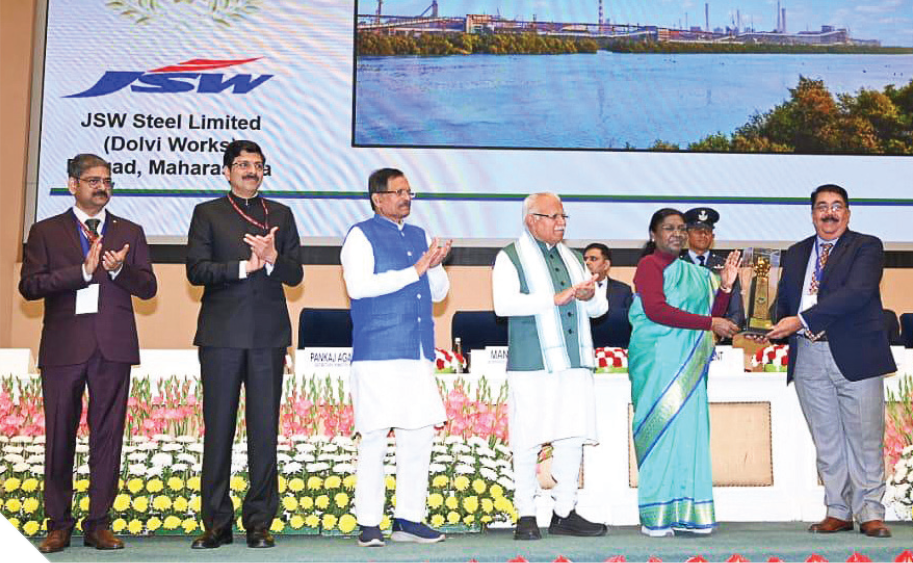
In December 2025, JSW Steel’s Dolvi Works was recognised as India’s Best-Performing Unit in the Integrated Steel Plants category at the 35th National Energy Conservation Awards, presented by President Droupadi Murmu, for its exemplary progress in energy efficiency. The recognition reinforces Dolvi’s position as a benchmark for responsible steelmaking and reflects the impact of initiatives such as Project SEED in helping us achieve our specific energy consumption target of 5.65 Gcal/tcs.