37,700+ hours
Of unplanned downtime saved.
Digitalisation
driving End-to-End Transformation.
- Grow Revenue
- Digital sales and marketing
- Reduce cost and improve throughput
- Digital mining operations, smart factory and digital supply chain and logistics
Being future-ready through
technology-led transformation
and digitalisation

Mr. Gajraj Singh Rathore
Chief Operating Officer
“For over three decades, our progress has been shaped by the belief that enduring excellence is built through shared capability, continuous reinvention and disciplined execution. Today, the Centre of Excellence (COE) has evolved into a catalyst for enterprise-wide transformation - converting ideas into scalable solutions and strengthening the way we operate across geographies.
By combining deep operational expertise with digital intelligence, collaborative problem-solving and a culture of replication at speed, we are creating an ecosystem where innovation delivers measurable impact.
From advancing efficiency and sustainability to accelerating Industry 4.0 adoption and building intelligent, connected operations, our focus remains on translating insight into enterprise value.
As we strengthen our digital foundations, embracing AI use cases to solve large problems and build a culture of ownership and experimentation, we are not only improving performance today but shaping a more agile, resilient and future-ready steelmaking organisation.”
Material issues addressed
- Economic performance
- Technology, product and process innovation
- Digitalisation and automation
Innovation, digitalisation and advanced technologies remain central to our journey towards operational excellence, sustainability and futureready manufacturing. Through focused investments in R&D, Industry 4.0, AI-led intelligence and enterprise-wide digital transformation, we are enhancing productivity, strengthening decision-making, improving asset reliability and building a smarter, agile and resilient steelmaking ecosystem aligned with long-term value creation.
INNOVATION AT JSW STEEL
Research and Development activities at JSW Steel continue to focus on innovation, operational excellence and sustainable growth through advancements in process efficiency, product development and resource optimisation. Key initiatives include quality and productivity enhancement, energy optimisation, waste recycling, conservation of natural resources, beneficiation of low-grade iron ore and development of new applications for slag utilisation. We also collaborate extensively with leading academic institutions, research bodies and technology partners to accelerate innovation and strengthen technological capabilities. These R&D initiatives have contributed significantly towards cost optimisation, operational improvement and revenue generation, resulting in net realisations of ₹443.34 crore during the year.
From ideas to enterprise solutions: COE’s role in accelerating transformation
JSW Steel’s Centre of Excellence (COE) continues to evolve as a catalyst for companywide transformation - enabling faster problem-solving, sharper execution, and consistent value creation across operations in India and the USA. By integrating expertise and standardising best practices, the COE is strengthening a unified, innovation-led operating ecosystem across our organisation.
In FY 2025–26, the COE significantly expanded its footprint, advancing a portfolio of 629 projects across key operational areas. Of these, 316 initiatives delivered measurable business outcomes, while 313 contributed to critical improvements in safety, environmental performance, and long-term process stability. This balanced portfolio reflects a dual focus on immediate performance gains and long-term operational resilience.
At the core of this progress is a strong culture of collaboration and shared ownership. By fostering cross-location learning and deep on-ground engagement, the COE has enabled faster replication of successful solutions - ensuring that innovation is not confined to individual sites but scaled across the enterprise. Its guiding philosophy continues to emphasise collective problem-solving and the efficient adoption of proven ideas.
This year also marked the introduction of a structured rewards programme, recognising project stakeholders for their contributions and reinforcing a culture of accountability and excellence. In parallel, the COE has initiated efforts to identify and pursue patenting opportunities for high-potential innovations - marking a strategic shift towards formalising intellectual capital.
From enhancing operational efficiency and optimising energy usage to advancing decarbonisation through initiatives such as SEED - under which 95 focused projects were undertaken during the year - the COE remains central to shaping a smarter and more sustainable future. As it continues to scale its impact, the COE is not just enabling operational excellence - it is embedding a forward-looking mindset across the organisation, reinforcing JSW Steel’s position as a globally competitive and innovation-driven steelmaker.
Projects executed during the year
Initiatives delivered direct operational and financial benefits
Initiatives contributed to improvements in digitalisation, reliability, safety and environmental performance
DIGITALISATION
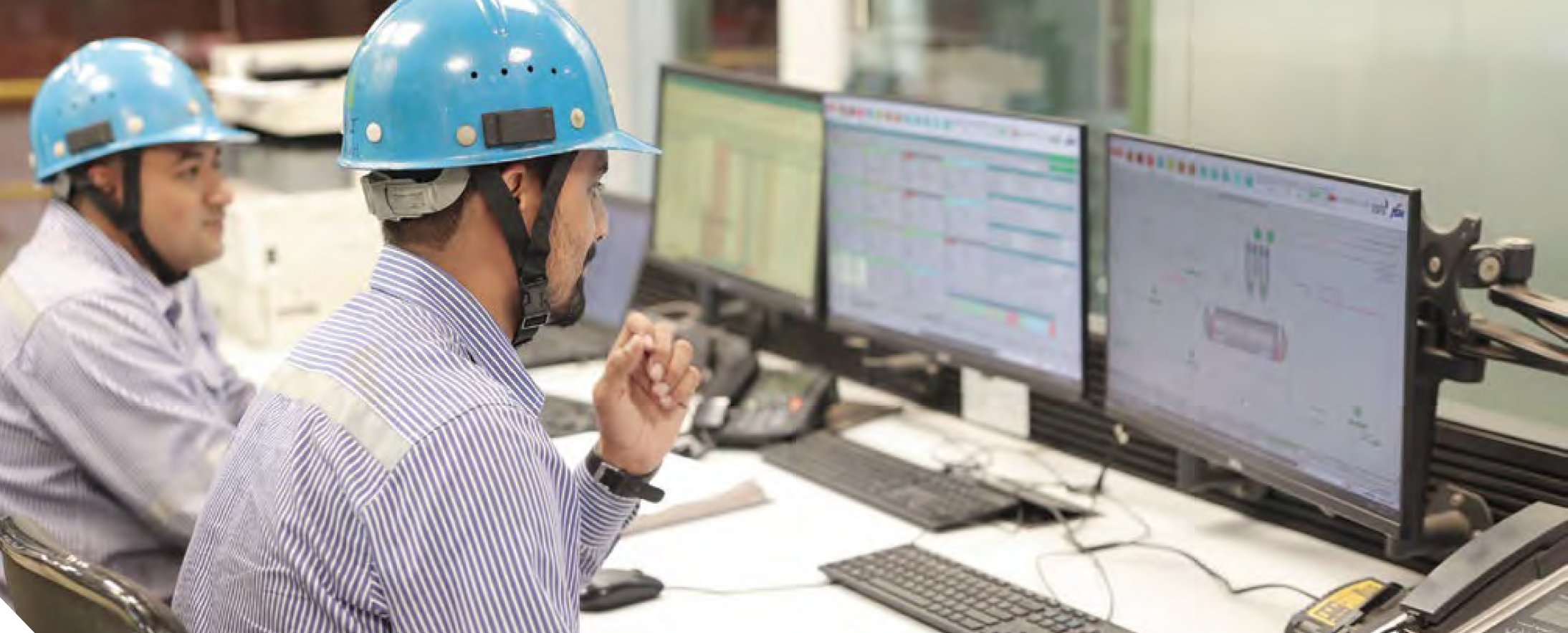
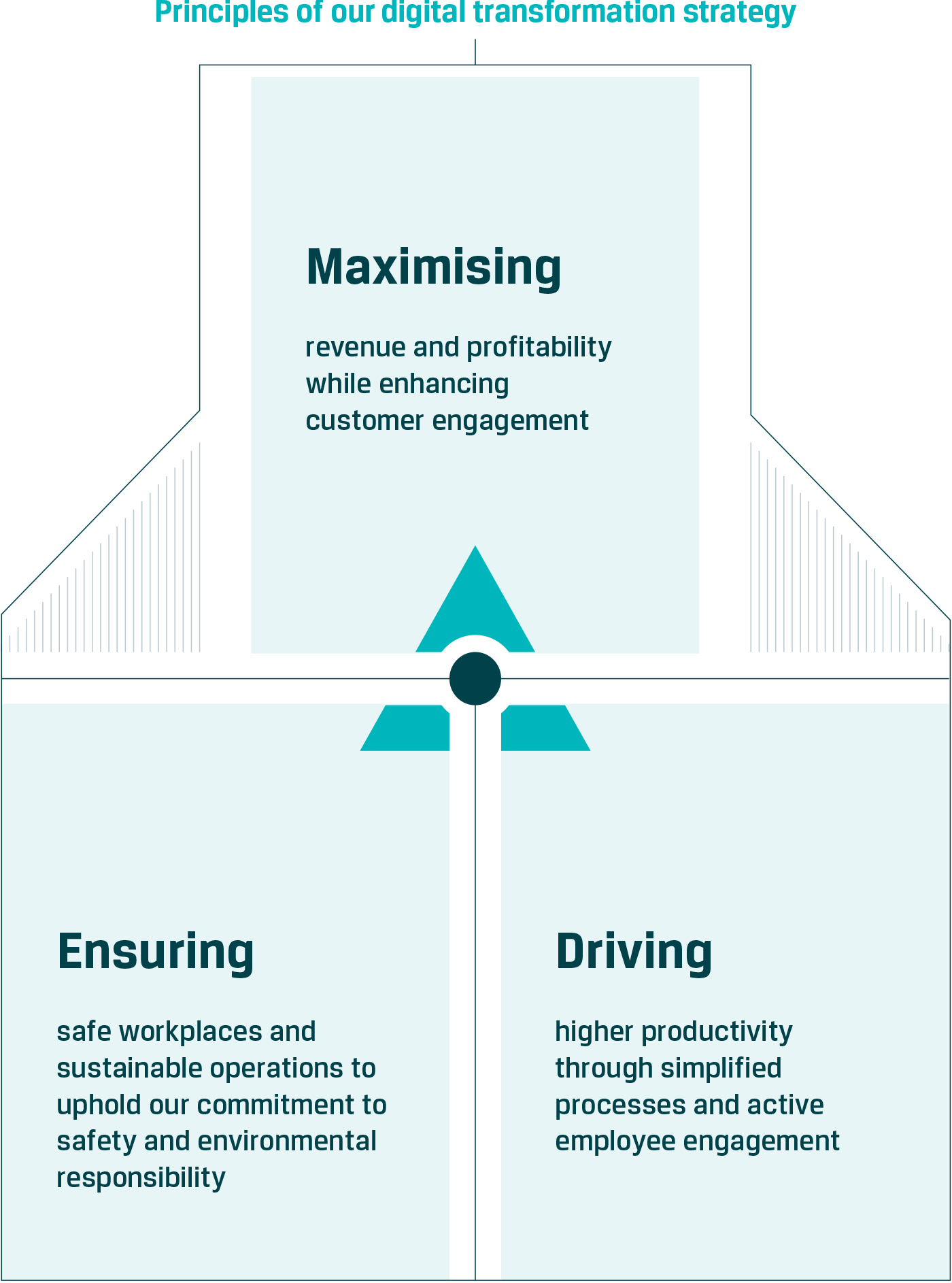
Our digital transformation journey continues to redefine the way we operate, innovate and deliver value across the enterprise. By leveraging Industry 4.0 technologies across manufacturing, supply chain, sales, sustainability and safety functions, our Company is enhancing operational efficiency, improving decision-making and strengthening stakeholder value creation. At the core of this transformation is an Agile Product Management approach that enables continuous innovation through iterative development, ensuring digital solutions remain adaptive, scalable and aligned with evolving business requirements.
Each digital initiative is designed with an enterprise-wide perspective, enabling seamless integration across plants and business units while supporting our Company’s strategic priorities of operational excellence, sustainability, safety and customer centricity. Advanced digital platforms and intelligent systems are improving equipment reliability, enabling proactive risk management, supporting real-time environmental monitoring and enhancing customer engagement through automation and data-driven insights. Together, these initiatives are strengthening organisational resilience and building a smarter, more agile and future-ready steelmaking ecosystem.
PERFORMANCE IN FY 2025-26
During FY 2025–26, we accelerated our digital transformation journey towards a more integrated, platform-led and intelligence-driven operating model. Our Company focused on building scalable digital ecosystems that enhanced operational efficiency, improved user experience and strengthened data-led decision-making across business functions. This transformation was supported by deeper collaboration across Digital, IT and Operational Technology teams, enabling seamless integration between business, manufacturing, engineering, safety and utility operations.
The year witnessed significant progress in end-to-end business process automation, expansion of digital platforms and wider adoption of customer and channel partner ecosystems. Advanced analytics, realtime dashboards and AI-enabled tools further strengthened operational visibility, faster decision-making and process optimisation across sales, inventory, dispatch and customer engagement functions. Collectively, these initiatives have enhanced scalability, improved operational responsiveness and reinforced our Company’s foundation for long-term digital innovation and value creation.
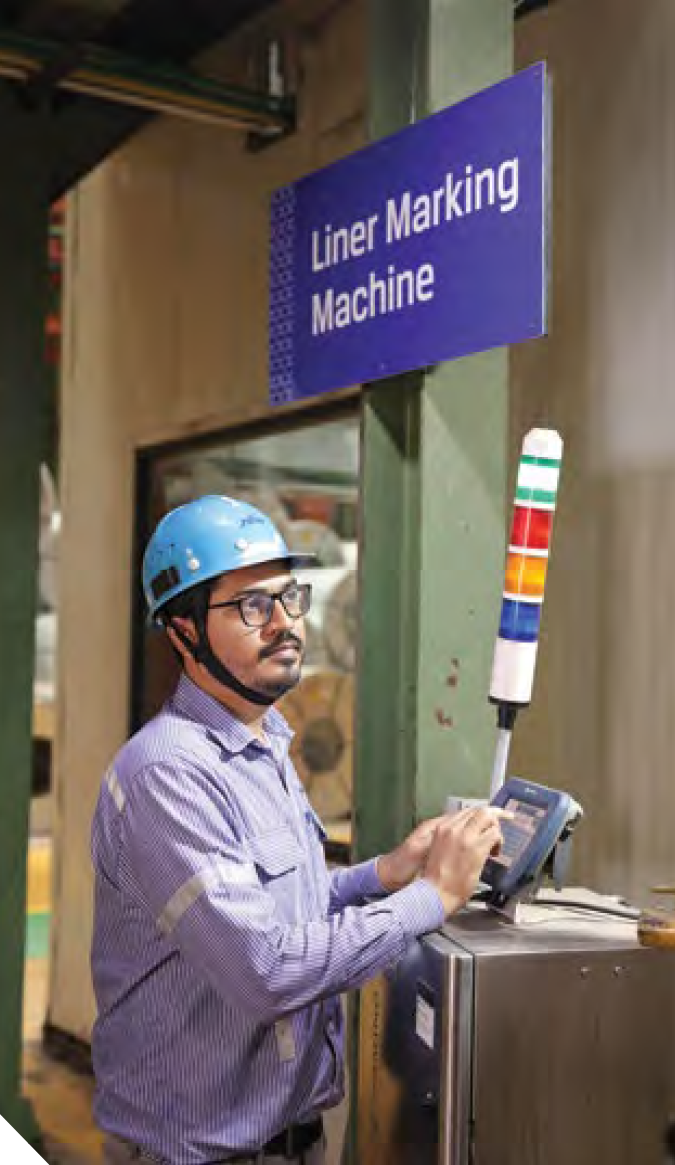

During the year, we significantly strengthened our enterprise data ecosystem through the expansion of our Data Products Programme, enabling wider access to trusted and contextualised data across business functions. The transition towards an agile and product-centric delivery model further enhanced responsiveness, accelerated digital solution deployment and ensured stronger alignment between technology initiatives and operational priorities.

Advanced analytics and AIled interventions continued to strengthen decision-making capabilities across sales, inventory, dispatch and customer management functions. Enhanced dashboard visibility, intelligent recommendation engines and AI-enabled analytics tools contributed towards operational optimisation, improved commercial outcomes and meaningful financial benefits across our business ecosystem.

The Connected Workforce Programme continued to strengthen shop-floor safety and operational continuity through real-time workforce visibility and enhanced emergency response capabilities. In parallel, automationled initiatives such as the Single Point Lubrication System reduced manual intervention in hazardous environments, improving workforce safety, maintenance reliability and operational efficiency.

Our Company continued to expand business process automation across critical commercial and operational workflows, improving standardisation, productivity and execution efficiency. Increased adoption of digital platforms across channel partners, order management and downstream engagement strengthened ecosystem connectivity, enhanced transparency and enabled faster transaction processing across our value chain.

Predictive maintenance capabilities were further strengthened through advanced digital platforms enabling improved equipment monitoring, fault detection and maintenance readiness across critical assets. Simultaneously, engineering digitisation initiatives created a more integrated and standardised operating environment, improving data consistency, project execution efficiency and coordination between engineering, operations and maintenance teams.

We strengthened our operational visibility through deeper IT–OT integration and deployment of centralised monitoring systems across key units. Enhanced realtime data visibility, improved energy monitoring and integrated quality reporting systems supported faster decision-making, operational transparency, proactive resource management and improved coordination between production, quality and operational teams.
Industry 4.0 journey
FY 2025–26 marked a significant milestone in our Company’s Industry 4.0 journey, with us accelerating the deployment of Artificial Intelligence, Machine Learning, Industrial Internet of Things, Vision Analytics, Digital Twins and advanced process control systems across its manufacturing ecosystem. The focus during the year extended beyond digital deployment towards embedding intelligent technologies into live operating environments to address critical challenges related to process variability, equipment reliability, quality optimisation, manual inspection dependency and decision-making efficiency. This strengthened Digital–IT–OT convergence and enabled the development of a more connected, intelligent and scalable production ecosystem.
Our Company continued to enhance real-time operational visibility through continuous process monitoring, predictive maintenance, AI-assisted operator insights and automated anomaly detection systems. Digital Twins improved simulation capabilities, bottleneck prediction and throughput forecasting while the Vision.AI Suite strengthened process analytics, product consistency, safety monitoring and automated inspection capabilities. These initiatives collectively contributed towards improved productivity, operational responsiveness, equipment reliability, safety performance and energy efficiency across operations.
20,000+
Sensors deployed under the Condition-based Monitoring Programme
37,000+ hours
Saved through predictive monitoring and intelligent maintenance systems
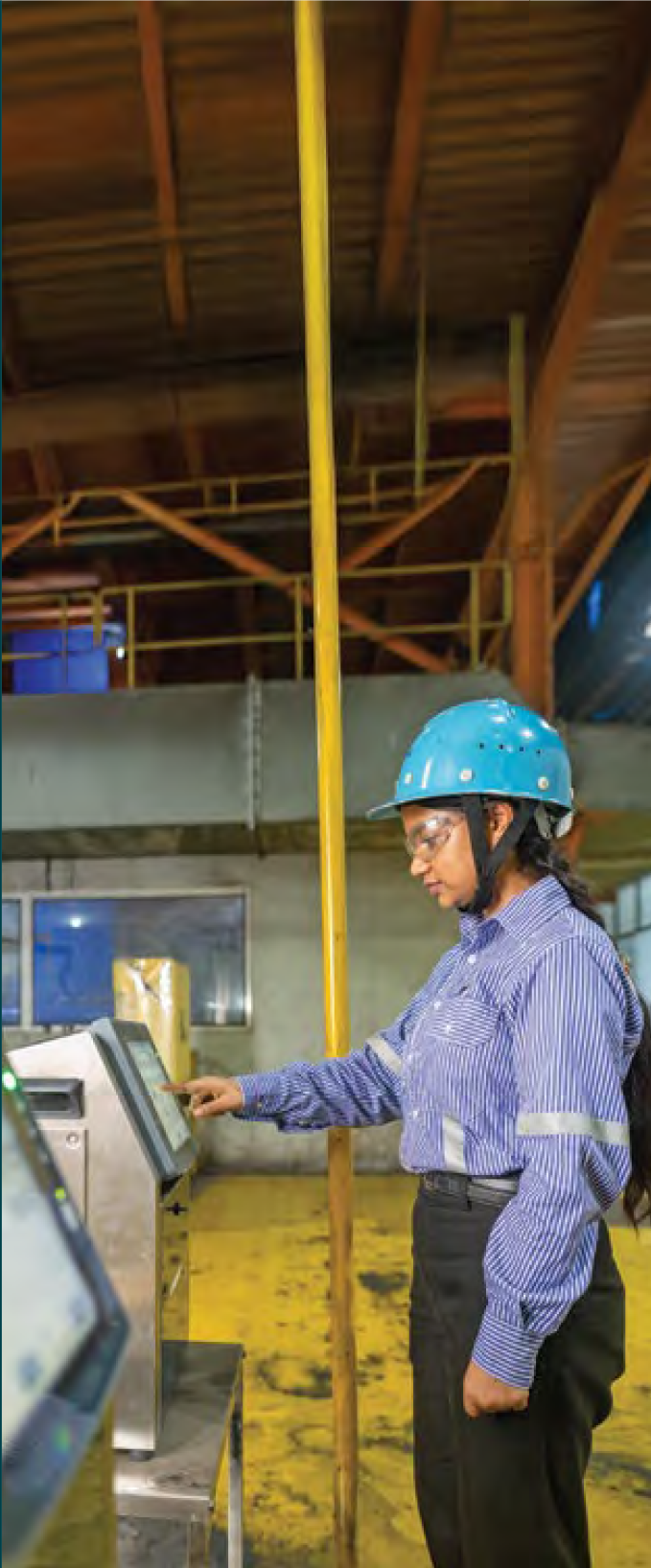
Intelligent operations
AI/ML-driven process optimisation has become a key pillar of our Company’s Industry 4.0 transformation. Real-time models, Vision.AI systems and Digital Twin deployments are being used across sinter, pellet, furnace, mill and utility operations to improve process stability, optimise resource utilisation and strengthen quality consistency. AI-enabled Advanced Process Control systems are also helping optimise fuel, air and temperature settings, while a pellet plant AI model delivered up to 5% energy savings alongside improved pellet quality and operational stability. Collectively, these initiatives are reducing variability, improving throughput stability and enabling more data-driven manufacturing decisions.
Asset reliability
We have significantly strengthened predictive maintenance and asset intelligence through Digital Twins, historian platforms, sensorisation, image analytics and real-time alerting systems. A key Digital Twin initiative for critical rotating and conveying assets delivered ~12–15% improvement in Mean Time Between Failures (MTBF), ~10–15% reduction in Mean Time to Repair (MTTR) and ~15% reduction in unplanned downtime. Additional capabilities such as vibration monitoring, temperature sensing, auto-lubrication systems, refractory management tools and asset condition dashboards are improving equipment availability, enabling earlier maintenance intervention and accelerating the transition from reactive to predictive maintenance practices.
Vision systems
Vision.AI solutions are increasingly being deployed to improve quality assurance, equipment reliability, safety compliance and material tracking across operations. Computer vision systems are monitoring pellet wheel behaviour, conveyor sway, foreign objects, furnace irregularities, pellet sizing and PPE compliance, significantly reducing dependency on manual inspection. These interventions are enabling faster identification of abnormalities, improving operational responsiveness and strengthening safety through real-time monitoring of unsafe conditions and behaviours. Parallel digital quality initiatives are also enhancing end-to-end quality assurance through predictive analytics, automated certification and defect visualisation.
Connected ecosystem
We continued to strengthen our digital backbone to support faster and more integrated operational and commercial decision-making. Grade-linked dashboards, lab-integrated decision systems, utility integrations, weighbridge connectivity and IIoT-enabled data flows improved cross-functional visibility and reduced latency between field events and management action.
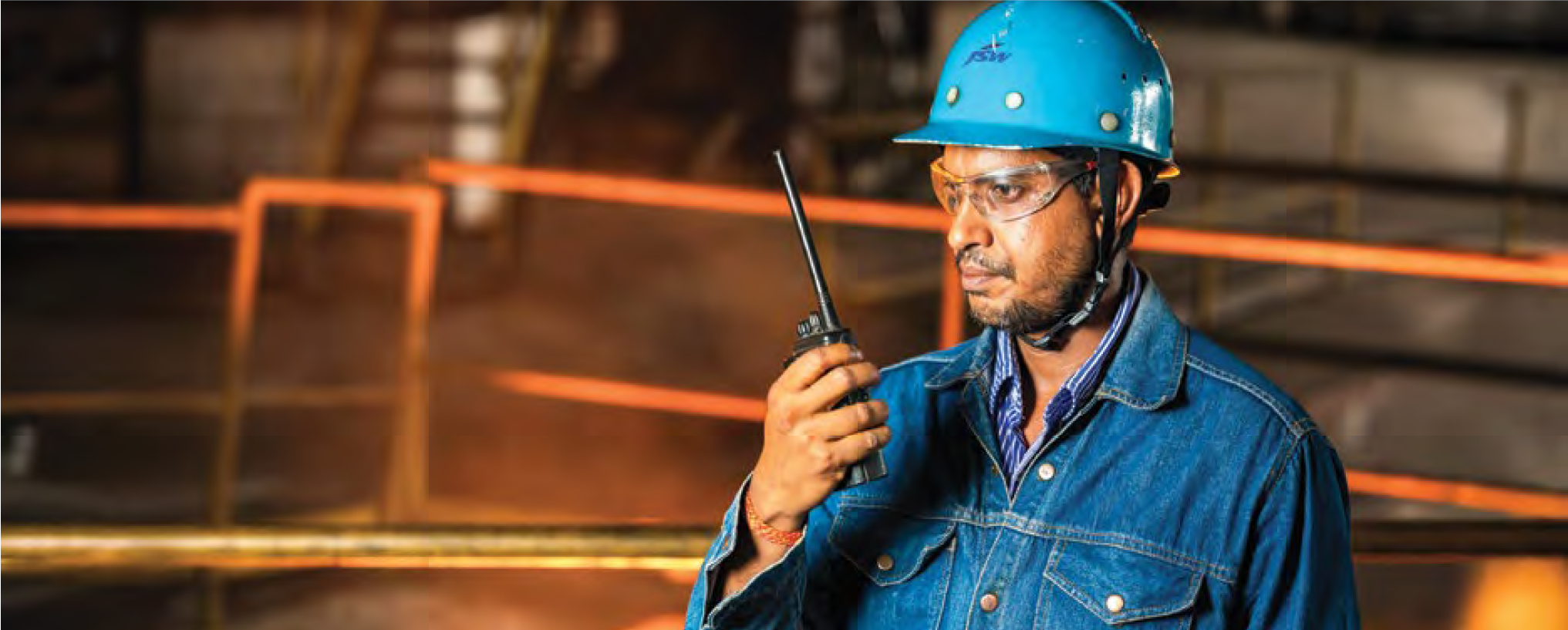
During the year, we advanced our Industry 4.0 journey through the deployment of a Private 5G network at Dolvi Works, creating a secure, highperformance digital backbone for next-generation manufacturing.
Spanning 60 lakh sq. metres, the network is supported by 14 towers interconnected through a 10 Gbps fibre backbone, delivering ~200 Mbps zonal bandwidth. This robust infrastructure provides seamless, low-latency connectivity across the plant, enabling real-time integration of machines, workforce, vehicles, sensors and enterprise systems.
The deployment marks a strategic shift from conventional operations to a data-driven, intelligent manufacturing model, while establishing a scalable foundation for future innovations such as AI, digital twins and autonomous systems.
Driving High-Impact Use Cases
The Private 5G platform is enabling multiple Industry 4.0 applications across key operational areas:
- Industrial IoT (IIoT) — Real-time asset monitoring and predictive maintenance to reduce downtime
- Digital Twins — Simulation-led optimisation of production processes
- Connected Fleet Management — Enhanced logistics visibility and asset utilisation
- Smart Safety — Wearable-based monitoring, geofencing and hazard management
- AI Video Analytics — Automated compliance, surveillance and incident detection
- Remote Operations — Centralised command and control of critical processes
- AI-led Quality Control — Automated inspection to improve consistency and reduce scrap
- Smart Warehousing — Real-time inventory tracking and yard management
- Energy Optimisation — Intelligent monitoring for improved efficiency and sustainability
Foundation for Future Manufacturing
The network is designed to support emerging capabilities, including autonomous material handling (AGVs and robotics), AR/VR-enabled maintenance and AI-driven decision automation, enabling the transition towards self-optimising operations.
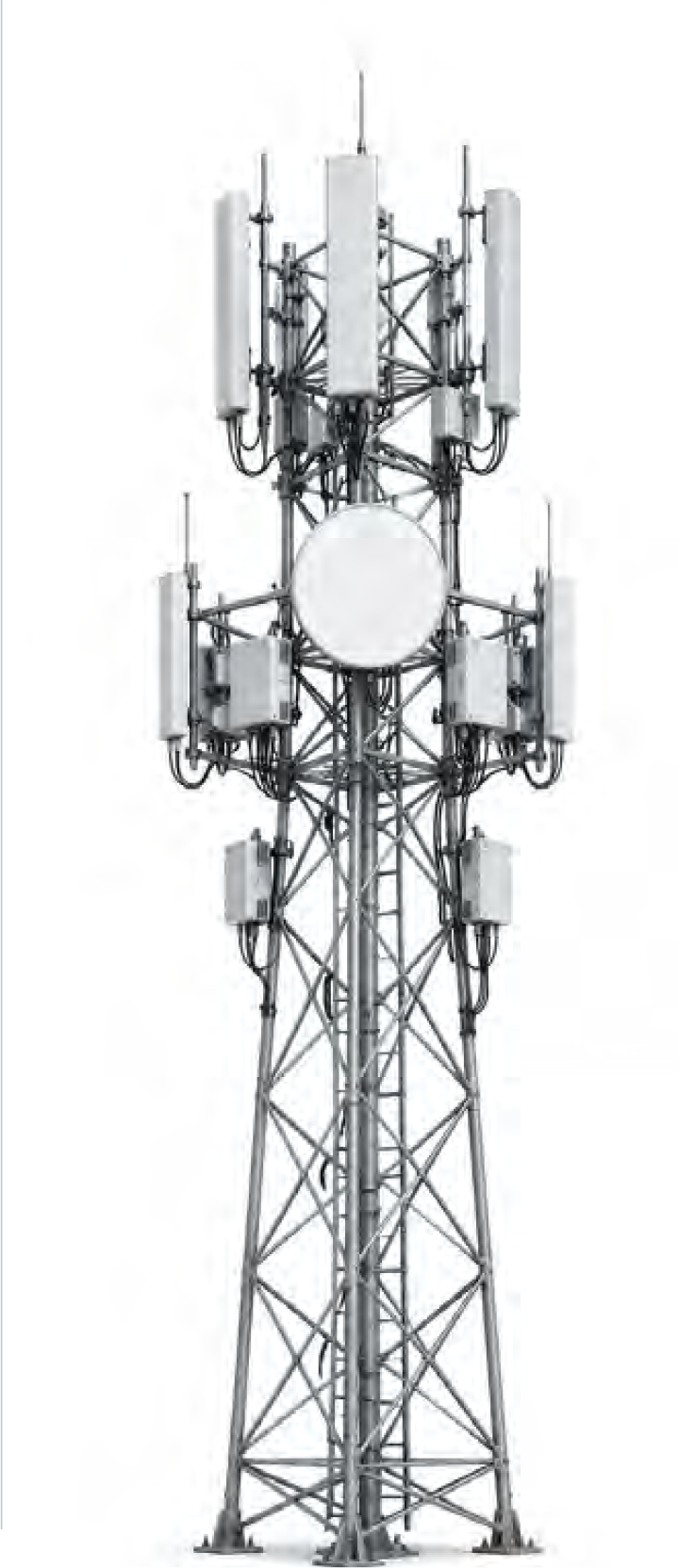
Applied AI
AI and ML technologies are increasingly moving beyond pilots into live operational workflows across manufacturing and maintenance environments. AI-based visual recognition systems are improving raw material validation and burden consistency while ML models are predicting key quality parameters such as sinter RDI, pellet quality and slab temperature to reduce off-spec production. On the maintenance side, AI-enabled image and video analytics are helping detect equipment anomalies, belt sway, foreign objects and unsafe operating conditions in real time. These applications are improving maintenance planning, operational efficiency and process reliability while delivering measurable business outcomes such as up to 5% energy savings in pelletising operations.

Intelligent optimisation
We also advanced our AI-led operational excellence journey through the development of the TEJAS Platform (Transformative Ecosystem for JSW’s AI and Digital Solutions), a reusable and internally governed framework for process optimisation. Designed to reduce dependence on conventional OEMled APC systems, the platform provides greater flexibility, source-code control and scalability while enabling plant-specific optimisation solutions.
The platform is currently being deployed through the Pellet Plant Indurating Machine Optimisation Project where AI models automatically regulate key operating variables to minimise fuel consumption while maintaining production and quality targets. In addition to improving process stability, productivity and energy efficiency, TEJAS is also laying the foundation for a manufacturing data lake and a central command centre, enabling future deployment across facilities such as the Sinter Plant, Blast Furnace and Coke Oven. This approach is transforming individual optimisation projects into a scalable enterprise-wide digital capability.
Unified intelligence
A key milestone during the year was the initiation of the Enterprise Data Lake under JSW Group’s broader data-led transformation agenda. Built on a domain-oriented data mesh architecture, the platform is helping transition our Company from fragmented reporting structures towards a governed ecosystem of standardised, reusable and business-owned data products. The Procurement Data Lake marked the first implementation under this framework, integrating data across multiple source systems to deliver near real-time visibility into spend analytics, procurement turnaround time and operational efficiency metrics. Beyond procurement, the initiative is creating a scalable analytics backbone that strengthens governance, improves planning accuracy, reduces manual reconciliation and enhances enterprise-wide transparency for faster and more informed decision-making.

Future-ready learning
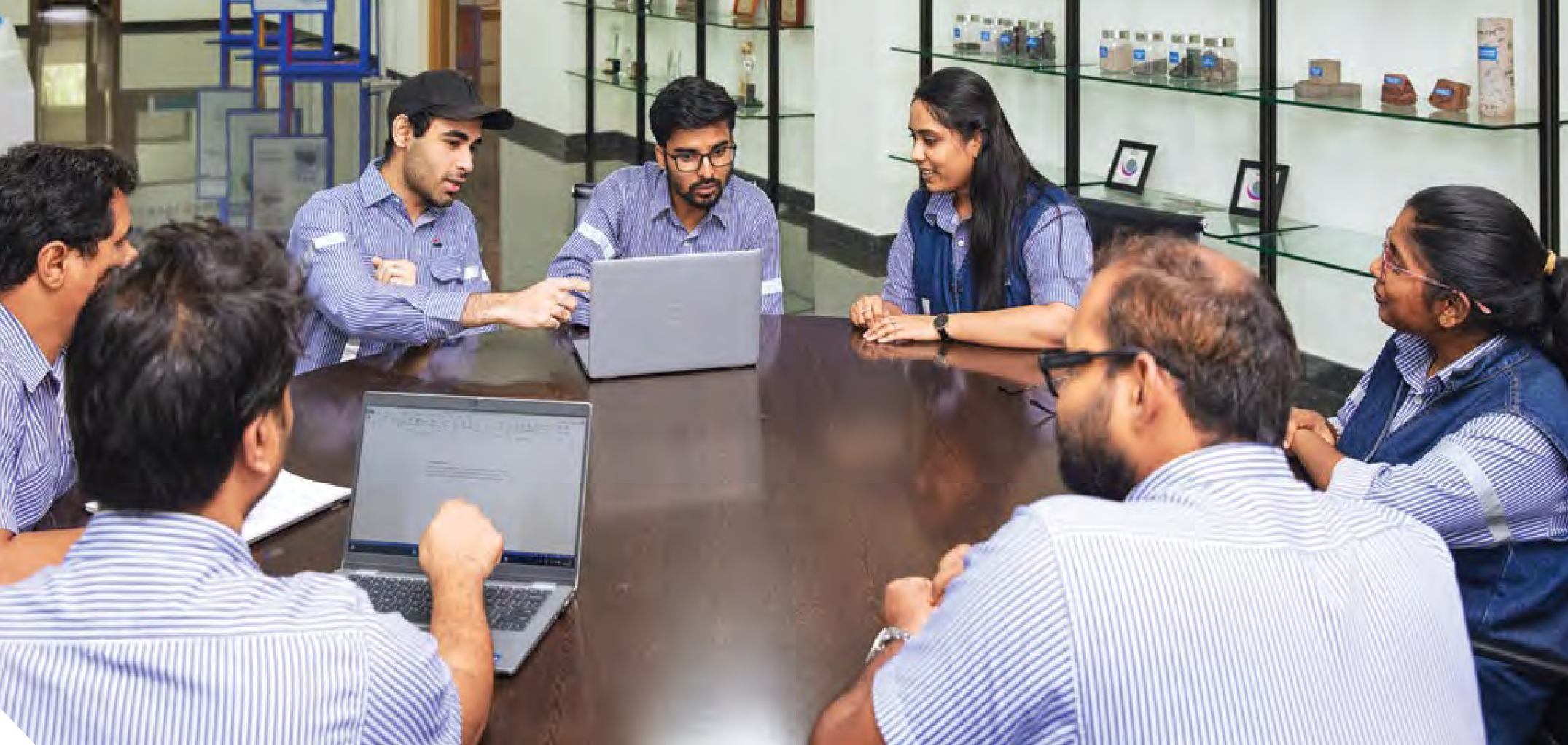
We continue to strengthen enterprise-wide capability building through structured learning and large-scale upskilling initiatives, delivering 37,730 training hours across 8,228 participants and completing 16,732 certifications during the year. Supported by partnerships with leading global institutions and platforms such as Harvard University, Skillsoft, Coursera and Steel University, the learning ecosystem is enabling employees to build digital, functional and leadership capabilities aligned with evolving business needs and Industry 4.0 transformation priorities.
Training hours delivered
Employees trained
Certifications completed
Digital capability
We strengthened functional and platformbased upskilling through targeted capability-building initiatives such as the Salesforce Training Academy. Designed to build advanced CRM, analytics and AI capabilities across Sales, Marketing and Data teams, the programme offers structured pathways across 31 Salesforce certifications spanning Sales & Marketing, Data & AI and Data & Analytics. These initiatives are helping teams transition towards more integrated, automated and insight-led operations, enhancing customer engagement, improving process efficiency and enabling stronger datadriven decision-making across functions.
Salesforce certification pathways
Agile execution
Our Company further strengthened execution excellence through a structured Agile transformation agenda led by the Data Analytics Centre of Excellence. More than 12 focused training sessions enabled over 30 technical trainees and 35 business stakeholders, fostering stronger collaboration between business and technology teams. Supported by the transition from manual project tracking to Azure DevOps Boards, the initiative is improving visibility, accountability and execution speed while embedding a culture of continuous improvement, cross-functional ownership and agile ways of working.
Agile and scrum in training sessions
KEY DIGITAL INITIATIVES
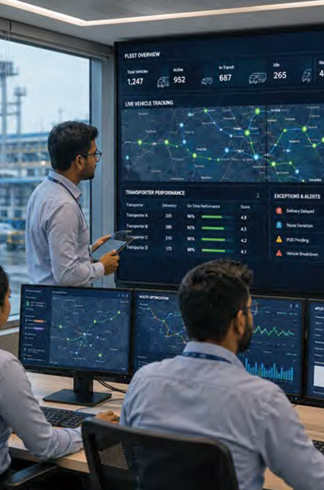
Project Spoorthi (ePOD)
Project SPOORTHI has enhanced logistics visibility and operational control through the deployment of electronic Proof of Delivery (ePOD) capabilities across the transport network. By digitising logistics workflows and enabling real-time movement tracking, the platform has improved planning responsiveness, exception management and coordination across dispatch, transport and receiving points. Advanced analytics capabilities such as lane risk profiling, route optimisation and transporter performance monitoring are enabling faster identification of disruptions and more proactive operational intervention.
The initiative has strengthened logistics efficiency by reducing information delays, improving turnaround management and enabling more data-driven decisionmaking across the supply chain. Realtime tracking and performance visibility are helping create a more resilient and responsive logistics ecosystem capable of supporting large-scale manufacturing operations with improved execution reliability and operational accountability.
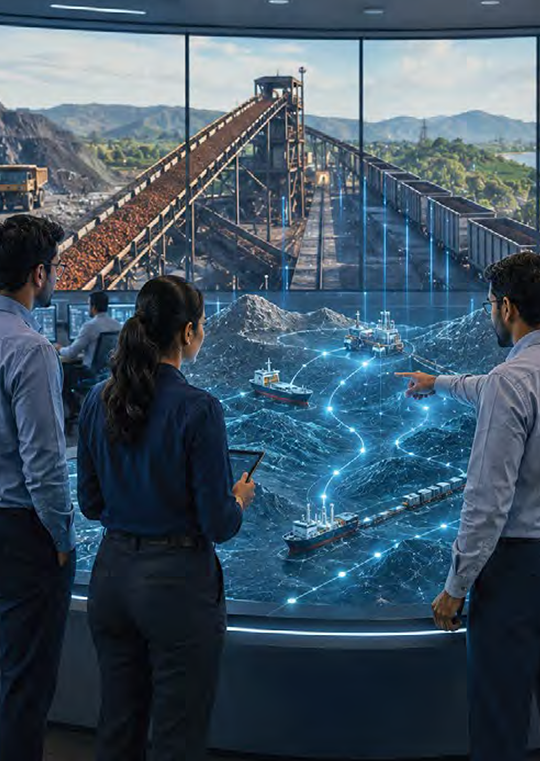
Project Drishti
Project Drishti is a strategic transformation initiative currently underway to build a Mine-to-Metal, AI-enabled digital platform that acts as a digital twin of the iron ore value chain—covering procurement, logistics, blending, and consumption planning and execution.
The programme is focused on creating an integrated, intelligence-driven platform that combines business, operational and external data to enable end-to-end visibility and value optimisation across the iron ore lifecycle. By embedding advanced analytics and AI/ML capabilities, Drishti aims to maximise value from sourcing, movement and utilisation of iron ore, while improving planning precision and execution outcomes.
The platform will enable real-time monitoring, predictive insights and scenario simulation, allowing teams to proactively manage supply variability, optimise blending decisions, streamline logistics flows and align raw material consumption with production needs. It will strengthen coordination across procurement, supply chain and plant operations through a unified decision layer.
Drishti will drive a shift from reactive, lag-based processes to a connected, agile and intelligence-led operating model, enhancing responsiveness, improving execution reliability, and delivering a more stable, efficient, and optimised supply chain across the enterprise.
JSW Vision.AI
JSW Vision.AI continued to scale during FY 2025-26 as an enterprise-wide digital platform focused on improving safety, quality and operational reliability through AI-powered visual intelligence. The platform has moved beyond pilot deployments to standardised implementation across multiple manufacturing locations, supported by reusable AI models, common deployment architecture and centralised governance. Integrated with operational technology systems, Vision.AI enables real-time alerts, anomaly detection, dashboards and reporting directly within plant operations.
Key applications deployed during the year included flame detection and thermal monitoring, material verification and particle sizing, conveyor and equipment health monitoring, and pellet process optimisation. These initiatives are improving predictive maintenance, reducing downtime risk, strengthening process stability and enhancing operational responsiveness through continuous visual monitoring and faster anomaly detection.
27
Initiatives planned or operational

Near-term
- We will continue to deepen the integration of Artificial Intelligence, advanced analytics and Industry 4.0 technologies across its manufacturing, supply chain and commercial ecosystems.
- Building on the strong digital foundation established through enterprise data platforms, connected operations and AI-led intelligence systems, our focus will be on scaling high-impact digital solutions across locations and business functions. Key priorities include expanding the deployment of the TEJAS optimisation platform across critical manufacturing processes, accelerating adoption of Vision.AI and predictive intelligence solutions, and strengthening enterprise-wide data products through the evolving Data Lake architecture.
- We will further enhance real-time operational visibility through deeper IT-OT convergence, enabling faster decision-making, improved process stability and enhanced resource efficiency. On the commercial front, we will continue to strengthen digital customer engagement, intelligent logistics orchestration and integrated supply chain visibility to improve responsiveness, service levels and market competitiveness. Through these initiatives, we aim to unlock greater productivity, reliability, sustainability and value creation across the enterprise.

Long-term
- Our long-term vision is to build a fully connected, AI-powered and data-driven steel enterprise where intelligent systems augment decision-making, optimise operations autonomously and enable continuous innovation across the value chain.
- We envision an integrated digital ecosystem powered by advanced AI, Digital Twins, Industrial IoT and cloud-native platforms that seamlessly connect manufacturing assets, supply chain networks, customers and business functions. Leveraging a unified enterprise data foundation, we will transition from predictive insights towards autonomous and self-optimising operations that enhance efficiency, quality, sustainability and resilience.
- By continuously investing in digital capabilities, emerging technologies and workforce transformation, JSW Steel aims to establish itself among the world's most technologically advanced steel manufacturers, creating sustainable competitive advantage while delivering long-term value for customers, shareholders and society.