
Among most efficient converters
First-quartile global cost positioning underpinned by superior resource utilisation, energy efficiency and cost competitiveness.
1.6+ BnT
Of iron ore access secured across mines in Karnataka, Odisha and Goa, further strengthened by five composite licences.
30% total economic interest
Achieved in the Illawarra metallurgical coal mines in Australia following the acquisition of an additional 10% stake, further strengthening our Company’s international raw material security strategy.
15-year
2 MTPA raw coking coal linkage (~0.9 Mt of clean coal) established with Coal India, alongside securing access to three captive mines in Eastern India and acquiring operational rights for the 2 MTPA Dugda washery.
92.2% equity
stake acquired
In Minas De Revuboe Limitada (MdR), Mozambique along with shareholder loans, unlocking access to a large untapped coking coal reserve and strengthening long-term raw material security.
Cost leadership through
resource optimisation and
improved raw material security
Mr. Arun Maheshwari
Director, Commercial & Marketing
“Our approach to raw material security is guided by a clear belief that leadership is built on stronger foundations and greater self-reliance. By accelerating the operationalisation of captive mining assets, strengthening domestic resource linkages and expanding strategic global partnerships, we are creating an integrated value chain designed to enhance supply assurance, optimise costs and ensure long-term competitiveness.
Alongside securing critical iron ore and coking coal resources, we continue to drive operational excellence through process innovation, energy efficiency, logistics optimisation and disciplined cost management across our footprint. These initiatives are enabling greater resilience, improving productivity and unlocking structural advantages at scale.
As we deepen backward integration and advance our renewable energy and resource strategy, we are not only strengthening performance today but building the capability, agility and conviction needed to shape the future of steelmaking with confidence.”
Material issues addressed
- Economic performance
- Vendor management and development
- Investment in clean technology
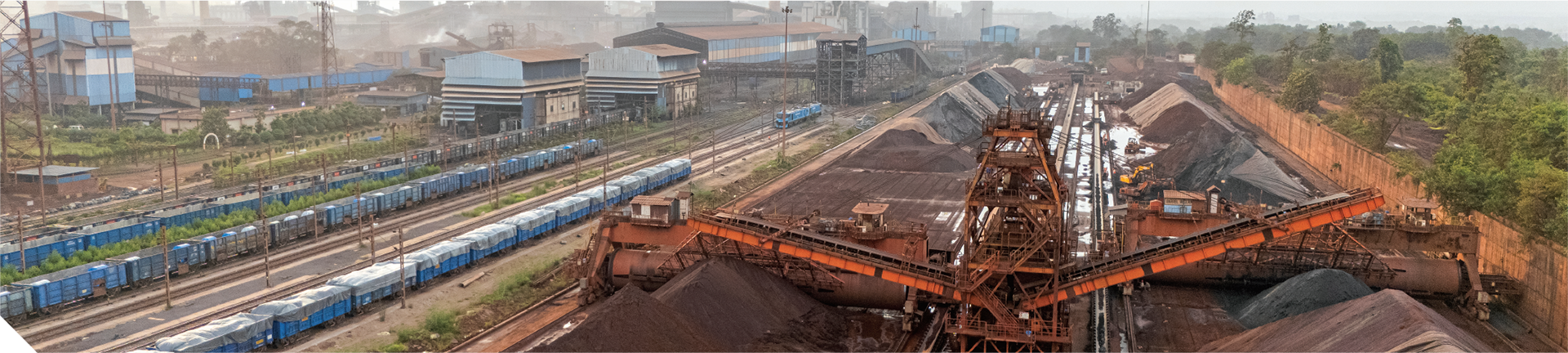
We sustain our cost leadership through resource optimisation and strategic investments across mining and logistics infrastructure. This reduces dependence on external suppliers, mitigates raw material price volatility and strengthens operational resilience across the value chain.
Iron ore consumption met through captive mines in FY 2025-26
Cost reduction projects completed during the year under Centre of Excellence drive
RAW MATERIAL SECURITY
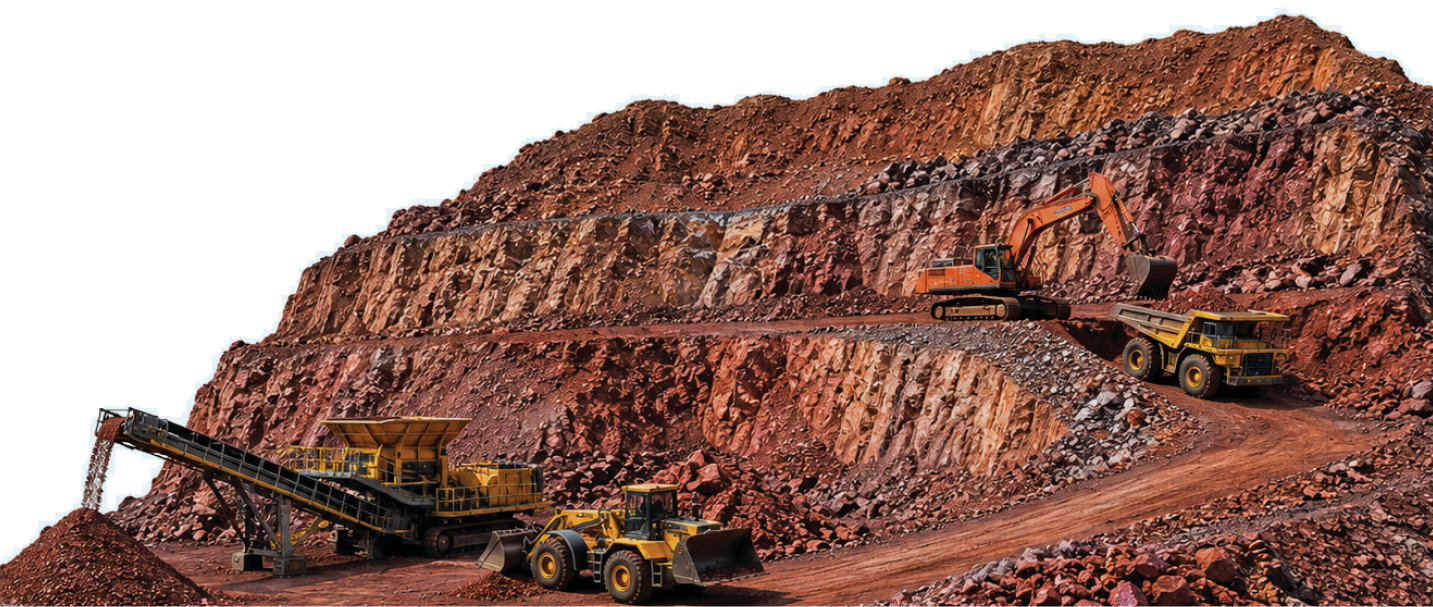
During FY 2025–26, we continued to strengthen our raw material security through the accelerated operationalisation and ramp-up of captive mining assets. Iron ore production from our Odisha mines including Nuagaon, Narayanposhi and Gonua reached 10.71 MT during the year, surpassing planned levels while dispatches stood at 8.31 MT to support steelmaking operations. We also achieved key regulatory milestones, including the enhancement of environmental clearance for the Narayanposhi mine from 6 MTPA to 10 MTPA, alongside plans for a large-scale beneficiation facility. Expanding our mining footprint further, we commenced operations at the Cudnem mine in Goa in November 2025, producing approximately 0.5 MT of iron ore, of which around 0.3 MT was dispatched to the Dolvi facility. In parallel, statutory clearances were secured for coking coal assets in Jharkhand, supporting future operationalisation and strengthening long-term coking coal security.
Our Jharkhand coking coal portfolio was further strengthened through the development of the Moitra Coking Coal Block (1.0 MTPA), Parbatpur Central Coking Coal Block (1.2 MTPA), Sitanala Coking Coal Mine (0.3 MTPA) and the addition of the Dugda Coking Coal Washery with a 2 MTPA FSA linkage. During the year, a 25-year Washery Developer and Operator Agreement (WDOA) was executed with BCCL for the Dugda Coking Coal Washery, while the NRS coking coal linkage was enhanced to 3.1 MTPA. These developments increased total raw coal availability to 7.6 MTPA and expanded coking coal reserves in Jharkhand to approximately 0.4 billion tonnes. Integration between captive mining assets and steelmaking operations also improved significantly, particularly at Vijayanagar, which recorded its highest-ever receipts from captive mines, supported by enhanced logistics connectivity and greater utilisation of internally sourced raw materials.
We further advanced our global raw material strategy through strategic investments in coking coal assets. JSW Steel formalised the acquisition of the Minas de Revuboè (MDR) Coking Coal Mining Project in Mozambique’s Moatize coal basin, which holds reserves of approximately 850 MT, including an estimated 250 MT of usable hard coking coal reserves. The project is being developed in phases, with Phase I targeting production of 2.4 MTPA of prime hard coking coal, strengthening long-term supply security while reducing dependence on imported coal. In Australia, the Company increased its stake in the Illawarra Coking Coal operations by raising its holding in the M Res HCC joint venture from 66.7% to 83.3%, thereby increasing its effective economic interest from approximately 20% to around 30% in premium hard coking coal assets. Reinforcing our backward integration strategy, we secured 25 iron ore mines and four coking coal mines through auctions with 13 iron ore mines already operational, while the remaining assets are at various stages of development and commissioning.
OPERATIONAL COST REDUCTION IN FY 2025-26
Continuous focus on Input raw material source and cost optimisation, fuel consumption, yield and process improvements, energy optimisation, higher renewable power, which has tightly controlled our operating cost. Our Company’s Centre of Excellence (COE) programme steers through innovative ideas implementation and consistent value creation across operations by integrating expertise and horizontal deployment of best practices contribute significantly to these initiative.
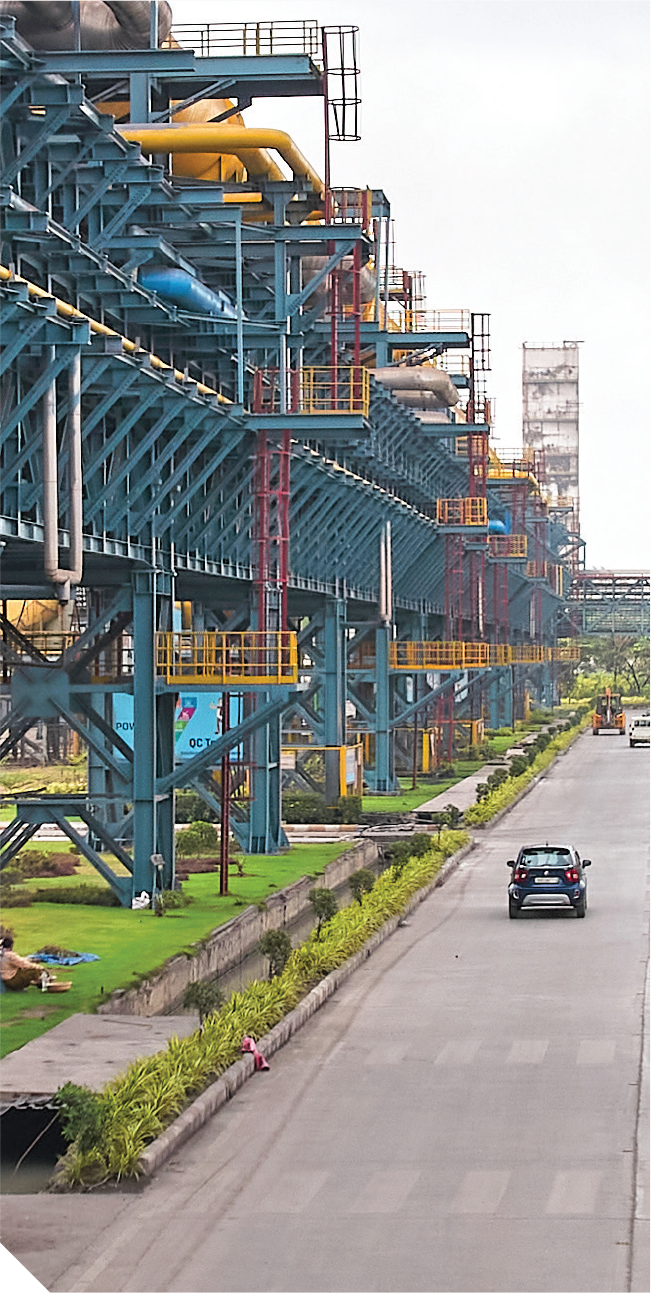
- Successfully implemented organic binders across PP-1 and agglomeration operations, resulting in a significant reduction in bentonite consumption while improving process sustainability and cost efficiency.
- Achieved record gross yields and optimised gas consumption across bar and wire rod mills, enhancing operational efficiency and reducing energy costs.
- Improved productivity across rebar manufacturing and rolling mill operations through higher equipment utilisation, reduced cobbles and enhanced component life, resulting in meaningful operational savings.
- Delivered savings under the Lakshya programme through ferro-alloy optimisation, process redesign and improved casting practices across CRCA, HR/HRPO, LP and GI product segments.
- Successfully executed Lean Six Sigma initiatives, including multiple Black Belt and Green Belt projects, driving operational excellence, waste reduction and measurable cost savings.
- Commissioned nine mid-life locomotives under the JVML initiative at significantly lower costs compared to new assets, enabling costeffective fleet augmentation and capital optimisation.
- Completed BF #3 furnace foundation bolt fixing in record time, substantially reducing downtime and supporting significant production cost savings.
- Established a reverse engineering team that developed in-house prototypes for existing equipment, improving self-reliance and delivering notable cost reductions.
- R&D-led initiatives focused on process improvement, product development, energy optimisation and operational efficiency contributed significantly to reducing overall operational costs.
- Continued utilisation of Coke Oven Gas (COG) at the Dolvi Sponge Iron Plant as a partial replacement for natural gas improved energy efficiency and reduced fuel costs.
- Enhanced operational efficiency at PP-2 through gas pressure optimisation and booster installation.
- Continued to advance the transition towards renewable energy through increased focus on solar, wind and hydro power sources, supporting lower power procurement costs, reduced greenhouse gas emissions and compliance with renewable consumption obligations.
- Progressed implementation of Project Drishti to enable end-toend raw material visibility, reduce input variability and optimise hot metal production costs through improved operational planning and process efficiency.
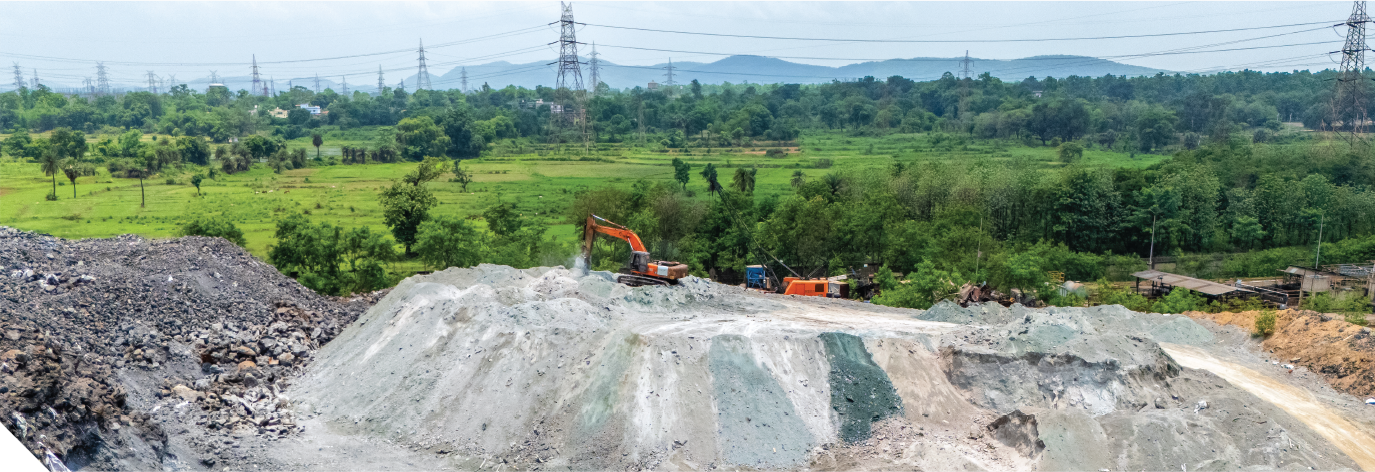
- Enhanced blast furnace efficiency through heat load optimisation, burden distribution improvements and higher PCI rates, resulting in lower fuel consumption and significant cost savings.
- Implemented energy conservation initiatives across compressors, sinter plants and process operations, improving operational efficiency and reducing power consumption.
- Introduced innovative process optimisation measures, including combustion intensification using BF gas injection, strengthening fuel efficiency and operational performance.
- Improved production yields across bloom products, steel melting operations and rolling mills through process optimisation, cut-length improvements and reduced online rejections.
- Strengthened product quality and manufacturing consistency through initiatives focused on reducing size variation, eliminating surface defects and improving bearing steel strike rates, contributing to meaningful operational savings.
- Enhanced rolling mill productivity and process feasibility through operational improvements across bar, rod and blooming mill operations, supporting higher throughput and reduced processing losses.
- Improved coke plant efficiency through higher gross coke yield, contributing to lower production costs and better resource utilisation.
- Optimised logistics operations by routing vessel handling through nearest ports, resulting in improved supply chain efficiency and notable freight cost savings.
- Modernised IT infrastructure through SD-WAN implementation and advanced data protection solutions, reducing network management costs, simplifying maintenance and strengthening disaster recovery capabilities.
- Optimised iron ore blend utilisation across pellet and sinter operations, improving raw material efficiency and reducing specific consumption levels.
- Reduced anthracite coal and furnace oil consumption at the pellet plant through optimisation of intermittent operations, supporting lower fuel costs and improved energy efficiency.
- Improved pellet yield and process efficiency at the DRI plant, resulting in lower specific pellet consumption and enhanced operational performance.
- Optimised dolomite consumption through improved input chemistry management, contributing to better process control and material efficiency.
- Reduced sinter return fines through improved sinter handling and landing practices, strengthening process stability and yield performance.
- Increased PCI coal utilisation at the blast furnace, enhancing fuel efficiency and supporting lower operating costs.
BHUSHAN POWER & STEEL
- Reduced electrode consumption at SMS-1 by optimising EAF operations through improvement in process and tapping ladle availability, resulting in cost saving.
- Power cost optimised through Turbine Top Recovery (TRT) installation at the Blast Furnace, reducing grid power consumption and resulting in cost saving.
- Enhanced steam generation efficiency by recovery of flared gas and utilised in the Boiler through the Power Plant Steam Line Interconnection.
- Reduced power cost by installing a Variable Frequency Drive on the Coke oven plant cooling tower fan - reducing power consumption and operational cost.
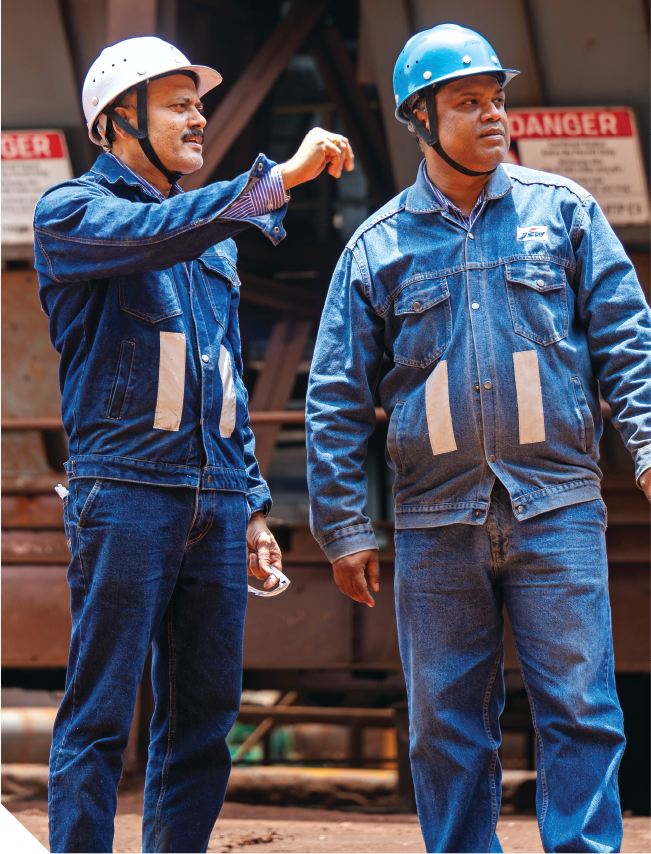
JSW STEEL COATED PRODUCTS
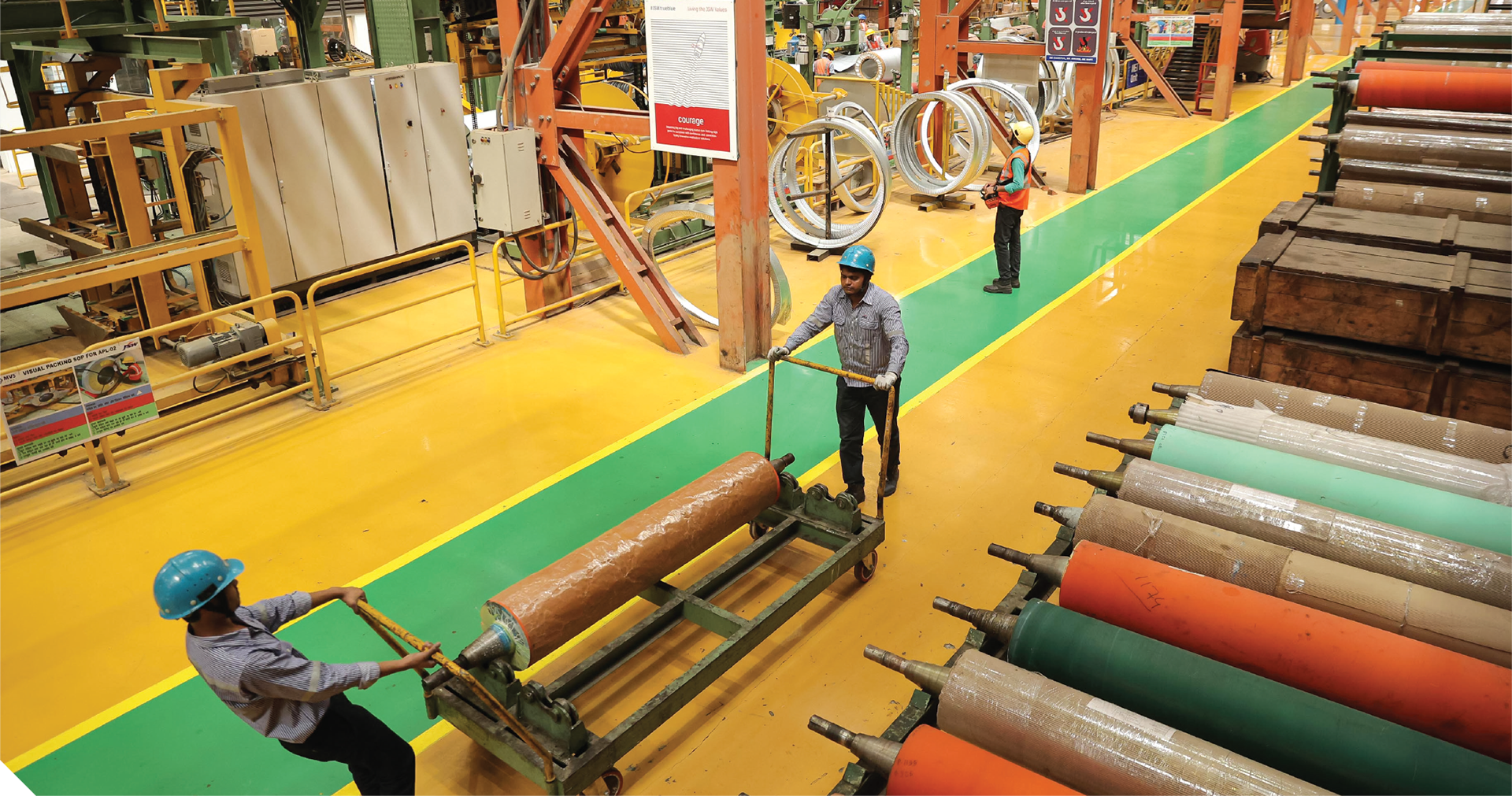
Vasind Plant
- Reduced RLNG consumption in Galvanising lines by implementing protocols for furnace temperatures for all grades and reducing line stoppages.
- Reduced power consumption by optimisation strip dipping temperature in pot and water quenching tank, supporting lower power cost.
- Improvement in yield strengthening skin pass mill and reducing number of line stoppage.
Tarapur Plant
- Reduced GI/GL scrap and SPM defects by commissioning narrow lap welder at two of its Galvanising lines and improved productivity.
- Reduced Rolling Oil consumption in PLTCM using Online Emulsion Monitoring System.
- Reduction in Conversion Cost of TFS cable armour by modifying the annealing process route from CAL to BAF.
Kalmeshwar Plant
- Optimisation of pickling process parameters through reduction of regeneration acid consumption.
- Reduction of HR Skelp generation through process control measures.
- Usage of internal transfer car for HR shifting to CSD [Railway siding inbound logistics].
- Galvalume yield improvement at GAL 2 and CGL 2.
- Reduction in paint consumption and CCL yield improvement through process optimisation.
Khopoli Plant
- Reduction in power consumption by increasing utilisation of line.
Bawal Plant
- Reduced power consumption by increasing utilisation of line and achieving full capacity production of CGL2.
Rajpura Plant
- Reduction in CCL-2 fuel consumption through commissioning of Waste Heat Recovery Boiler.
- CCL-2 yield Improvement through commissioning of DFT and continuous monitoring.
- Reduction in CCL-2 Power consumption through Equipment Control Logic and Pump Automation and RC fan optimisation.
- Reduction in usage of wooden pallet by reverse transportation of used pallets from customer to plant.

Near-term
- Optimise the production from the existing 13 operational mines out of total 25 iron ore mines (including 5 Composite Licence “CL” blocks) so that overall Iron ore cost remains low.
- Operationalise three new iron ore mines in Karnataka and three in Goa in the coming years.
- Operationalise the 30 MTPA slurry pipeline for transportation of iron ore from Odisha mines to Jagatsinghpur to enhance logistics efficiency and reduce landed cost of Iron ore.
- The prime hard coking coal imports from overseas mine (Illawarra), where our Comply has increased its stake from 20% to 30%.
- Operationalise three domestic coking coal mines: Moitra, Parbatpur and Sitanala Mines in the next 1-2 years.
- Out of secured ~5 MTPA domestic raw coking coal as long-term supply from Bharat Coking Coal Ltd. (BCCL), supply of about 0.6 MTPA has been initiated and balance expected in the next 1-2 years. In parallel, the Dugda coal washery construction activity has begun and commissioning of the washery is expected in FY 2027-28.
- Minas de Revuboè (MdR) Coking Coal Mine in Mozambique acquisition is complete and construction activity has begun with the first phase targeted by mid CY2028, producing about 5 MTPA of prime hard coking coal.
- Complete the Phase 2 of 2.5 GW of renewable energy generation and 320 MWh of battery storage, enabling a structurally lower energy cost.
Long-term
- Raw material security target: around 50% of iron ore and coking coal requirement from captive sources.
- Participate in the iron ore, coking coal mines and coal washery / linkage auctions to enhance captive raw material.
- Explorations work in existing acquired 5 composite licences of Iron ore blocks are underway.
- Production enhancement from existing captive sources will be of high priority.