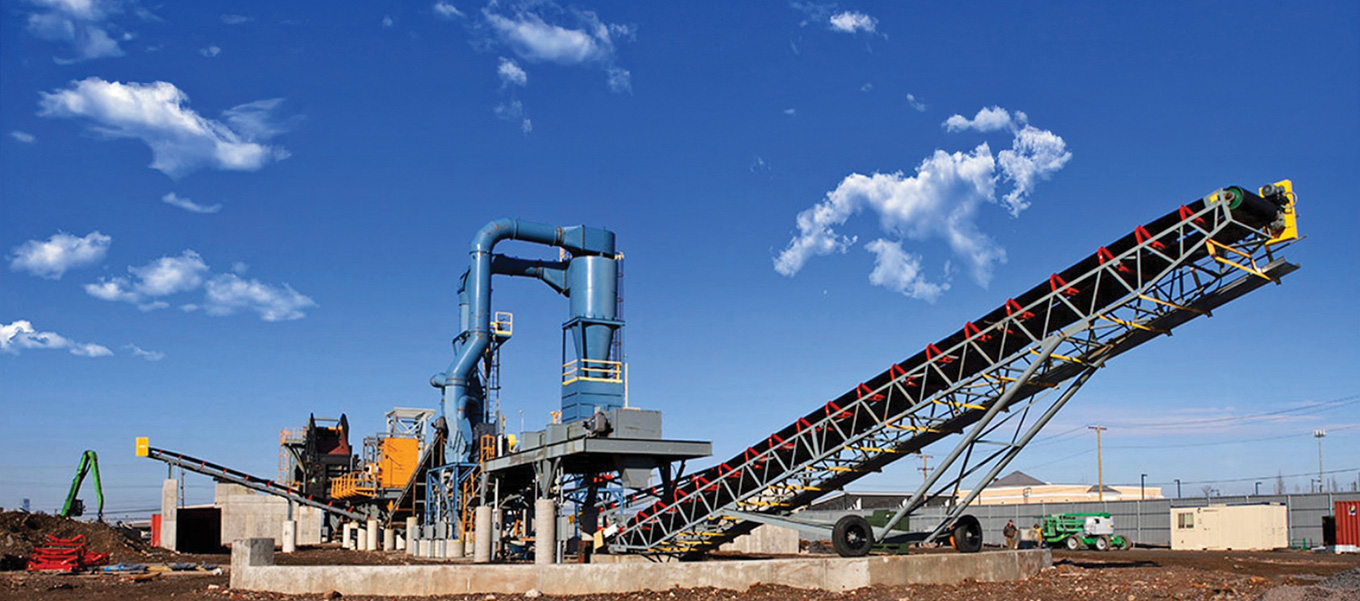
Waste management has long been a core pillar of our sustainability strategy. As one of India's leading steel manufacturers, we place great emphasis on curtailing production waste, conserving resources, and enhancing the circularity of our activities across the full scope of our operations. We have reinforced our waste management plan by optimising waste recovery, reducing landfill disposal, and adopting cutting-edge recycling technologies. Furthermore, our employees play a vital role in achieving our waste reduction goals, and we believe that education is key to their active participation.
Approach to waste management
Waste-to-value initiatives, which transform the byproducts deriving from our manufacturing processes into economically valuable resources, have emerged as a central element of our waste management strategy. To cite an example, blast furnace slag is redirected for use in the cement industry. This practice not only aligns with Circular economy principles but also generates other environmental co-benefits, including reducing the carbon footprint of allied industries and minimising waste disposal. Besides cement production, steel slag also finds applications in road construction, railway ballast and soil treatment. We have also augmented the use of fly ash obtained from our captive power plants in cement and brick manufacturing, thereby mitigating environmental pollution.
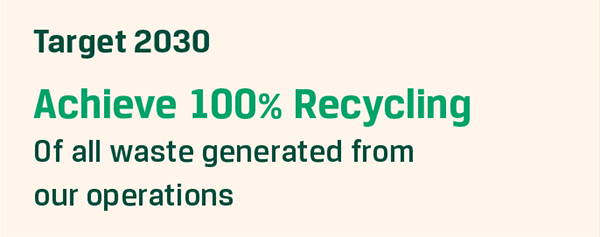
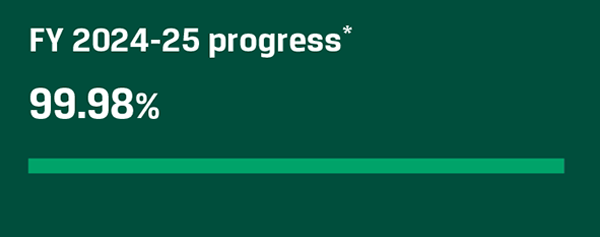
We have achieved success in applying zero-waste-to-landfill practices at our production facilities through optimising waste segregation, recycling and process enhancement. We regularly conduct detailed waste audits across all our facilities, analysing the types and quantities of waste produced. These audits help us identify inefficiencies in our processes, and by pinpointing areas where waste can be reduced, we create a roadmap for improving our overall waste performance.
Moreover, we strive to invest in research and development to discover and innovate new technological and operational levers to minimise the waste deriving from our processes. These efforts enable us to explore cutting-edge technologies and catalyse the adoption and integration of circular economy practices across our operations. By implementing such cutting-edge recycling and reuse programs, we continue to significantly reduce the volume of waste sent to landfills. Among our key initiatives, we have developed an innovative in-house solution to convert blast furnace slag into cement and pioneered the use of steel slag in road construction.
Utilising circular pathways
By integrating circular economy principles, technology innovation, and robust waste management into our sustainability plan, we continue to cement our status as an industry leader in environmental stewardship. This strategic approach, driven by iterative improvements, ensures a cleaner, more resource-efficient future.
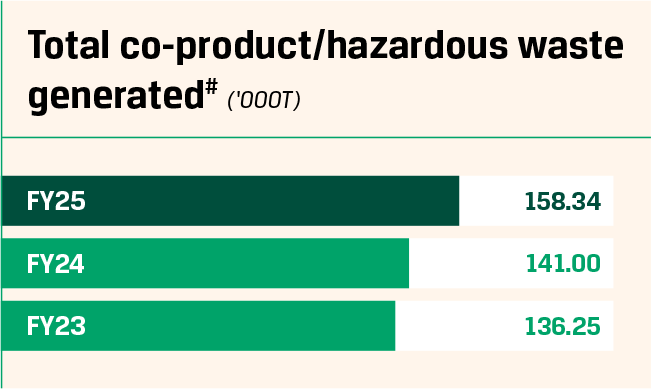
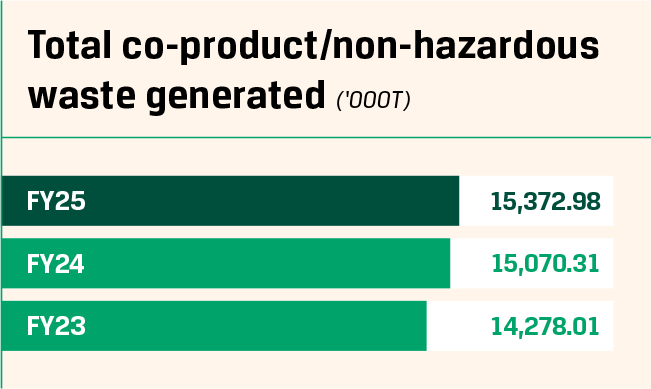
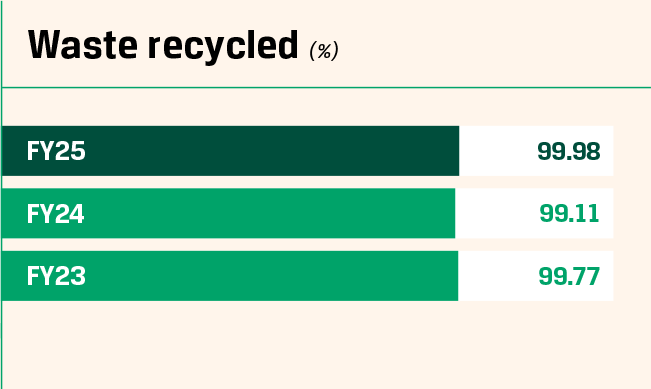
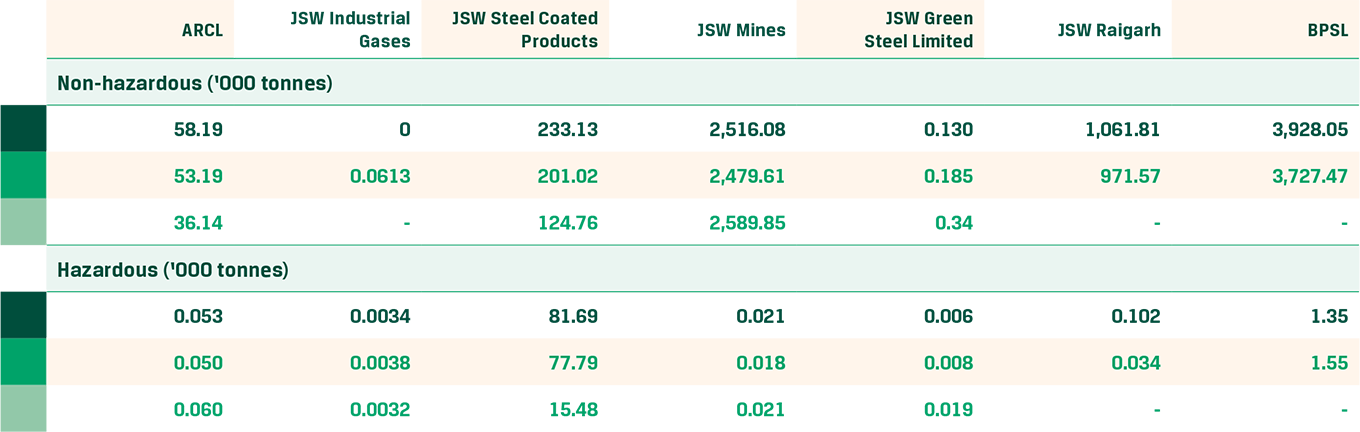
Waste generated

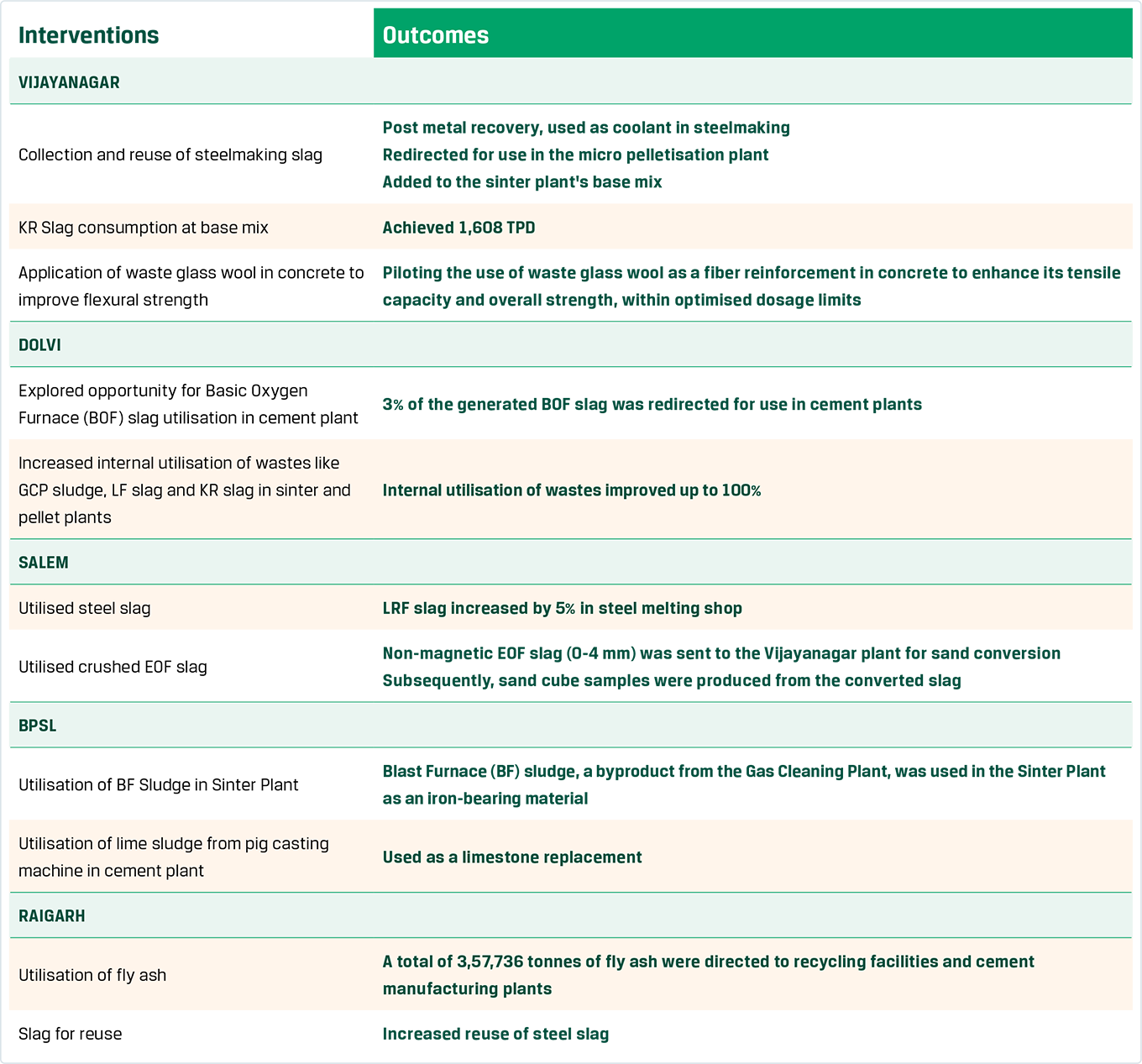
Sustainable solutions
JSW Vijayanagar has taken a significant step towards sustainable steelmaking by replacing limestone with LD slag, a by-product of the Steel Melting Shop, in its blast furnace operations. Traditionally used as a flux, limestone combustion releases CO2, and its mining exacerbates environmental degradation. Likewise, LD slag's disposal and storage can prove particularly challenging, often leading to unsustainable land use. After detailed analysis, it was established that 2 kg of LD slag could replace 1 kg of limestone without compromising furnace performance.
Following successful pilot trials in Blast Furnace 3, the initiative delivered multiple gains: a 2.5 kg reduction in CO2 emissions per tonne of crude steel, lower raw material costs and reduced waste. Challenges encountered during the pilot, such as phosphorus content and slag grindability, were addressed through burden optimisation and are being further mitigated by installing a dedicated grinding mill. With plans to scale this initiative across all blast furnaces by FY 2025–26, JSW Steel is firmly advancing its circular economy aspirations, transforming industrial by-products into sustainable and economically valuable solutions.
2.5 kg
Reduction in CO2 emissions per tonne
of crude steel
achieved
through this initiative
25,039 tonnes
Of LD slag usage
