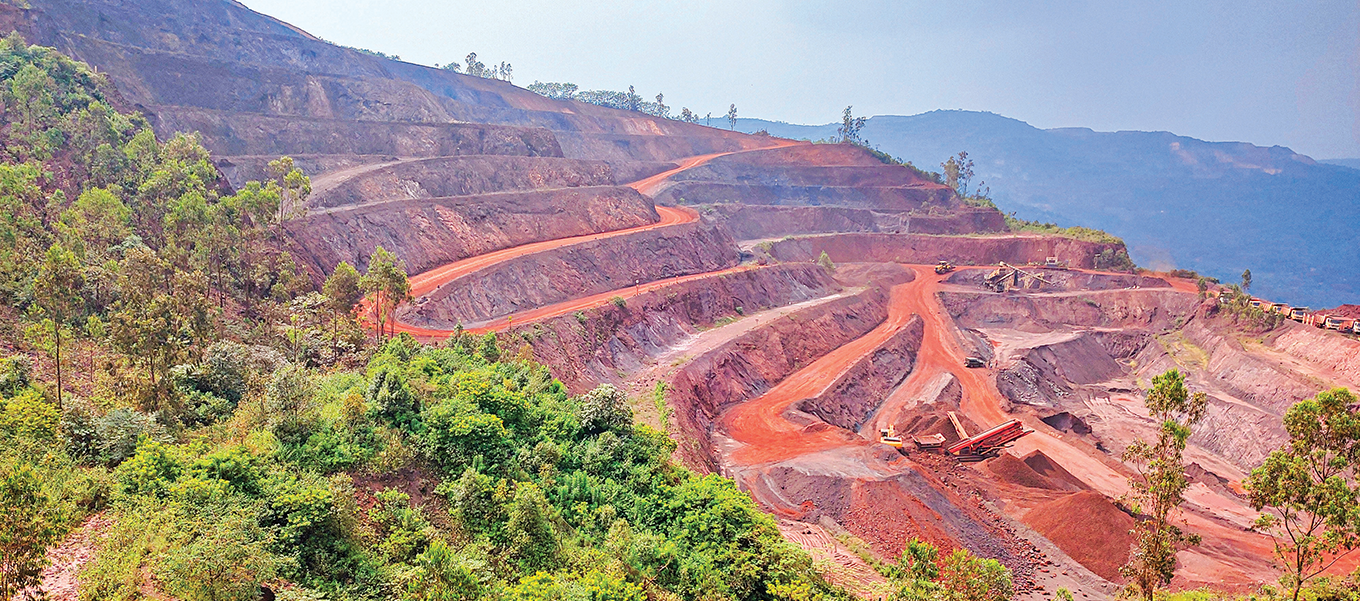
At JSW Steel, we see every contour unearthed not only as a raw material but also as a terrain to be honoured, restored and rejuvenated. During FY 2024-25, we further entrenched our focus on sustainable mining by expanding green buffers, enhancing tailings infrastructure and lowering our carbon footprint. Our strategy aims to minimise environmental disruption while maximising long-term ecological integrity and harmony.
Tailings management
In line with our tailings management approach, this past year, we continued to integrate additional containment systems at our major mining facilities. Our tailings ponds aim to blend environmental safety with resource recovery and circularity.
While they incorporate advanced lining systems and geotechnical measures to enhance safety, they also serve as closed-loop systems, wherein the water consumed in beneficiation is virtually completely reclaimed and recycled through thickening, paste backfill methods, and intricate piping systems. We further strive to minimise the transportation of tailings to reduce ground disturbance and regularly implement structural reinforcements to ensure seismic safety and curb seepage.
Restoring biodiversity
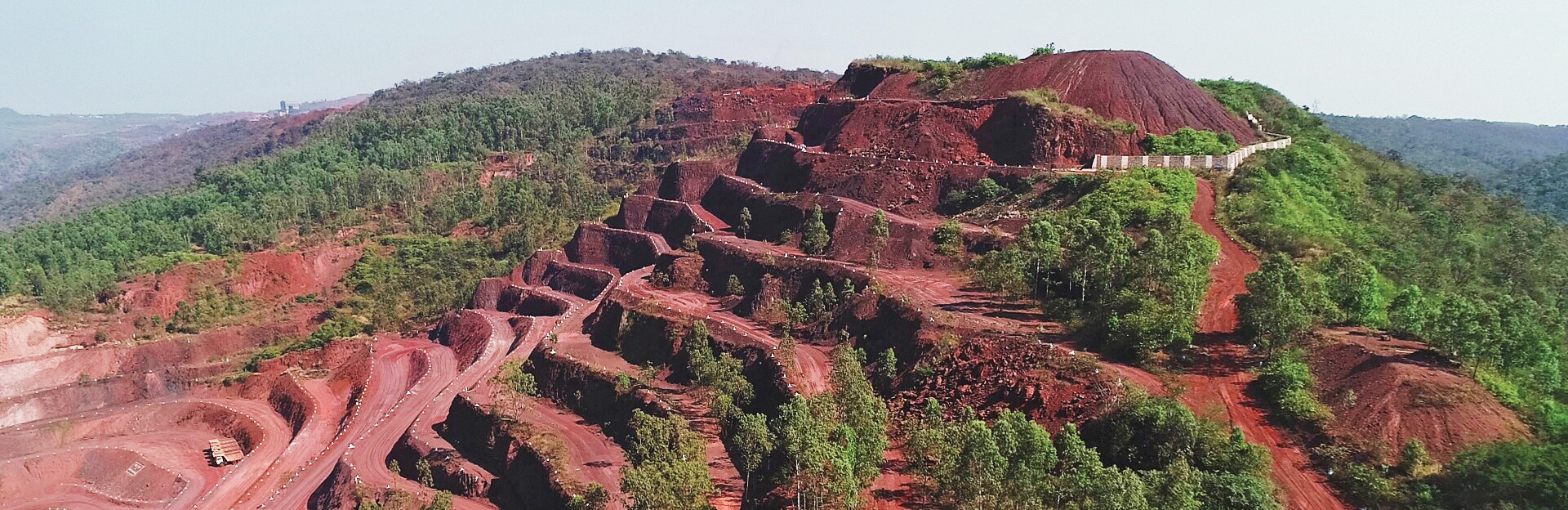
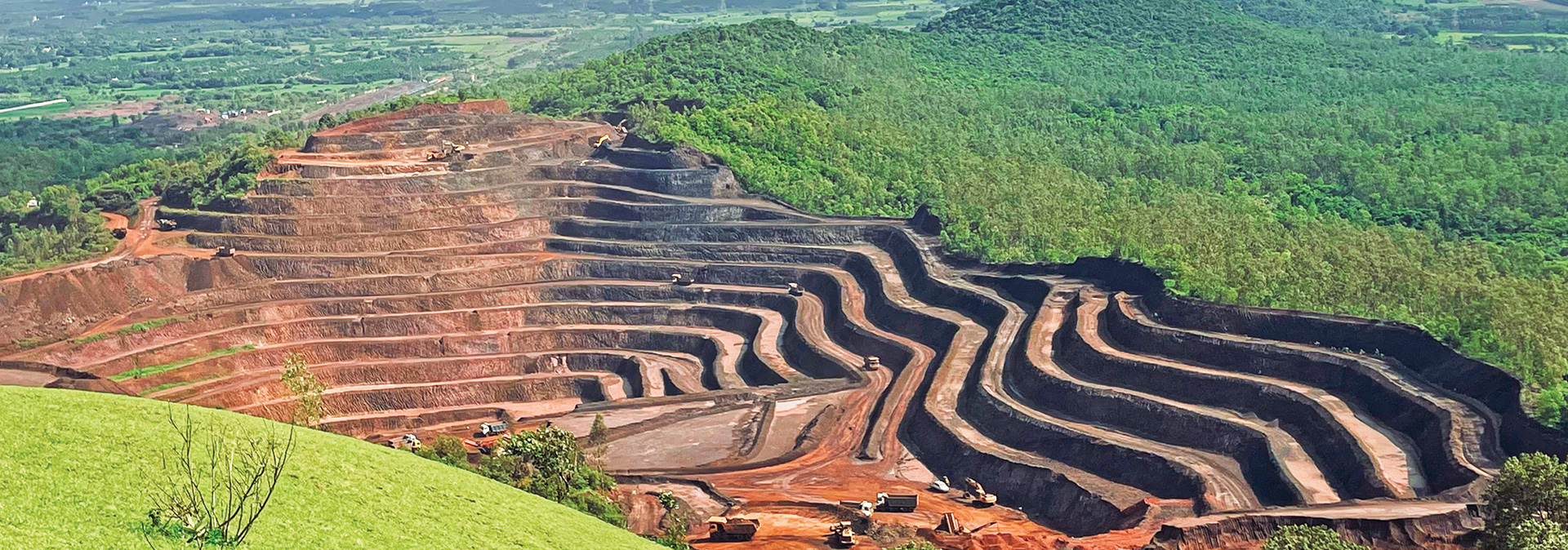
The lands that we mine are consistently repurposed and restored, both aesthetically and structurally, into lush green zones. Building on plantation work from last year, FY 2024-25 witnessed large-scale greening across benches and slopes that helped improve soil holding capacity and thwart soil erosion. Such restoration and repurposing initiatives also help alleviate dust pollution by serving as natural dust screens and promote the revival of biodiversity by providing microhabitats for native fauna and flora, thereby paving the way for ecological recovery at scale.
Focused on cleaner transport
We also furthered our objective of pivoting away from traditional fuel-based transport and towards closed conveyor systems for ore haulage. These systems not only help mitigate particulate matter dispersion but also significantly reduce reliance on fossil fuels.
The deployment of more fuel-efficient machines, combined with route optimisation and the sequential uptake of cleaner fuels in transportation, has driven both reductions in greenhouse gas emissions and improvements in operational efficiency. The benefits to the environment engendered by the activation of these strategic transportation-greening levers go beyond numbers; they are evident in fresher air, reduced noise pollution, and healthier ambient ecosystems in the areas surrounding our mines.
Reconciling biodiversity conservation with mining
A biodiversity-sensitive approach now underpins all our mining activities. We incorporate wildlife corridors, buffer zones, and habitat protection strategies directly into our mining plans. In addition, we deploy camera traps and institute robust monitoring systems to ensure our operations do not disrupt the health and resilience of local habitats and wildlife. These efforts, coupled with awareness programs for local communities and employees, help ingrain ecological consciousness at the core of our mining culture.
Greener mines for a cleaner future
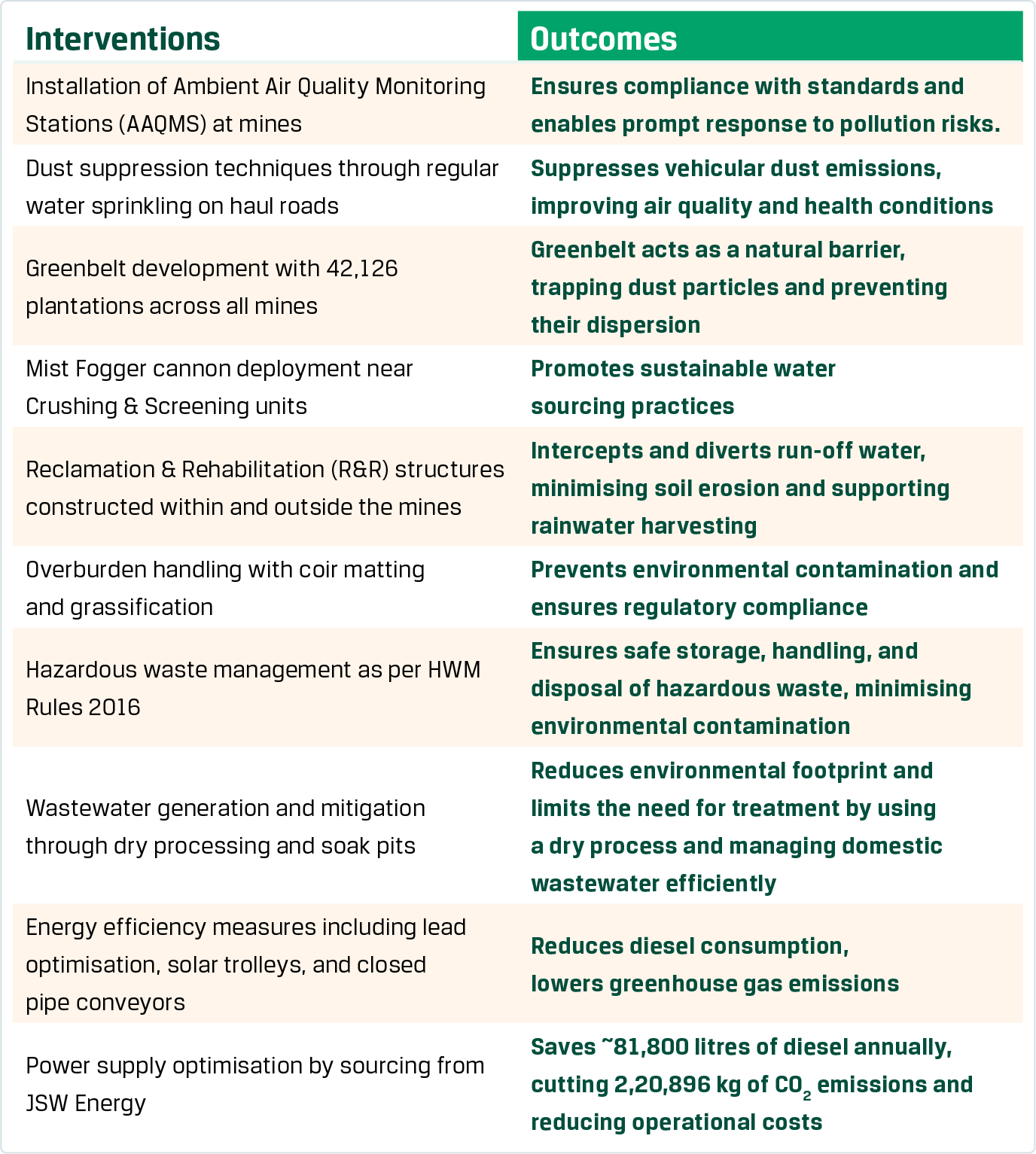
At Vijayanagar, our operations have adopted a multipronged approach to environmental sustainability, focusing simultaneously on improving air quality, water efficiency, waste control, and energy conservation. Ambient Air Quality Monitoring Stations enable real-time air quality monitoring, while water sprinkling and mist fogger cannons at crushing units help counter dust pollution. Greenbelts, with over 42,000 new plantations in FY 2024–25, also serve as natural air filters and visual buffers, mitigating dust pollution and enhancing the site's aesthetic appeal.
In terms of waste management, overburden with low iron content is stabilised through terracing, coir matting, and grassification, with provisions for backfilling during mine closure. Additionally, hazardous waste, such as spent oil, is securely handled in accordance with the HWM Rules 2016. We also strive to conserve energy to the greatest extent possible and are actively working to electrify our operations. Diesel use has significantly decreased due to lead optimisation, and solar trolleys generated nearly 15,945 kWh of electricity in FY 2024–25. The switch from diesel to grid power at Devadari’s crushing units marked a critical milestone in our electrification journey, allowing us to save 81,800 litres of diesel and reduce our footprint by 220,896 kg of CO2.
42,000
New plantations added to the greenbelt in FY 2024-25
15,945 kWh
Generated by solar trolleys
